
About
About the Alliance
Membership
Membership Types
Member Highlights
Services
Safety Assessments + Consultations
Advisor Services
Leadership and Psychological Safety Services
Training
COURSE CATALOG AND CLASSES
CONFERENCES & WORKSHOPS
Resources
By Type
OHS Competency Tools and Framework
COR Certification | OSSE
Getting Certified
COR / OSSE Resources
Recognition & Awards
Navigation
Member Highlights:
Safety Assessments + Consultations: Air Quality Assessment, Combustible Dust and Combustion Risk Assessments, Confined Spaces Assessment, Critical Incident Response Services, Ergonomics, Machine Safeguarding Assessment, Noise Hazards | Surveys and Testing Services
Advisor Services: Safety Needs Analysis | GAP Analysis, Safety Program Support (SPS) | Safety Compliance Support (SCS)
Leadership and Psychological Safety Services: Psychological Safety Training and Coaching, Leadership Training and Coaching, Respectful Workplace Support
COURSE CATALOG AND CLASSES: All Training Topics, Upcoming Classes, eLearning - Online Safety Training
By Type: Checklists, Guidebooks, Presentations, Quick Reference Cards, Safety Awareness Posters, Safety Videos, Templates, Toolbox Talks, Webinars
OHS Competency Tools and Framework:
Getting Certified: Steps to COR / OSSE Certification, COR / OSSE for Small Business, COR / OSSE Business Referral Program, Certified COR / OSSE External Auditors
12
Months
of Safety
of Safety
October 2026
Personal Protective Equipment (PPE)
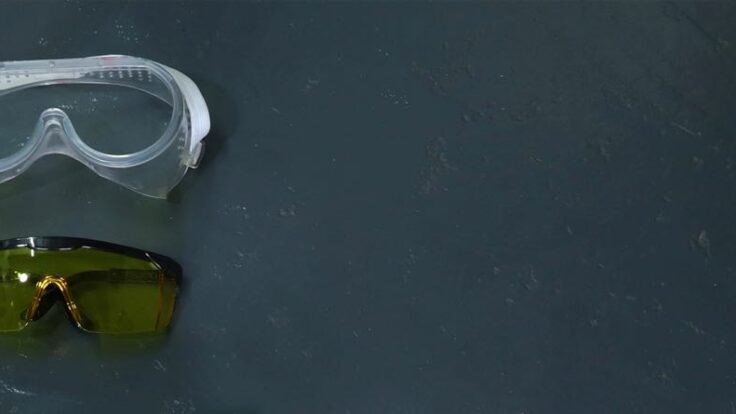
Personal protective equipment (PPE) is the gear that your workers need to help protect them from specific hazards in your workplace. PPE can include hard hats, safety glasses, respiratory protection, hearing protection, fall protection, gloves, safety glasses, and safety boots.
If you have reviewed the risks in your workplace and determined that other measures may be ineffectual or impractical to control certain hazards, PPE may be required. PPE can be used on its own, or in addition to other risk mitigation activities.
It is important to include a PPE program as part of your occupational health and safety program. This program should include:
- Risk assessment and recommendation of controls
- Education and training of workers on the appropriate use of PPE
- Selection, use, maintenance, and storage of PPE.
Basic Training
Course
This awareness level course will introduce learners to the importance of hearing conservation and how to protect themselves from hearing impairment.
Videos & Webinars
Personal Protective Equipment (PPE)Health and Safety Resources and Tools
Toolbox Talk
Safety eyewear and face shields are the most common method used in industry to protect the eyes and face from injury. Safety eyewear is an essential piece of personal protective equipment (PPE), but all too often workers wear the wrong kind or even worse don’t wear it at all.
Toolbox Talk
Hands are essential for work, yet hand injuries are one of the most common injuries in the workplace. Hands are injured by dull cutting tools, jagged edges, and sharp objects. Most hand injuries are preventable. Injuries happen when workers are rushed, not wearing PPE, using equipment without guarding, or poor supervision and training.
Photochromic lenses (such as the brand Transitions) are allowed by the CSA and ANSI standards, but whether or not the use of them would cause an additional safety hazard is something that must be determined with a site hazard assessment. Our program has begun offering basic photochromic safety eyewear “testers” for use during these hazard […]
CSA Group Research - Canadian Women's Experiences with Personal Protective Equipment in the Workplace
Quick Reference Card
This resource was shared by EyeSafe BC during a webinar on Nov 27, "Managing Eye Safety PPE Compliance."
Presentation
This PDF provides insight into the types of frames and styles that are currently available for eye protection.
Toolbox Talk
Eyewash stations are devices used to flush the eyes in an emergency. Employers are required to have emergency washing facilities (including eyewash stations) in places where a worker’s eyes or skin may be exposed to harmful or corrosive materials. This Toolbox Talk will review key characteristics of eyewash stations and how to ensure they are ready for when you need them.
Poster
Hands are essential for work, yet hand injuries are one of the most common injuries in the workplace. Hands are injured by dull cutting tools, jagged edges, and sharp objects. Most hand injuries are preventable. Injuries happen when workers are rushed, not wearing PPE, using equipment without guarding, or poor supervision and training.
Toolbox Talk
“Noise” is unwanted sound. The psychological effects of noise is that it can startle you, annoy you, and disrupt your concentration. Physiological effects include loss of hearing. Severe exposure to noise can cause pain and even nausea. Noise can also affect communications which interferes with both job performance and your safety.
Toolbox Talk
Hearing Protection Devices (HPD), also known as hearing protectors, are devices worn as a barrier to reduce sound levels entering the ears to diminish the harmful effects of sound. Examples of HPD can include earplugs and earmuffs. With each of these HPD, there is a large variety of examples to choose from.
Checking with your employees once or twice a year to make sure their PPE is fitting comfortably and meeting their needs is a great way to ensure they are properly protected. This can ensure that they will continue to fit well and protect workers should there be any changes in their faces due to weight […]
These systems usually include a note along the lines of “suitable protective equipment must be worn by the operator at all times” in their operating procedures. However, please confirm with your local regulatory body (WorkSafeBC if in BC) or connect with a Safety Advisor for more information.
Due to the wide range of possible chemical related hazards, for the best possible answer you will need to cross-reference the specific chemicals of concern vs the available materials for safety eyewear. The most common materials used for safety frames are: Metal Aluminum Monel (Nickel-Copper Ally) Nickel Silver Stainless Steel Titanium Plastic Acetate Injection Mould […]
This presentation was shared by Greg Neher from EyeSafe BC through a webinar on November 27, 2025. The webinar, “Managing Eye Safety PPE Compliance,” is available on-demand here.
Noise Hazards— Surveys and Testing Noise is one of the most common occupational health hazards. WorkSafeBC has established occupational exposure limits (OEL) to protect workers’ hearing as well as protect their mental health. An employer must ensure that a worker is not exposed to noise levels above 85 dBA Lex daily noise exposure level or […]
Presentation by Dorothy Wigmore at a CSA (COPE - Conference on Protective Equipment) conference.
Toolbox Talk
WorkSafeBC receives approximately 872 claims each year for respiratory related occupational diseases and respiratory irritations. In this Toolbox Talk, review what respiratory hazards may be present in your workplace and how workers and employers are working together to prevent respiratory incidents.
Conference Session
Personal protective equipment (PPE) is the last line of defense in worker safety—but only when it fits and functions for every employee. Too often, PPE programs are built on “one-size-fits-all” assumptions that exclude women and underrepresented workers, leading to safety gaps, increased risk of injury, and reduced retention in the workforce. This session explores how […]
Workers must wear a minimum of Class 1 high-visibility apparel if they work around vehicles or mobile equipment moving slower than 30 km/h. If workers are around vehicles moving faster than 30 km/h, they must wear Class 2 or 3 high-visibility apparel. This poster shows examples of what types of apparel must be worn and […]
CSA Z94.3 has optional standards for tinted lens sun protection. Tints of 15% or less are still considered “clear” lenses (as defined on Table 1 of the standard), tints up to 60% are considered “Cosmetic”, and tints between 60% and 92% are considered “General Purpose” sun protection (as defined on Table 7 of the standard). […]
You can find the Occupational Health & Safety regulation details for Northwest Territories here. Please look at 97(1-4) which currently reads: “Eye and Face Protection 97. (1) If there is a risk of irritation or injury to the face or eyes of a worker from flying objects or particles, splashing liquids, molten metal or ultraviolet, […]
The number one way to ensure your employee wears their PPE is to make sure it fits them comfortably. EyeSafe BC designed a “Perfect Fit” checklist for assisting in this, which is shared with all their dispensing optometrists. This checklist is based on the guidelines provided in CSA Z94.3.1, combined with eyewear dispensing best practices. […]
You will want something with a full seal gasket to keep the droplets out of the eyes. If the water being splashed on the face is constant you may want to move up to a rubber seal gasket, for a stronger seal against the face. Here are some examples of both options: Frames w/ Full […]
News & Blog Articles

Hearing loss in the workplace IS preventable – Make hearing conservation an injury prevention strategy
March 10, 2022
In March, we recognize World Hearing Day (March 3) – an annual global advocacy event that calls for action to address hearing loss. Hearing loss is more common than you might think – an estimated 54 percent of Canadians, ages...
About MSABC
Board & Governance
Contact Us