
The Dust You Don’t Always See: Why Maintenance Decides Whether Your Dust Collection Systems Works
Jean Fong2026-10-16T15:20:12-07:00A well-designed dust collection system is only as good as the way it is used and maintained. Most of the risk sits in places nobody looks: inside the ductwork, inside tool cabinets, and above the ceiling.
Our recent dust webinar covered how combustible dust hazards are identified and how collection systems are designed to control them. The question that came up again and again was what happens after handover. That is where this article picks up.
No dust collector is 100% effective. Every system is the product of three things: design, operation, and maintenance. Get the design right and neglect the other two, and the system will drift away from what it was built to do, often without anyone noticing until something fails.
Good Collection reduces housekeeping. It does not replace it.
A properly designed system captures dust at the source and carries it to the collector. That cuts the amount of dust that settles in the facility. It does not eliminate it.
The dust that escapes capture settles on beams, ledges, cabinets, and ceiling spaces. The dust that drops out inside the ductwork builds up where nobody can see it. Both are fuel. In a combustible dust environment, accumulated dust is what turns a small event into a serious one.
That is why maintenance and housekeeping belong in the same conversation as design. A system delivered to NFPA-referenced design intent on day one can fall well short of it a year later if changes are made without consideration of the effects on the rest of the system.
What we find in the field
These are the conditions our team sees most often during site visits. None of them are design failures. All of them are maintenance and operating failures, and all of them are preventable.

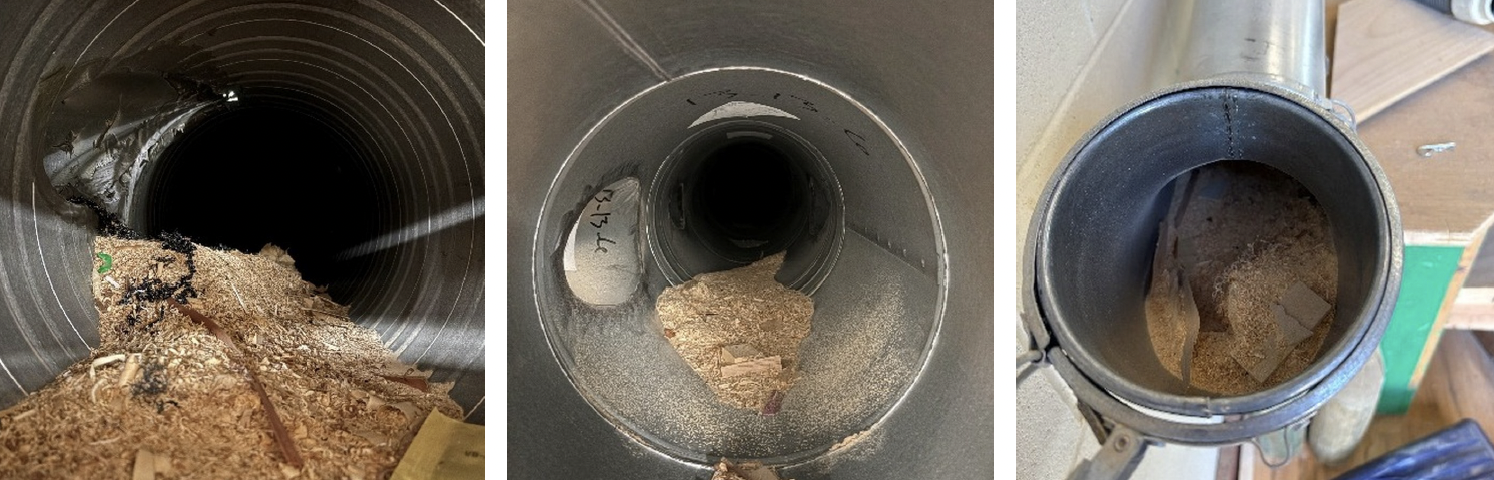
Dust settling inside the ductwork.
A collection system is balanced to keep dust moving at the right velocity through every branch. When users adjust blast gates, or add and remove pickup points, that balance is lost. Air velocity drops in parts of the system, and dust falls out of the airstream and builds up inside the duct.
Photo: Dust and debris settled inside branch ducts where air velocity has dropped.
Blast gates used the wrong way.
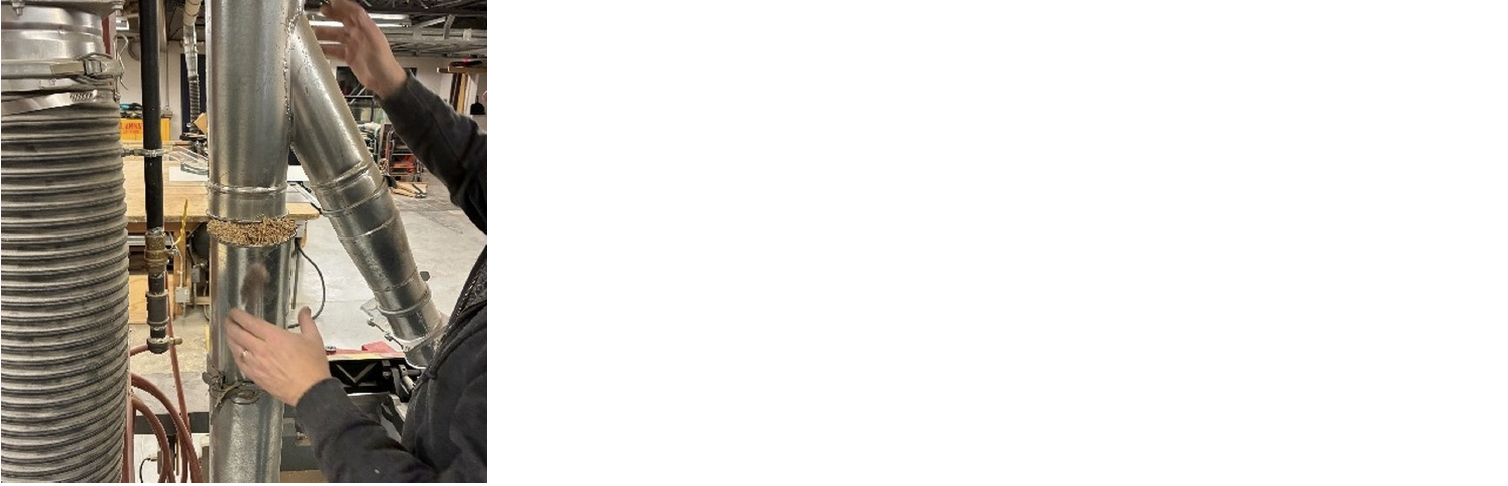
Blast gates are there to balance the airflow to design conditions at all pickup points. When they are used to isolate branches that are not in use, material can build up in the duct that plugs the system and prevents capture when that tool is used.
Photo: Opening a branch duct for inspection and cleaning.
Machines not connected.
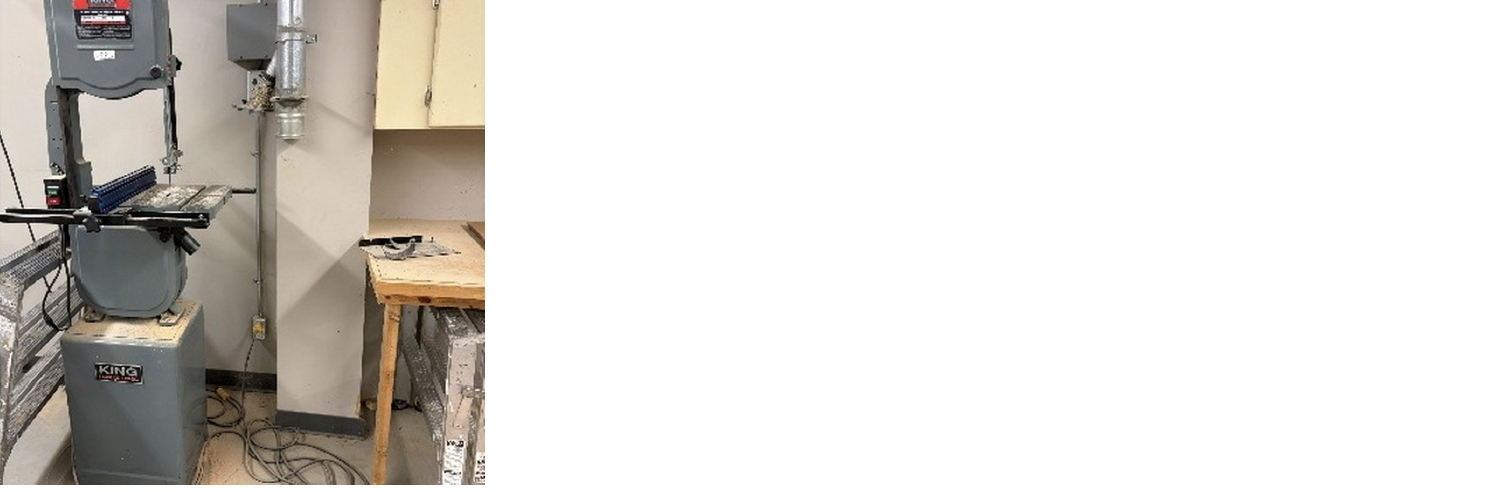
We regularly find ductwork run right to a machine that is simply not hooked up. The pickup exists on the drawing. It does not exist in practice.
Photo: Duct run in place, machine not connected.
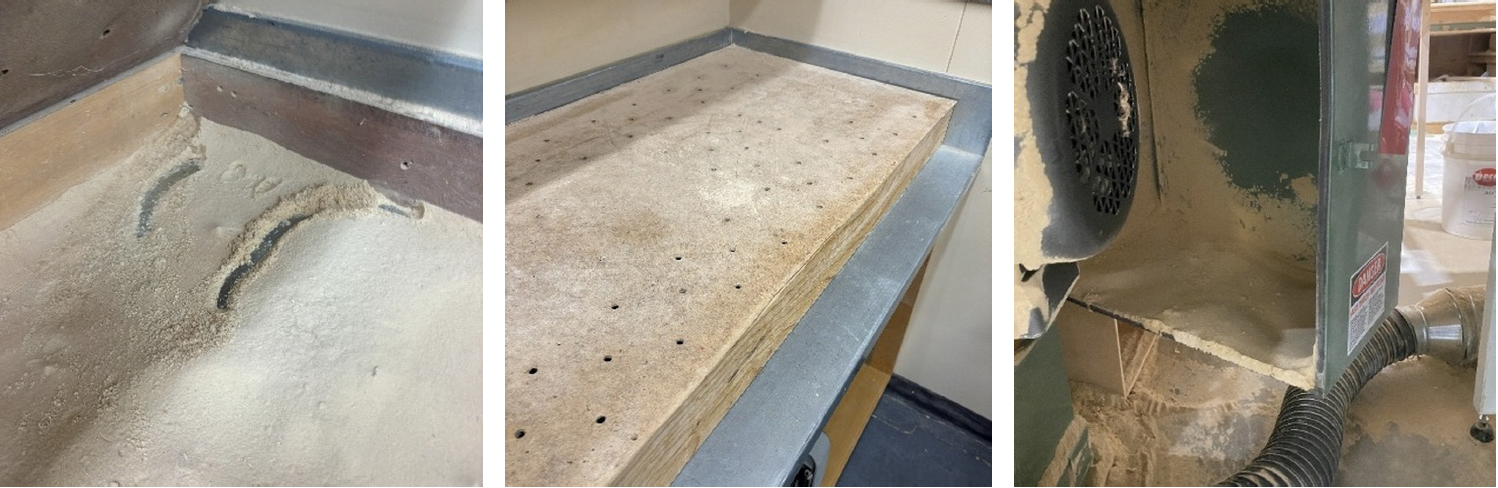
Dust building up inside tool cabinets.
Machine enclosures and cabinets collect fine dust over time. It is out of sight, close to motors and moving parts, and rarely on anyone's cleaning list.
Photo: Dust accumulated inside tool cabinets and machine enclosures.
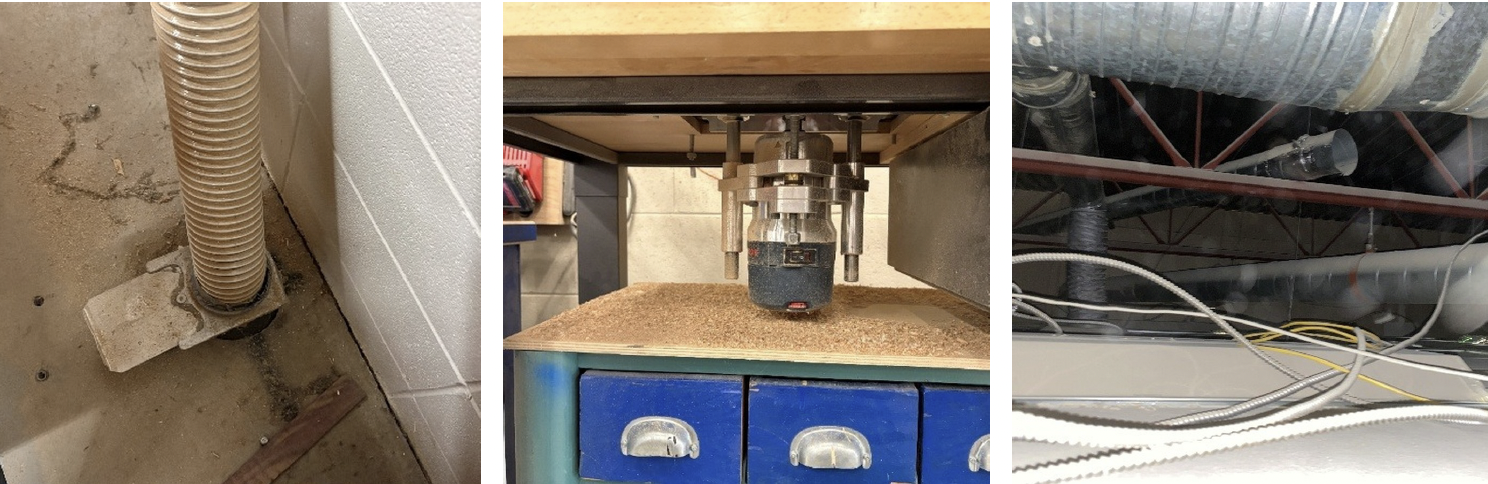
Dust around tools and above suspended ceilings.
Fugitive dust settles on every horizontal surface. Above a suspended ceiling, it can build for years without anyone seeing it.
Photo: Dust around tools and pickups, and above a suspended ceiling.
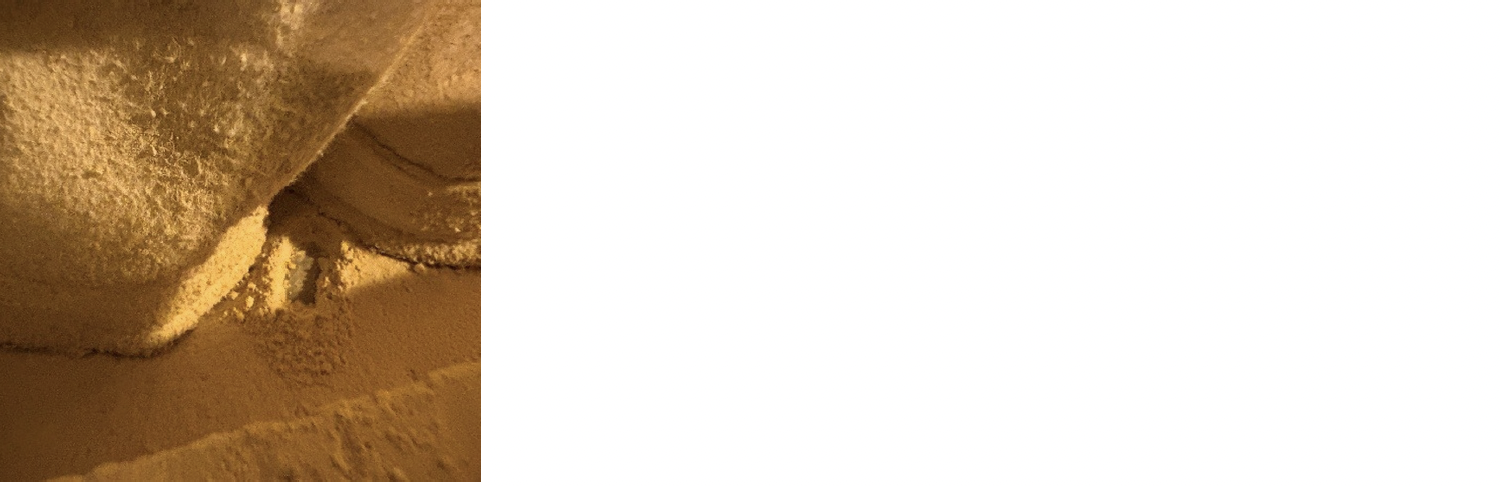
Plugged or torn filter bags.
A plugged bag chokes airflow for the whole system. A torn bag sends dust straight through the collector. Either one means the collector is no longer doing its job.
Photo: Collector inspection: dust-loaded filter bags.
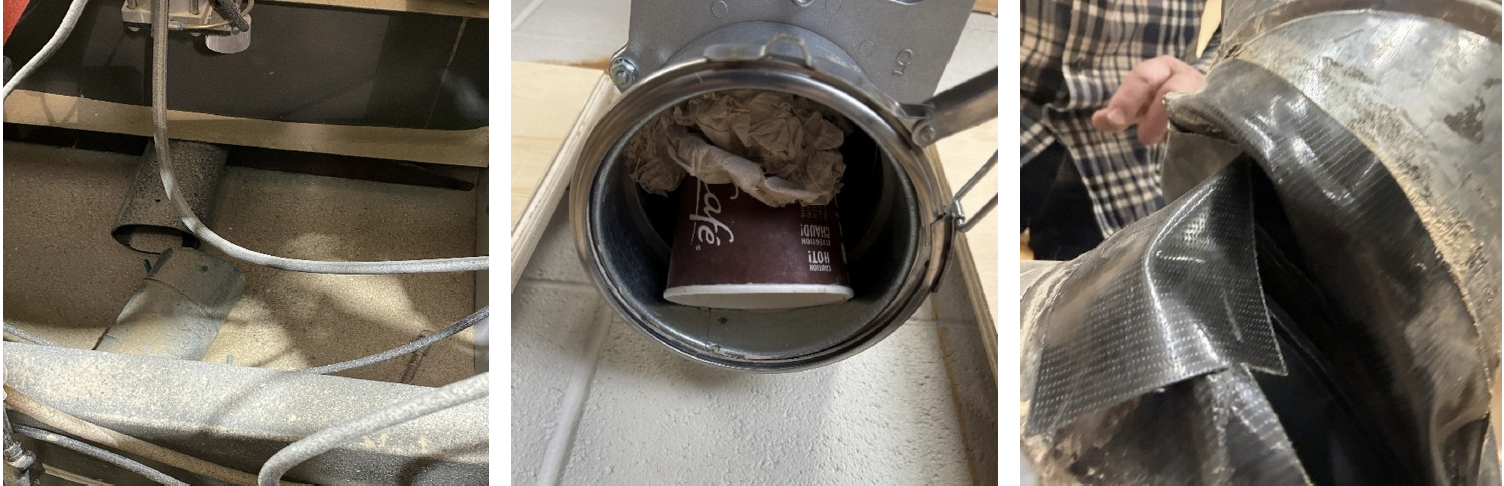
Damaged or blocked ductwork.
Broken or ineffective hoods, duct plugged with foreign objects, and damage patched with tape rather than properly repaired. Each one reduces capture at the source.
Photo: Ductwork inspection: a damaged hood, a foreign object in the duct, and a taped repair.
The discipline that prevents it
- Manage change. Treat any change to pickup points, machines, or blast gate settings as a change to the system. Have it reviewed before it is made, not after.
- Inspect and clean the ductwork periodically. Open cleanouts, check for buildup, and remove it before it becomes a hazard.
- Inspect the collector. Check bags for plugging and tears, and replace them before performance drops.
- Inspect hoods and duct connections. Confirm every machine is connected, every hood is intact, and every repair is a proper one.
- Build hidden areas into housekeeping. Tool cabinets, ledges, beams, and ceiling spaces belong on the schedule. Just because the floor is clean, doesn’t mean the facility is.
Where projects struggle
The pattern behind these findings is rarely neglect. It is drift.
- No owner after handover. The system is commissioned, the project team moves on, and nobody is named as responsible for how it runs.
- Small changes add up. A new machine here, a moved pickup there, a gate left half open. Each change looks harmless. Together they rebalance the system in ways nobody designed.
- Inspection only happens when something breaks. By the time airflow drops enough to notice, dust has usually been building in the ductwork for some time.
- Housekeeping stops at what is visible. Floors get swept. Cabinets, beams, and ceiling spaces do not.
Maintenance is part of the system, not an afterthought
At AIRPLUS, we treat maintenance as a stage of the system lifecycle, not a separate service bolted on after the fact. Our 4P approach is the operational expression of our ISO 9001:2015 quality system:
prepare. prevent. protect. perform
- prepare. Align goals, hazards, risks, and constraints with outcomes.
- prevent. Address risk through technologies that align with industry standards.
- protect. Safeguard people, assets, and the environment with systems built for critical duty.
- perform. Operate, maintain, and optimize over the lifecycle to protect uptime.
For dust collection, that means deciding at the prepare stage who owns the system after handover and how changes will be managed. It means designing to NFPA-referenced design intent. And it means building inspection, duct cleaning, and filter replacement into the plan from the start, rather than waiting for a failure to prompt them.
The last P is where most systems are won or lost. Through our Parts & Maintenance Services, we help facilities keep their collection systems running the way they were designed to run.
Look where the dust hides
The dust you see on the floor is the easy part. The dust inside the ductwork, inside tool cabinets, and above the ceiling is the part that matters. If your system has changed since it was commissioned, or it has been a while since anyone opened a cleanout or checked the bags, now is the time to look.
AIRPLUS is One Accountable Partner for dust collection, from basis of design through commissioning, maintenance, and optimization. With 6,000+ projects, 3,200+ clients, and 30+ years in operation, we know what these systems look like after handover, not just on the day they are commissioned.
Contact Us at sales@airplusindustrial.ca to talk about keeping your dust collection system safe, ready, and running.
This is a sponsored article from Allied Partner AIRPLUS Industrial Corp.
Written by: Rob Klassen, AScT, Dust Collection System Specialist