

Coaching Employees for Safety: A More Effective Approach Than Telling Them What to Do
In the world of workplace safety, it’s easy to fall into the habit of simply telling employees what to do. The rules are clear, the protocols are in place, and the expectations are non-negotiable, so why not just direct? Compliance doesn’t always equal commitment. Telling someone to wear PPE, follow procedures, or report a hazard might result in short-term action, but it rarely leads to lasting change. Coaching, on the other hand, creates space for employees to understand why safety matters, reflect on their role, and make personal, meaningful connections to safe behaviour. What’s the difference between telling and coaching? Telling is top-down. It assumes the message alone will lead to action. Coaching is collaborative. It invites conversation, explores barriers, and taps into motivation. Safety coaching impacts workplace culture When we coach employees into safety, we engage their thinking. We help them reflect on the consequences of their choices, not just for themselves, but for their colleagues, families, and the workplace as a whole. Safety culture is strengthened. Safety coaching helps employees: Take ownership of their actions Understand the bigger picture Feel respected and heard Build problem-solving capacity Develop intrinsic motivation for safety Shifting towards coaching When leaders and supervisors move from just issuing directives to asking thoughtful questions, listening actively, and supporting reflection, something powerful happens. Employees stop seeing safety as someone else’s job, and start making it part of how they lead themselves and look out for others. Here are a few simple, powerful coaching questions leaders can ask: “What made that task feel risky or uncomfortable?” “What would make it easier or safer to do this job next time?” “Have you noticed any patterns or near misses lately?” “What would you do differently if you were training a new employee?” “What’s one change that could improve safety on this team?” If we want safer workplaces, we can’t just focus on rules and reminders. We need conversations that build insight, accountability, and buy-in. Coaching doesn’t replace clear expectations, it enhances them. Let’s lead safety conversations that stick. — Editor’s note: Contact Steve to schedule a one-on-one leadership coaching session. Additionally, Steve provides consultations to members on how to create safe and healthy workplaces—and offers workshops on a variety of mental health topics that can impact manufacturing facilities. Written by Dr. Steve Conway | Director of Leadership and Psychological Safety Originally shared via LinkedIn

5 Tips to Help Build your Safety Training Plan
As safety leaders, we’re always looking for relevant and current safety topics to share with our teams. At times, it can feel like we’re repeating ourselves or struggling to get everyone on the same page. How can you keep it fresh and interesting? Here are five tips to help build your safety training plan. 1. Understand your safety needs As an Alliance member, you have access to free advisory support. Contact our advisor team for help to identify any gaps in your safety plan or future proof your program. If you start the certification process, a gap analysis is also part of your planning process. Ask a safety advisor » 2. Understand your team’s learning style Get to know your team and how they learn and retain information. Some people like to learn in groups, and some prefer to learn on their own at their own pace. Low language proficiency can also make safety training a bigger challenge for some. Understanding your team’s learning style can help you identify the best ways to train. ** Did you know that the Alliance offers awareness-level safety eLearning courses in multiple languages? Check out Employee Safety Orientation, Emergency Response Awareness, and WHMIS in Punjabi, Mandarin (Simplified Chinese), Cantonese (Traditional Chinese), and Spanish. Watch for Tagalog translations coming soon. » 3. Build a training plan When it comes to building a safety training program, you don’t have to do it alone. Ask your safety advisor for help to build a training plan based on your operations and regulatory training requirements. Meet your team’s specific training needs—from toolbox talks to formal training and supporting resources. 4. Explore our list of safety topics and safety courses Alliance courses include training for supervisors, managers, and workers—from safety committee courses to technical topics like storage racking or confined space. Explore our course catalogue » You can also search resources, training, and advisory services by safety topic. If there’s a specific risk or hazard you’re looking to control, our topic pages are the place to start. Browse all safety topics » 5. Take advantage of training promotions Watch for seasonal training promotions for discounts on eLearning, private group classes, and more. Until August 31, save 25% off eLearning courses with promo code SUMMERSAVINGS2025. Get more details » If you prefer classroom training, schedule a private class, book your people into an upcoming public class, or join us at Make It Safe for a range of training options in one place. Reach out to get started »

2026 WorkSafeBC Premium Rate Changes for Manufacturing
The injury rate across B.C. is at a record low, but risk levels vary across industries and individual company performance. In their July rate change meetings, WorkSafeBC announced that overall, the average base rate is not changing this year, and increases to rate group rates are temporarily capped at 10%. For many companies, this will be good news. WorkSafeBC notes that these results are possible and based on outstanding investment returns. They also note that rate freezes create “bubbles” and the need for future “make whole” increases. The cap on rate increases to 10% is for the base rate only. Within a rate group, some individual industry CUs are experiencing increases of more than 10%, and experience rates for many companies also increase rates through surcharges. WorkSafeBC notes that companies with poor experience ratings have a limited window to get them under control or risk accelerated payments in future years. Breaking down the impact for Alliance members While the majority of Alliance members will see a base rate decrease in 2026, for 48% of the industries that make up the Alliance membership, the base rate will increase. Employers’ actual costs will range much more widely—with the safest companies receiving up to a 69% discount while companies with poor experience ratings face premium surcharges up to 163%. Not sure what the impact is for your business? Find your base rate here. To understand your experience rating and actual premium costs, this on-demand webinar explains how to use your WorkSafeBC employer report card and portal to understand and manage your experience rating and premium costs: WATCH »
Safety on the World Stage in 2025
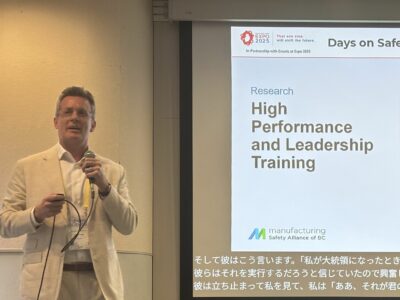
In July, Manufacturing Safety Alliance of BC CEO Wayne Arondus and Director of Leadership and Psychological Safety Steve Conway were invited to speak at the 1st international symposium on safety, health, and wellbeing at work on the 2025 World Expo stage in Osaka, Japan. Sharing Canadian research insights into the role of emotionally intelligent leadership in creating psychologically safe workplaces, this session included in-depth interviews with Puratos Canada President Michael Simone and behavioural scientist and MEUS Science Corp CEO Ehsan Etezad. This important topic and talk is on the agenda at Make It Safe Vancouver this fall as well. A week later, Wayne was at the 2025 ORP Congress in Cartagena, Colombia. There, he he was invited to speak on the future of prevention with INSHPO President Elect and NEBOSH Chief Officer Dee Arp and four other international leaders, and presented a second talk on Building a shared Safety Culture across Generations. In an unexpected honour, on behalf of the Manufacturing Safety Alliance of BC, Wayne was invited to receive a 2025 International Recognition Award: Recognizing the Alliance’s leadership role in promoting a safe, healthy and sustainable business culture in the manufacturing and food processing industry in British Columbia, and its contribution to enhancing global workplace safety and health. Bringing Global Insights Back to B.C. While far from our British Columbia base, these events were unique opportunities to educate and share perspectives with a wider health and safety community—and to meet world-wide experts and industry leaders. We are excited to introduce several of these international leaders to our local safety community as speakers and supporters of Make It Safe Online this fall.
Why attend Make It Safe this fall?
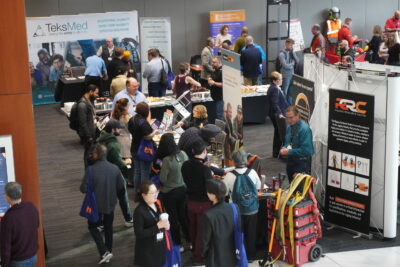
6 Reasons to attend Make It Safe this fall If you’re on the fence about Make It Safe Vancouver—the health and safety conference happening Oct 8+9 at the Anvil Centre in New Westminster—here are a few reasons you won’t want to miss it! Make valuable connections with local safety professionalsAs business leaders, safety experts, or people and culture professionals, we know that it isn’t always about what you know, but who you know. Meet fellow attendees, industry leaders, and see demonstrations during the breaks. Build your skills with relevant safety topics that matterWith 2 days of hands-on safety committee training and leadership, HR, and technical safety topics, Make It Safe is for you. Take away effective strategies for regulatory complianceGet the latest updates and how-to’s on regulatory compliance topics—from return-to-work and disability management to contractor safety. Learn new ways to strengthen your programs and stay compliant. Get expert insights from industry leaders who’ve been thereLearn from safety award winners, innovators, and industry leaders from organizations like Puratos Canada, Dinoflex, Hansen Industries, West Coast Reduction, and more. Make It Safe Vancouver hosts a Women in Safety Workshop on Day 2In a half-day Women in Safety workshop with the Women in Occupational Health and Safety Society, meet and learn from female leaders and mentors in the safety professions. Fast track your OHS educationTechnical hours of education gained at Make It Safe qualifies for CRSP and CPHR certifications, with a separate track for JHSC annual training. Make It Safe Vancouver includes 8.7 technical hours, and Make It Safe Online (ticket included) up to 20 additional hours of professional development. Watch for more speaker details in the coming weeks—but save your seats now before the Advance Registration savings end Friday. Get your tickets today!

Leadership and Mental Health: Don’t Forget to Put On Your Own Oxygen Mask First
More and more, leaders are recognizing the importance of supporting employee mental health. They’re checking in, creating space for honest conversations, and building cultures of psychological safety. This shift is long overdue and deeply encouraging. But amidst all of this, one essential question must be asked: Are leaders taking care of their own mental health? The reminder we hear on every flight applies just as much to leadership: Put on your own oxygen mask before helping others. The Pressure of Leadership Leadership is demanding. It carries emotional weight, decision fatigue, and the constant pull to support others, even when you’re running on empty. Yet many leaders feel pressure to power through, to model strength, to stay “on” at all times. But resilience isn’t about ignoring your own needs. It’s about recognizing them early, and responding with care. Some signs to watch for: Difficulty sleeping Fatigue or low energy Feeling overwhelmed or emotionally reactive Rising anxiety or low mood A sense of disconnection or isolation If any of this resonates, you’re not alone, and you don’t have to go it alone. Strategies for Self-Care Here are a few ways leaders can take care of themselves: Speak to a trusted friend, mentor, or mental health professional Reach out to your EFAP or support network Engage in regular self-care (sleep, movement, quiet time, healthy boundaries) Normalize talking about mental health, starting with your own You can’t lead well if you’re running on empty. Being aware of your own mental health is not a luxury, it’s a necessity. The stronger you are within, the better you’ll lead those around you. Let’s take care of ourselves so we can truly take care of others. — Editor’s note: Contact Steve to schedule a one-on-one leadership coaching session. Steve will be joining Alliance CEO Wayne Arondus on stage at the Expo 2025 in Osaka. They will be sharing strategies for what how EQ and psychological safety can help leaders set their teams up for success. Additionally, Steve provides consultations to members on how to create safe and healthy workplaces—and offers workshops on a variety of mental health topics that can impact manufacturing facilities. Written by Dr. Steve Conway | Director of Leadership and Psychological Safety Originally shared via LinkedIn