
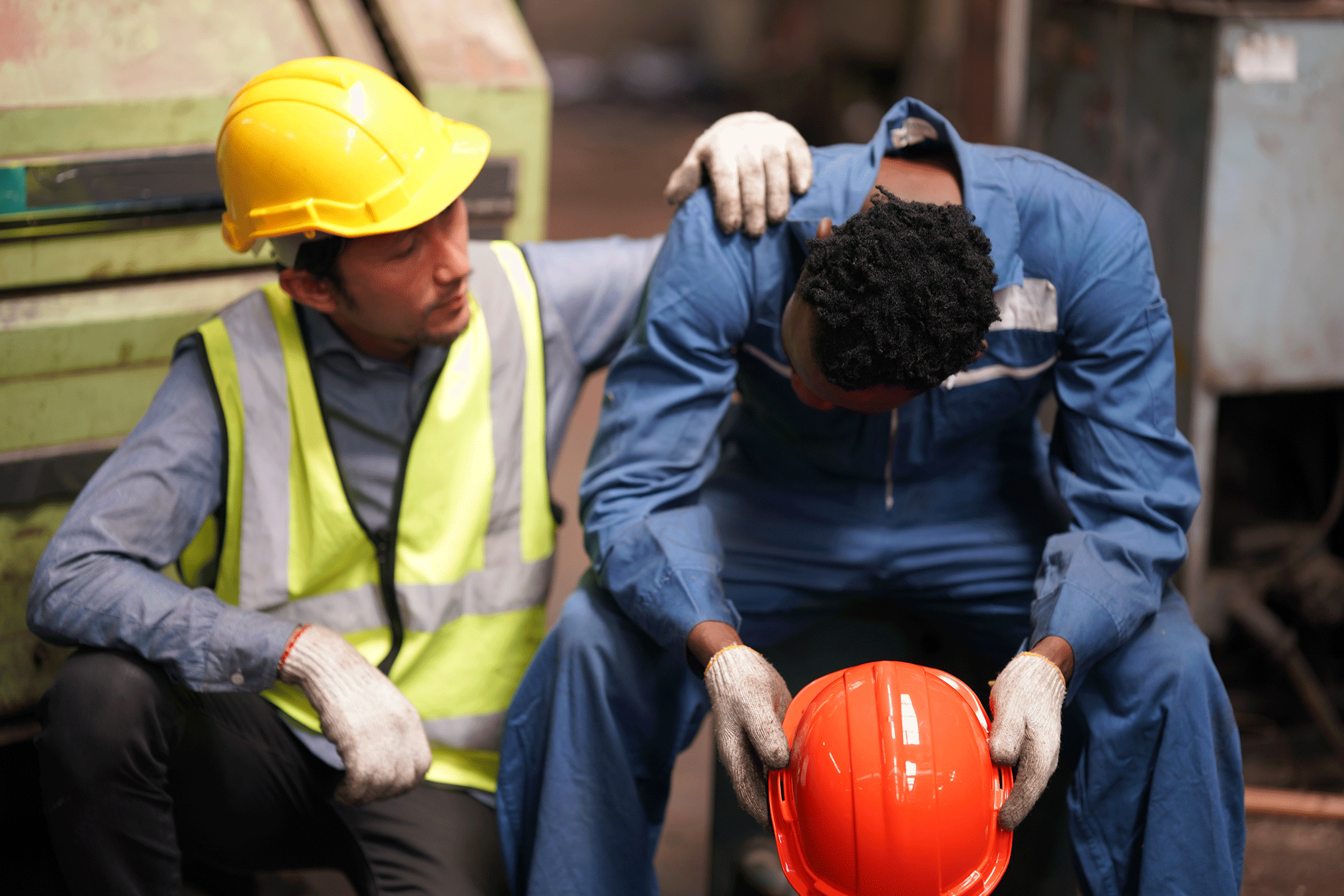
Strength Beyond the Shop Floor: Why Psychological First Aid Matters for Men in Manufacturing
Jean Fong2026-06-09T10:27:26-07:00What do we know about men’s mental health?
- The suicide rate for men is approximately three times higher than women. (Public Health Agency of Canada, 2023)
- Of the estimated 4,500 suicide deaths in Canada each year, nearly 75% are men. (Public Health Agency of Canada, 2023)
- Men are significantly less likely to seek mental health support or therapy. (Sager0Ouiaghli, I, Godfrey, E, 2019)
Poor mental health doesn’t stay at home
Through our experience and work with members, we see the impact of poor psychological safety on the physical health and safety of workers everyday. “Focus drops. People become distracted. And in high-risk industries like manufacturing or construction, that can lead to serious consequences,” says Dr. Steve Conway, Director of Leadership and Psychological Safety at the Manufacturing Safety Alliance of BC. However, people don’t and can’t leave a part of themselves at the door when they get to work. Stress, grief, or personal challenges can affect attention, decision-making, and overall safety, putting both individuals and teams at risk.
The challenge: We see it, but don’t know what to do
During the week, we spend nearly half of our waking hours at work. We build relationships with our coworkers and often notice when something isn’t right. But many people:
- Don’t know how to start the conversation
- Feel it’s not their place
- Worry about saying the wrong thing
Stigma among men still continues to prevent open conversations.
The solution: Psychological First Aid
Psychological First Aid provides workers with practical tools to support one another.
It helps people break down the masks we wear every day at work:
- By building skills to start meaningful conversations
- Recognize warning signs and know how to intervene to offer support
- Understand and connect people to the resources and services available
Sometimes, just having a conversation that is supportive and authentic can encouraging for someone who is having a challenging time.
According to OHS Trainer Romy Soullier this upcoming session for Psychological First Aid on June 17 will be more peer-based versus leadership-based. “The focus is on how to have good, healthy, meaningful conversation and connection. And how to respond when start a conversation when they’re not themselves.”
Through this course, people learn how to:
- Recognize changes in behaviours and warning signs
- Have supportive, non-judgemental conversations
- Respond and navigate in crisis situations
- Understand when they are obligated to tell someone
- When and how to connect someone to resources
Like First Aid Attendants, Psychological First Aid attendants are not meant to fix the problem, it’s about assessing a situation, recognizing when help is needed and supporting someone until they are connected to the correct resources.
“We don’t expect Psychological First Aid Attendants to be an expert.” explains Soullier. “We talk about the different resources out there—from local, provincial, and federal crisis lines and supports, to company employee assistance programs.”
Creating psychological safety takes a change in culture
When more workers are trained in psychological first aid within a company, it can:
- Create an atmosphere where workers are more willing to open up and talk
- Encourage open conversations
- Introduce more mental health focused safety moments and Toolbox Talks
- Reduce stigma
- Build strong peer support networks
- Reinforce that safety includes both physical and psychological wellbeing
This reflects a company’s commitment to improving the overall wellbeing of their workers. Because worker safety isn’t just physical, it’s psychological too.