Business

Fractional support for safety in BC manufacturing

Last week, the Canadian Occupational Safety published an interview with Wayne Arondus that reveals how the Manufacturing Safety Alliance of BC best helps its members with support, training, and resources. CEO of the Year winner Wayne Arondus explains how free and low-cost safety support is driving gains for BC manufacturers The Manufacturing Safety Alliance of BC has built what its chief executive officer calls a “fractional safety” model, deploying specialists such as ergonomists and confined-space experts on demand to manufacturers that cannot justify a full-time hire, often at no cost to smaller, cash-strapped members. Wayne Arondus, who has led the alliance as CEO for roughly three years, credits the approach for measurable injury and incident reduction among the organization’s members. The strategy also underpinned his recent win of the WSPS Award for CEO of the Year, part of this year’s full list of Canada’s Safest Employers Awards winners announced in October. A new strategic plan replaced a 17-year legacy Arondus stepped into the CEO role after serving as chief operating officer, taking over from a founder who had led the organization for about 17 years. The transition meant building a new strategic plan largely from scratch. “To step into that role, come up with a new strategic plan, and rally the entire team around the work we wanted to accomplish – honestly, it was about getting my board on side, getting my team to understand clearly what we were going to do and how, and guiding them through it,” Arondus said. “There was such great buy-in from my entire organization and my board on the vision and the strategy.” That shift pushed the alliance toward specialized hires in ergonomics, confined spaces, and mental health, alongside upgraded training and onsite support. “This was really supporting members at the core of the deficiencies they had on site as an organization,” Arondus said. Free support for small manufacturers, not just large ones With members ranging from large manufacturers to small, family-owned operations, Arondus said flexibility is the point of the fractional model. “Because we have the flexibility, in a lot of cases we were giving complete free services to those small companies that maybe aren’t as flush with cash. We were able to give them a lot of support for free, point them in the right direction, and give them the onsite support they were looking for,” he said. He added that barely a week goes by without a personal call or site visit to a member’s owner or vice-president. Tariffs and a skilled worker shortage test the sector Arondus pointed to ongoing tariff pressure as a distraction for high-hazard industries supplying the US, alongside a persistent gap in qualified safety professionals that mirrors the skilled labour shortage reshaping safety staffing in other sectors. “That is still a challenge even for ourselves, to find safety people. It’s not easy. These are skills that are in demand,” he said. He also described psychological health and safety as newly urgent after 25 years in manufacturing where it barely came up. “Psych health and safety wasn’t a discussion – it was never really a discussion,” he said. “And now it is a discussion.” Presence over compliance defines his leadership style Asked what separates a CEO who treats safety as culture rather than obligation, Arondus pointed to presence. “Those leaders are very physically present in their buildings and plants. They have a genuine interest in all the workers, regardless of who they are,” he said. “I’ve been in some organizations where safety was kind of like a line item on the P&L statement, and while we said the right things, our actions didn’t speak as loud.” His advice for future leaders centred on trust over control. “A good people leader is a person that empowers people but doesn’t try to overpower people,” he said. “We hire people because they have talent. I don’t need to be the smartest person in the room.” Written by: Shane Mercer This article was originally published November 10, 2026 by Canadian Occupational Safety on https://thesafetymag.com/ca.

Read More »
CEO of The Year Award 2026

Canada’s Safest Employers Awards Names Wayne Arondus CEO of the Year

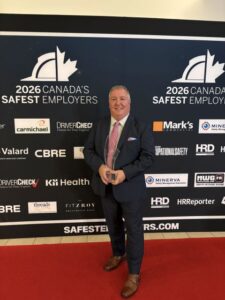
At the 2026 Canada’s Safest Employer Awards in Toronto, Manufacturing Safety Alliance of BC CEO Wayne Arondus was honoured as CEO of the year for his dedication leadership and commitment to the vision of safer workplaces across British Columbia and beyond. “Shocked, but truly honoured. It’s fantastic,” Arondus said, in an interview with Canadian Occupational Safety, “crediting a three-year push by his team to ‘make BC the safest place to live, work, and play.’ “We support all the food and beverage manufacturers in the province of BC, and it was crazy, but we just stayed focused on helping industry,” Arondus said. “This is a nice capstone to that work we’ve done.” The Workplace Safety and Prevention Services Award for CEO of the Year recognizes a CEO who drives successful safety strategies from the top by putting people first and championing innovative safety values. The Manufacturing Safety Alliance of BC is a not-for-profit that supports more than 3,000 member manufacturing and food processing businesses across B.C. The Alliance supports manufacturers with safety guidance, training, and specialized support. “Our manufacturing sector is facing headwinds,” Arondus says. “We are here to help them protect the health and safety of their people even in the most challenging environments,” he explains. “I’m incredibly proud of the work we’re doing together,” he adds, “That we’re seeing more companies come to us for help, and coming back again, is a sign that our support is making an impact.” Under Arondus’ leadership, the organization’s Make It Safe event and webinar series has expanded to educate and connect thousands in Vancouver Island, the Okanagan, northern B.C., the south coast—and outside the province via industry partnerships and the country’s largest virtual safety conference, Make It Safe Canada: Online. After a long career in senior manufacturing leadership role, giving back is a consistent tenet for Arondus—helping bridge the gap between what schools teach and what industry needs as an instructor at BCIT’s School of Business for 20 years, serving as Vice Chair on the Advisory Board for the BC & Yukon Chapter of Make-A-Wish-Canada, and as a past president of the CMHA, Vancouver-Fraser Board of Directors. Arondus is an alumnus of the 8th Governor General’s Leadership Conference of Canada.The finalist list for the 2026 CEO of the Year was deep, with 12 finalist awardees considered for the award: Derek Kelleher – Flanagan Foodservice Don Cooper – Innovator Industrial Services Jon DiMascio – QM LP Ken Robuck – EnergySolutions Canada Marc Breault – Paradox Access Solutions Matthew Bryan – SLB Canada Ltd. Mercy Lawluvi – Immigrant Women Services Ottawa Neil Waugh – NPL Canada Tim Hollander – Toyota Motor Manufacturing Canada Inc Wayne Arondus – Manufacturing Safety Alliance of BC Yves Tremblay – Pronghorn Controls

Read More »

Inside a cyber incident: What really happens and how to respond

Cyberattacks aren’t a distant threat – they’re happening every day to businesses of all sizes. But they don’t have to be catastrophic. With a clear plan and swift action, you can minimize the impact and emerge even stronger. Associate Member Acera Insurance shares some practical strategies to help our members prepare, respond effectively, and build resilience for the future. Learn about the lifecycle of an attack – beginning at the first point of entry to the financial and legal fallout – and actionable strategies for recovery and long-term resilience. From understanding who’s behind today’s attacks to building a tested incident response plan, here’s what you need to know. Who’s driving today’s cyber threats? Cybercrime is no longer just the domain of lone hackers in basements. Today’s threat actors are highly organized, well-funded and increasingly strategic in their approach. Understanding who they are and what motivates them is essential for building effective defences. Here are the top and emerging players shaping the modern threat landscape: Nation-states State-sponsored groups focused on espionage, infrastructure disruption and cybercrime to fund regimes. Organized crime syndicates Criminal enterprises that operate like businesses and are often behind ransomware, financial fraud and large-scale data theft. Lone hackers Independent actors using dark web tools for opportunistic attacks. Hacktivists Ideologically motivated attackers targeting organizations to advance political, social or environmental causes. Where are the weak spots? Attackers rarely storm the gates – they slip through cracks in everyday systems and processes. These vulnerabilities are not only common but increasingly sophisticated, making them prime targets for exploitation. Here are the most frequent and emerging entry points organizations need to watch: Phishing attacks Still the leading tactic for stealing login credentials, spear phishing emails and fake login portals are commonly used together. Cloud vulnerabilities Data has increasingly shifted to the cloud, with many small businesses relying on Microsoft 365 and Google Workspace. Cloud environments face 30 times more attacks than on-premise systems. Brute force attacks Password guessing remains effective where multi-factor authentication (MFA) isn’t enabled – a persistent gap that can be easily addressed. Adversary-in-the-middle (AiTM) A growing threat: even MFA can be bypassed through login session hijacking. These types of attacks are also often initiated through phishing and fake login portals. Email redirection and payment fraud Attackers manipulate email flows to redirect payments from vendors and exploit internal payment processes to siphon funds. Vulnerable edge devices Firewalls, routers and other network hardware are prime targets if not patched or properly configured. Unprotected endpoints Any device lacking robust monitoring or endpoint protection can serve as an easy entry point. The first 24 hours: Every minute counts When a breach occurs, time is your most valuable asset. The first day sets the tone for recovery and can determine whether the impact is contained or spirals out of control. A clear, tested incident response plan is critical. Here’s what to prioritize immediately: Contain the threat: Stop further spread or access immediately. Preserve evidence: Avoid wiping logs and data that could be vital for investigation. Isolate affected systems: Disconnect compromised devices from the network. Secure backups: Ensure clean copies are protected and accessible. Engage experts early: Technical and legal teams should be looped in as soon as possible. If cyber insurance is available, call your insurer’s hotline even if there’s only a suspicion of a breach so they can activate an incident response team and help clarify your coverage to avoid unexpected out-of-pocket costs. Additionally, key vendors to be engaged post-breach include digital forensics, legal counsel, public relations and notification services. Acting fast but in a planned, practiced way is essential. Building resilience beyond prevention Even the best defences can still be breached. Resilience is what keeps businesses afloat when prevention fails. A robust resilience strategy ensures you can absorb the impact, recover quickly and adapt for the future. Here’s how to make resilience part of your organizational DNA: Maintain and test your incident response plan Your incident response plan isn’t something you write once and forget. It should be a living guide that’s tested regularly (just like fire drills) so everyone knows their role under pressure. Include clear steps for containment, evidence preservation and communication. Keep physical copies accessible In a crisis, digital access may be compromised. Store hard copies of your incident response plan and cyber insurance policy in a secure but accessible location. Educate key players Ensure leadership, IT teams, legal counsel and other staff understand their responsibilities. Training should cover decision-making under pressure, escalation paths and vendor coordination. Update regularly Threats evolve, and so should your plan. Review and update your incident response strategy at least annually or after any major organizational change or cyber event. Prepare for business interruption scenarios Think beyond technical recovery. If systems go offline (e.g., VPN downtime for remote workers), how will you notify employees? How will you maintain operations? Build contingency plans for communication and continuity. Resilience = Preparation + Detection + Response + Recovery + Adaptation The cost of a breach Cyberattacks carry a price tag that goes far beyond ransom payments. The financial, operational and reputational consequences can be severe and long-lasting. Here’s what organizations need to consider: Direct financial costs Fees for third-party response vendors including forensic investigators, legal counsel, crisis communications and IT recovery teams. Ransom payments and fees for negotiation services. Fines and penalties from regulatory bodies for violations of privacy law. Litigation costs if legal action is taken by affected parties. Indirect and operational disruption Business interruption (downtime that affects productivity and revenue). Recovery costs (resources needed to restore systems and operations). System fortification (post-breach upgrades to improve security). Human impact Poor communication and uncertainty can damage employee morale and lead to turnover. Strategic and competitive impact Innovation may stall as resources get diverted to crisis management and recovery. A breach can disrupt critical workflows and pipelines, delaying service delivery and project milestones. Third-party consequences Partners may cut off access to their systems and networks until reassurances are provided, and may require audits or impose new standards before

Read More »

OHS Canada Feature | The use of augmented reality in health and safety training​

“The future of safety training is changing fast, and leaders will need to keep up, especially if they want to connect with a younger workforce on a deeper level. Gamification, virtual reality, augmented reality, the metaverse, and artificial intelligence are fuelling a training revolution.” Propelled by innovative technologies that promise to enhance efficiency and knowledge transfer, workplace health and safety training is undergoing a transformation. Manufacturers are looking to immersive technologies such as virtual reality (VR) and augmented reality (AR) tools to equip their teams with consistent and effective health and safety training. Hands-on safety training significantly improves understanding and retention of training information. In the past, this was only achievable through costly on-site training. Today, AR and VR training immerses workers in simulations of real-world situations where they can practice and apply the most complex safety procedures from anywhere. This results in efficiencies and cost reductions for some employers—with stunning improvements in results compared to traditional methods. Immersive training can also engage learners through gamification elements such as points, rewards, and competition. For leaders, this new technology creates opportunities to make training more enjoyable and interactive. Engaged employees support a strong and healthy safety culture. And workers are more likely to stay focused, complete training modules, and retain crucial safety knowledge through short, directed, and hands-on virtual learning. Since October 2023, two independent systemic literature reviews have been published through Safety Science on the use of immersive technologies for occupational health and safety training and education. These reviews concluded that indicators strongly suggest immersive solutions are more effective than traditional training methods. Anecdotally, workers young and old at Husky Technologies, an Ontario-based global injection molding packaging systems manufacturer, have come to perceive the use of immersive technologies as the future of training. Trainees shared that their immersive learning platform has added value to their learning experience of how to work safely on client sites. And for the company, it provides a streamlined and convenient way to ensure that all their technicians receive the same standardized training. As businesses adopt immersive technology, there are broader implications for workplace culture and risk management as well. Business leaders are beginning to recognize that investments in advanced training technology can take them beyond regulatory compliance in a strategic move toward creating a safer, healthier, and more productive work environment. As leaders consider the benefits of a shift from a compliance-driven approach to training to a proactive, data-driven, and employee-centric model, they are seeing long-term benefits to their training technology investment. Sustainable gains in efficiency and performance support the collective skills and competency of learners and underscore the value of their people. Written by: Lisa McGuire Originally published in OHS Canada’s Digital Edition, Winter 2024.

Read More »

OHS Canada Feature | Inspiring World Class Health, Safety, and Performance

Leaders play a key role in creating both physically and psychologically safe workplaces. As leaders, we have the duty to guide our organizations to long-term success and to care for our essential resources and investments—time, money, and most valuably, people. To do that successfully, our vision needs to recognize how the health, safety, and well-being of our teams integrates into overall performance. The most effective leaders recognize the critical role of a healthy safety culture in business success. Fostering a shared vision and culture of safety is both our moral and our pragmatic responsibility as leaders to ensure the sustainable success of our businesses. In a recent interview with Michelle Lofting, a health and safety leader at Factors Group of Nutritional Companies and the 2023 Safety Excellence Awards recipient of the Apex Award for safety advocacy, she reinforced this critical message: “Safety culture is important,” she noted. “It drives change within the organization. And it’s the right thing to do when it comes down to safety.” People make businesses successful. They are the most important resource we have. So, ensuring that they have a safe and respectful environment in which to work is not only the way forward, but the only way to build thriving and sustainable organizations into the future. To support ongoing success, we need to ensure that our people are equipped and empowered to make decisions daily that align with our vision and values. Great leaders take responsibility for health and safety throughout the organization. To set a tone of accountability right from the top, one where everyone takes ownership, we, too, need to hold ourselves to the same standard, walking the walk that we ask of our teams. By our investments of time and resources, and unflagging engagement of our teams’ participation in safe behaviours that strengthen our safety culture, we can change people’s attitudes and motivations. “With the right vision, we set standards about creating the right environment where people feel comfortable speaking up when something isn’t right with no consequences,” notes Puratos Canada President Michael Simone, a 2023 finalist for the Soaring Eagle Leadership Award. “A feedback culture is key to safety,” he adds. When people feel heard and have the tools to evaluate their own health and safety actions, our programs become more effective. One way we can build this level of buy-in is to commit to a path towards certification. Health and safety management programs that meet an occupational safety standard of excellence certification have consistently shown to produce superior performance results. Certification offers a roadmap for teams to use to reinforce successful health and safety processes and identify those that need improvement. It helps companies set measurable goals and benchmarks, and to work together to build safer workplaces where everyone can thrive. Excellent leaders recognize that a strong safety culture reflects a healthy workplace culture, one that celebrates successes and recognizes the growth and contributions of individual team members. And the sustainability of our success requires us to remain vigilant in the face of change. “You cannot rest on the wreath of glory, even for one second,” comments 2023 Soaring Eagle Award recipient Amit Golan, Vice President at CKF Inc. “Even if you’ve done something half decent, you need to always look at the present and the future,” Golan adds. “You must live and breathe safety at all times, every day.” That level of humility, vigilance, and dedication to continuous improvement characterizes the most successful leaders. With emerging technology, strategies, research, and risks; leaders also need to stay current on challenges, opportunities, and trends with the potential to impact our organizations—locally, nationally, and around the world. At global events such as the World Congress on Health and Safety or closer to home at Canadian events such as our upcoming Make It Safe Conference, online this fall, leaders can build connections and knowledge to stay informed and walk away with crucial tools in defeating complacency. Events like these offer unique opportunities for business owners and executives to explore, connect, and discuss current and emerging key issues, developments, and strategies—because health, safety, and performance are intricately connected. The steps we take to recognize this connection, and the levers we can control to support it, are the keys to building healthy, accessible, inclusive, and respectful workplaces, and thriving industries. Written by: Lisa McGuire Originally published in OHS Canada’s Digital Edition, Fall 2023.

Read More »
Women in Safety

OHS Canada Feature | Keeping your team safe: Leadership tips for working with subcontractors

Most business leaders recognize their duty to protect workers within the four walls of their operating facilities. Even in recent years, with more employers adapting policies to address remote work, production staff in the manufacturing sector remained onsite. But what if your team provides services and support onsite elsewhere — at a facility you don’t own? What if you employ temporary workers and contract employees? Where do the obligations of contractor and subcontractor begin and end in protecting contract workers’ health and safety? While subcontractors are separate entities, there is a fiduciary responsibility and onus on all businesses to ensure every worker is protected from hazards and risks. And, as business leaders, we are responsible to know what risks we are introducing into our facilities when we hire a contractor or subcontractor and to control those risks effectively. Ultimately, we are responsible for the health and safety of our workers and the contractors and subcontractors who come to work in our facilities—as well as their impact on our risk profile and culture. Health and safety considerations in contractor procurement A sustainable culture of health and safety doesn’t begin and end at our business location’s front door. In procuring contractors, in addition to knowing what services they provide, we need to understand who they are and how they approach workplace health and safety. By considering it upfront in our contractor selection, we can take steps to protect the safety culture in our own operations. Our due diligence includes requiring that proposals including information on the contractor’s health and safety programs — and references confirming that they follow their safe work procedures onsite. As we identify potential contractors and subcontractors, we also need to determine whether their approach aligns with ours. What is their safety performance record? How do they balance the health and safety of their workers with the demands of clients? Have they achieved a safety certification such as COR or the Occupational Safety Standard of Excellence to demonstrate they have a third party audited process to systematically manage OHS risks? Due diligence in answering questions like these provides checks and balances in the selection of contractors whose values align with ours. Oversight and follow-through Whether we work with a subcontractor on a short-term basis or long term, we are entering a partnership. Oversight and follow-through are critical factors in managing this important relationship. By valuing health and safety in the selection and ongoing management of contract workers, we see to the protection and wellness of everyone. This is an expectation and our duty as employers when endorsing contractor agreements. In our management processes, we also need to evaluate and plan for effective orientation, training, and oversight of contractors and subcontractors on-site. And in a longer-term contract arrangement, contractors have a significant impact on our teams and culture. That is an influence we need to recognize and manage. How do we ensure that all workers will have the required safety training? Will required training be upfront or ongoing? Have we assigned an employee to orient, train, manage, and provide oversight to the contractor worker? Could there be benefit in a long-term contractor participating in our joint health and safety committee? With the support of health and safety professionals both at our own companies and at our subcontractors, we can identify the best way to engage each other to minimize risk and strengthen our culture. Continual improvement and review No matter how we work with a contractor or subcontractor, it’s important to identify and agree to an ongoing process of review and refinement — including an assessment of the contractor’s health and safety policies, any incidents involving contract staff, and the influence of the contract workers on employee perceptions of health and safety. Continual improvement is key to ongoing, successful health and safety programs. As we develop and refine our own health and safety programs, we need to look for ways to bring our contractors along. Keep them informed about changes in policies, procedures, physical changes, in the facility, staffing changes, and anything that could impact their safety. Through integration of health and safety into contractor procurement, oversight, and continual improvement, we protect our people and safety culture. Collaboration on health and safety makes our contractor partnerships more effective — and becomes another driver of sustainable business performance. Written by: Lisa McGuire Originally published in the August 2023 Edition of OHS Canada.

Read More »

Change to COR incentive payment method:

WorkSafeBC has announced that beginning in May/June 2021, Certificate of Recognition (COR) financial incentives will be credited directly to the WorkSafeBC assessment account of participants who meet the program’s incentive eligibility criteria. This means incentive amounts will automatically be applied towards the oldest outstanding amount on the employer’s WorkSafeBC account or as a credit towards their next premium if they have no outstanding balance. Incentive payments were previously mailed as physical cheques. WorkSafeBC is making this change to reduce the number of paper cheques it distributes, in accordance with best practices within the industry. Benefits of this change will include eliminating delays in reimbursement created by mail delivery disruptions and outdated address information, reducing the time required by employers to deposit incentives, and reducing our environmental footprint. Please visit worksafebc.com to learn more about COR incentives or email partners.program@worksafebc.com if you have any questions.

Read More »
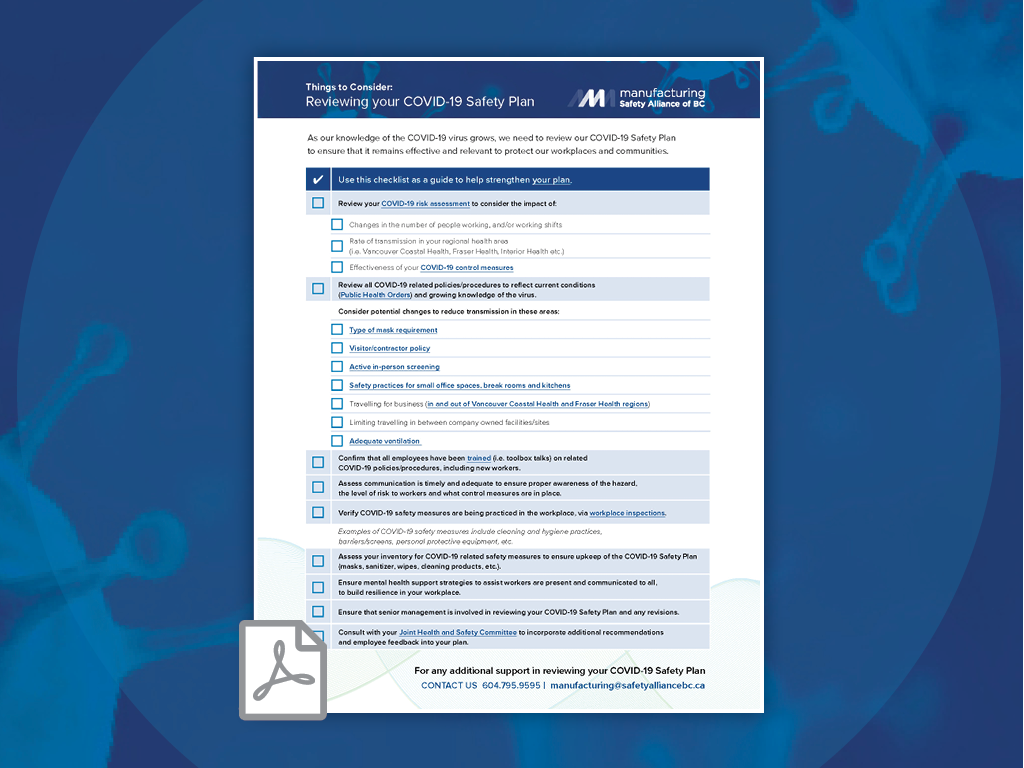
COVID-19 safety planAs our knowledge of the COVID-19 virus grows, we need to review our COVID-19 Safety Plan to ensure that it remains effective and relevant to protect our workplaces and communities. Use this checklist as a guide to help strengthen your plan.
WHMIS EducationThe Workplace Hazardous Materials Information System (WHMIS) education course provides essential training on the safe handling, storage, and disposal of hazardous materials in the workplace. Available in 5 languages: English, Spanish, Punjabi, Mandarin, and Cantonese.
Navigating BC OHS LegislationAs new or experienced safety committee members, managers, or supervisors, it is important to fully understand and know which OHS regulations are related to your work and how you may be in compliance—or not. This 45-minute self-paced course helps introduce people to information on how to identify and find the OHS legislation related their work—perfect for anyone working at a manufacturing or food processing facility who may be tasked with consulting OHS legislation.
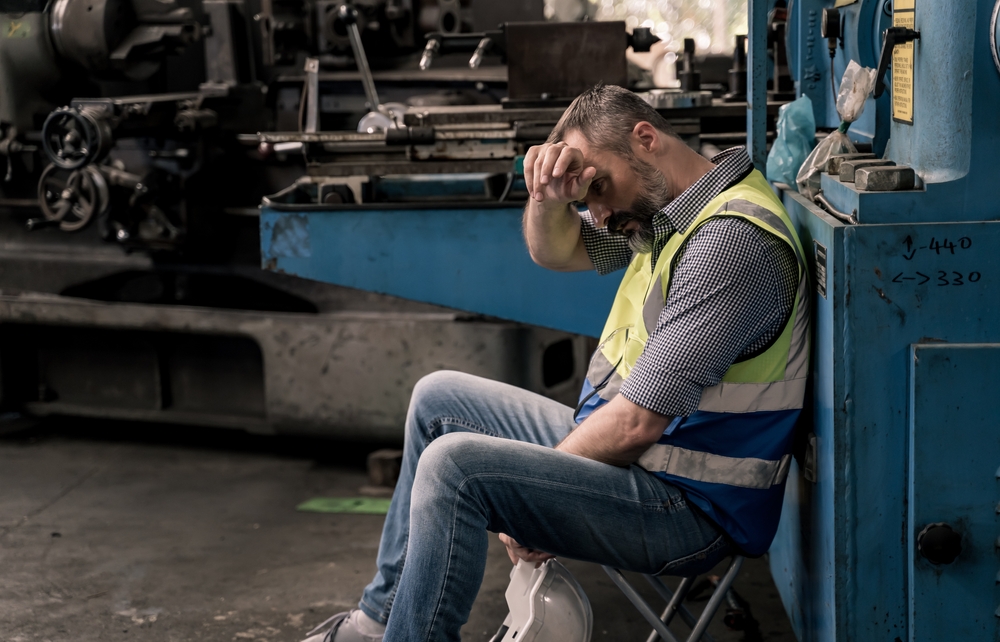
Mental Health Skill Building for WorkersIn this 45-minute, self-paced online course, workers learn to identify common signs and symptoms of mental health issues, to recognize stigma and reduce the impact. They learn practical strategies to respond to a co-worker experiencing a mental health issue.
Managing Difficult ConversationsWhether you're working in an environment in-person or virtually, gain practical tools to help you manage difficult conversations effectively to achieve the best possible outcomes through this course.
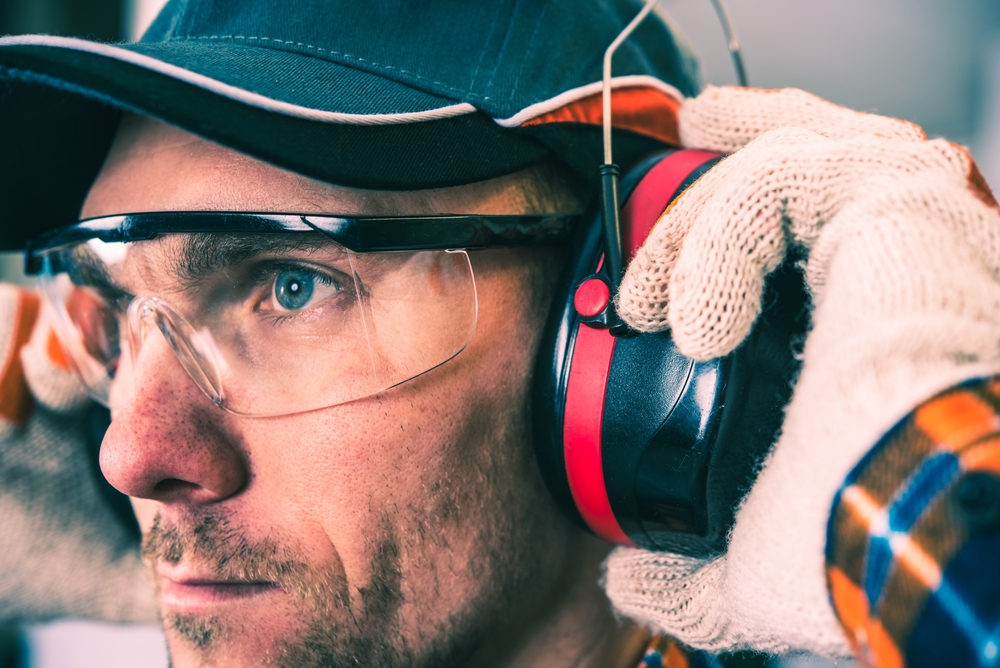
Hearing ConservationThis awareness level course will introduce learners to the importance of hearing conservation and how to protect themselves from hearing impairment.
Disability Awareness: Working with People with DisabilitiesCreating an inclusive working environment and workplace is essential for fostering innovation, improving team dynamics, and addressing the evolving needs of today’s workforce. By understanding the challenges faced by people with disabilities and recognizing their unique contributions, learners will gain the skills to support a more diverse and equitable environment. This online course was developed to raise awareness and provide practical strategies to work effectively with people with disabilities.     
Developing a Safety Procedures ManualConsistent safety procedures foster safer working environments, reduce injury-related downtime, and boost productivity. This course will provide participants with the foundation needed to start writing safety procedures that are clear, concise, and practical for day-to-day use. 
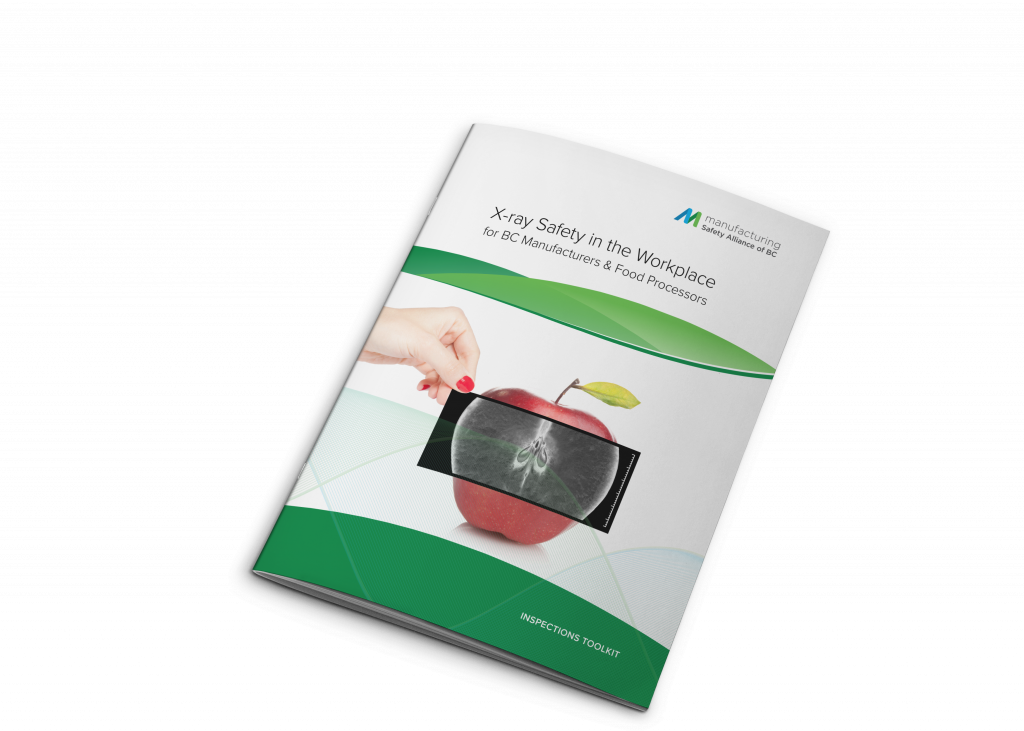
X-ray Inspection ToolkitA collection of checklists to help guide routine x-ray equipment inspections, including a resource for Joint Health and Safety Committees
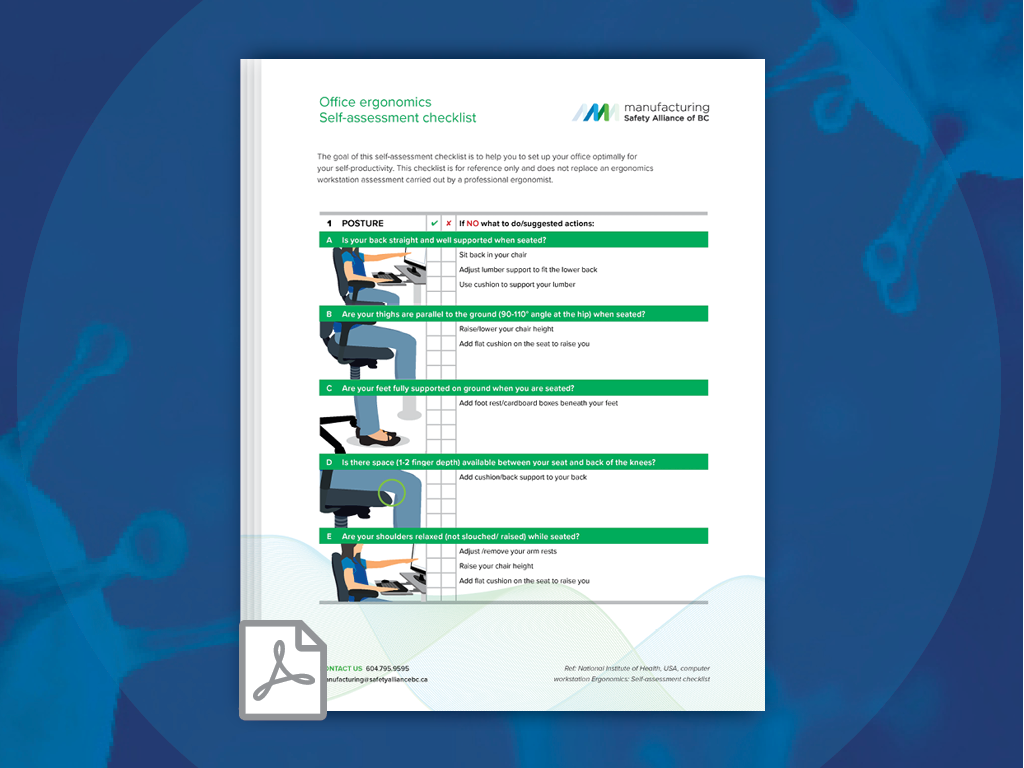
Office ergonomics Self-assessment checklistThe goal of this self-assessment checklist is to help you to set up your office optimally for your self-productivity. This checklist is for reference only and does not replace an ergonomics workstation assessment carried out by a professional ergonomist.