Covid-19

About Covid-19 and support from the Manufacturing Safety Alliance of BC
Joint Health and Safety Committee Excellence AwardJoint Health & Safety Committee Excellence Award This award recognizes a company’s JHSC team for excellence in achieving health and safety goals above and beyond regulatory requirements, making a positive impact on workplace culture with demonstrated team leadership. Submit a Nomination Now Award Requirements & Guidelines Eligibility  Awarded to a Joint Health & Safety Committee of any MSABC member* or OSSE certified organization. Criteria The application must include a completed WorkSafeBC Joint Health & Safety Evaluation Tool↗ and a nomination form submission detailing how the JHSC has demonstrated excellence in achieving health and safety goals above and beyond regulatory requirements, making a positive impact on workplace culture with demonstrated team leadership. Nominations Employee nominations are accepted and encouraged. Nominators are encouraged to submit supporting materials or video—including the company’s Employer Report from WorkSafeBC with data for at least one year and preferably the past three. Nomination Process Submit a Nomination Nominate a Joint Health & Safety Committee of any MSABC member or OSSE certified organization you would like to see recognized. Additional Information We will reach out to you with a short questionnaire. Review & Selection All nominations will be reviewed and a short list of finalists determined. Judges may interview finalists to determine a winner. Start Your Nomination Past Award Winners & Finalists 2026 JHSC Excellence Award Winner Award Finalists 2025 JHSC Excellence Award Winner Award Finalists 2024 JHSC Excellence Award Winner Award Finalists 2023 JHSC Excellence Award Winner Award Finalists 2022 JHSC Excellence Award Winner Award Finalists 2021 JHSC Excellence Award Winner Award Finalists Who would you like to nominate?
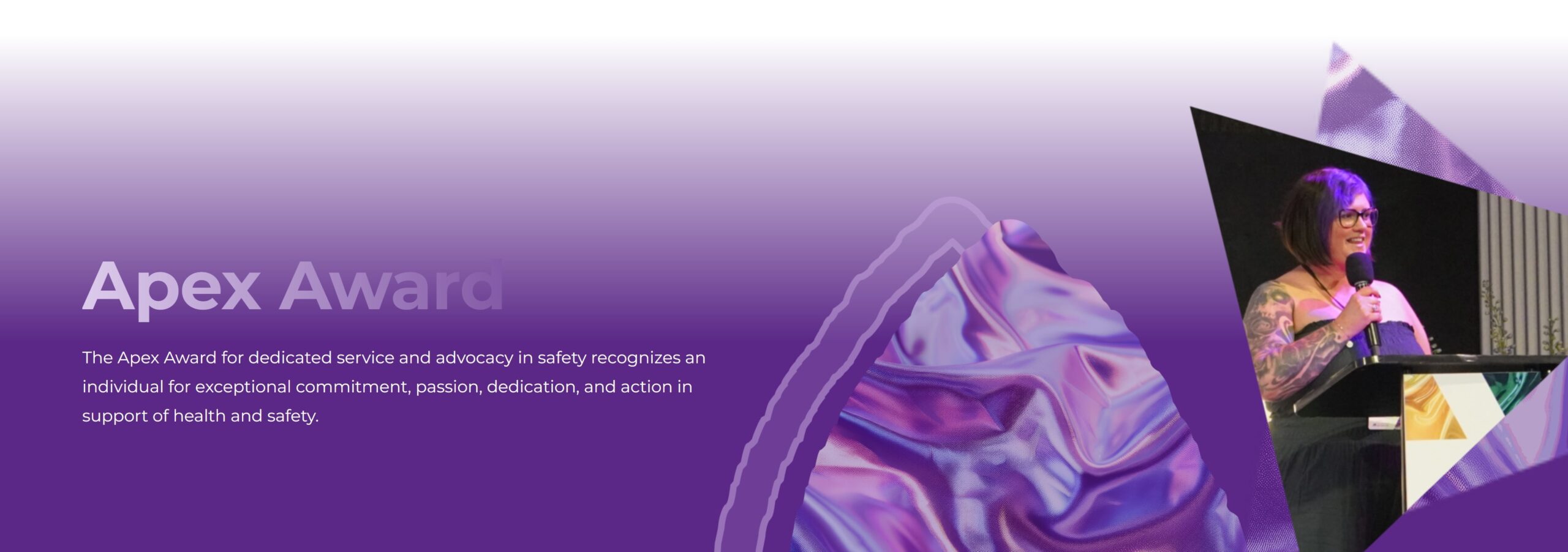
Apex AwardApex Award The Apex Award for dedicated service and advocacy in safety recognizes an individual for exceptional commitment, passion, dedication, and action in support of health and safety. Submit a Nomination Now Award Requirements & Guidelines Eligibility Awarded to any individual working at a MSABC member* or OSSE certified organization. Criteria This award recognizes an individual for exceptional commitment, passion, dedication, and action in support of health and safety. Nominations Self-nominations are not accepted. Others may submit supporting nominations, but the primary nomination must come from someone inside the nominee’s organization. Nomination Process Submit a Nomination Nominate an individual whose dedication and advocacy for safer workplaces is reflected through their exceptional commitment, passion, dedication, action in support of health and safety.  Additional Information All nominees will be contacted for additional information to supplement the nomination. * We may also reach out to the nominator for additional information. Review & Selection All nominations will be reviewed and a short list of finalists determined by an external judging committee. Judges will interview all finalists to determine a winner. Start Your Nomination Past Award Winners & Finalists 2026 Apex Award Winner Kristen Stinson CEO & Founder, EMKAO Foods https://youtu.be/FyP6j3jGriI?si=GwGDV5DB66bLydk- Award Finalists https://youtu.be/OmSx_JjRY6g?si=FQlECO1gjzyezfZw Breanne O’Neil Talent Acquisition Manager, Hevvy Toyo Pumps North America https://youtu.be/EvhNvzB6SeA?si=JiRaTgvP_GXXw_ex Jennifer Sites EHS Manager, Agrifoods International Cooperative 2025 Apex Award Winner Laura Spiers Health and Safety Specialist, West Coast Reduction Ltd. Award Finalists https://youtu.be/gbBn-p2b8Dg?si=AXmF5xoCdPm9knwP Sandra Tanemura Food Safety & Health and Safety Coordinator – Western Canada, Andrew Peller Estates https://youtu.be/eFDYn4N1x1A Jessee Regnier HR Manager, Freeport Industries ltd. 2024 Apex Award Winner Imelda Rivera Health, Safety, and Environmental Manager, CKF Inc. https://youtu.be/nBmm6BSVtkI?si=cOUFLPEO5aY-mMZy Award Finalists https://youtu.be/8OLoSwtSxQE?si=TnPEsZWb7_MP-Y8C Aryo Wirastomo Safety Specialist, Kerry Canada https://youtu.be/v_UTLGZA1Ek?si=SxpPga43ozlBJmTu Baylee Out Quality Control Technician, Peller Estates 2023 Apex Award Winner Michelle Lofting Manager, Health and Safety, Factors Group of Companies https://youtu.be/kwdsF-aj3zQ Award Finalists https://youtu.be/NflFrvY4nvE Roger Hall Safety Manager, RIMEX Supply Ltd. 2022 Apex Award Winner Robin Ambrose VP of People and Wellness, Epicure https://youtu.be/sYwX4j1wDDI Award Finalists https://youtu.be/FepE3h-mj34 Aaron Schoeder Operations Manager, Nutri-Nation Functional Foods 2021 Apex Award Winner Jason Longden CEO, Fine Choice Foods https://youtu.be/muFcIuWMkuk Who would you like to nominate?
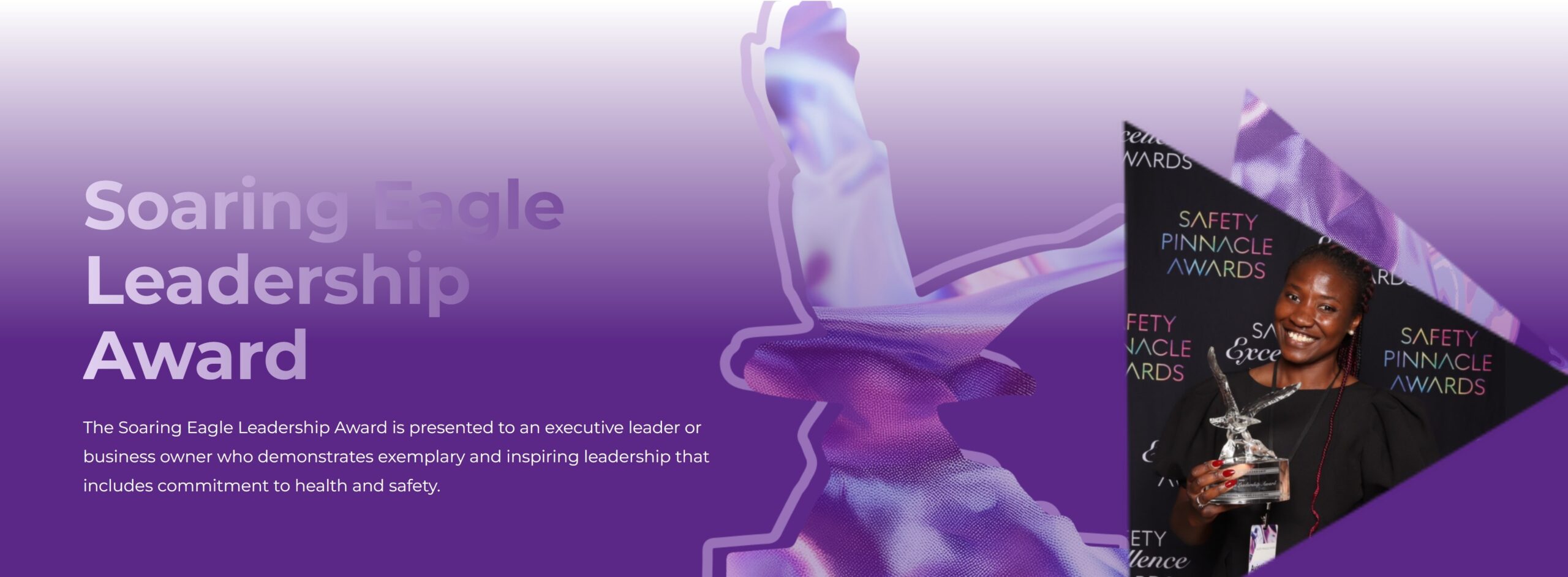
Soaring Eagle AwardSoaring Eagle Leadership Award The Soaring Eagle Leadership Award is presented to an executive leader or business owner who demonstrates exemplary and inspiring leadership that includes commitment to health and safety. Submit a Nomination Now Award Requirements & Guidelines Eligibility The owner or senior executive in a BC organization. Criteria This award recognizes an executive leader or business owner who demonstrates exemplary and inspiring leadership and a commitment to health and safety. Nominations Self-nominations are not accepted. Others may submit supporting nominations, but the primary nomination must come from someone inside the nominee’s organization. Nomination Process Submit a Nomination Nominate an owner or senior executive of a BC organization you would like to see recognized. Additional Information All nominees will be contacted for additional information to supplement the nomination. * We may also reach out to the nominator for additional information. Review & Selection All nominations will be reviewed and a short list of finalists determined by an external judging committee. Judges will interview all finalists to determine a winner. Start Your Nomination Past Award Winners & Finalists 2026 Soaring Eagle Leadership Award Winner Ayissi Nyemba CEO & Founder, EMKAO Foods https://youtu.be/yCe25pDVZs8?si=WPFyAFbioVQLBmXv Award Finalists https://youtu.be/KqigCGxJRwA?si=TIBRNBHaNQEAF2Fq Dr. Rishi Gupta CEO & Founder, Setu Technologies Inc. https://youtu.be/wFIQRCYSjDQ?si=2gQUE8yGIWXXtpvp Mike Robbins CEO, Carmela Industries 2025 Soaring Eagle Leadership Award Winner Mark Burleigh President, Northside Industries https://youtu.be/pqARM-3CJus Award Finalists https://youtu.be/5SGat_LlBi4 Amit Chaabra President, Hansen Industries Ltd. https://youtu.be/s0RaeKIQU-E Gil Goldstein CEO, APEX Food Source 2024 Soaring Eagle Leadership Award Winner Brent McCrea President & Owner, McCrea’s Welding Ltd. https://www.youtube.com/watch?v=286MPPU5kt0 Award Finalists https://www.youtube.com/watch?v=Ygd0C-wIJzk Lesli Bradley President, SunRype Products Ltd., A Division of A. Lassonde https://www.youtube.com/watch?v=jGHZW0hXHLE Jaime Pacreu Plant Manager, Kerry Group Canada 2023 Soaring Eagle Leadership Award Winner Amit Golan VP, Operations-West, CKF Inc. https://youtu.be/TU1uNk_jk7M Award Finalists https://youtu.be/jnJoXOD_nVo?si=niGdd5RyE1CQ7ydw Jonathan Robertson COO, RIMEX Supply Ltd. https://youtu.be/5COjKfmK36k?si=RYnxMM2zJf-lJORY Michael Simone President, Puratos Canada 2022 Soaring Eagle Leadership Award Winner Mark Bunz CEO, Dinoflex Group https://youtu.be/61_URbYL6XI Award Finalists https://youtu.be/80xKTO_maOE Ken Smith Director of Operations, Gambrinus Malting https://youtu.be/CgFllTcXbvY Steve Mander President & COO, Knight Signs Who would you like to nominate?
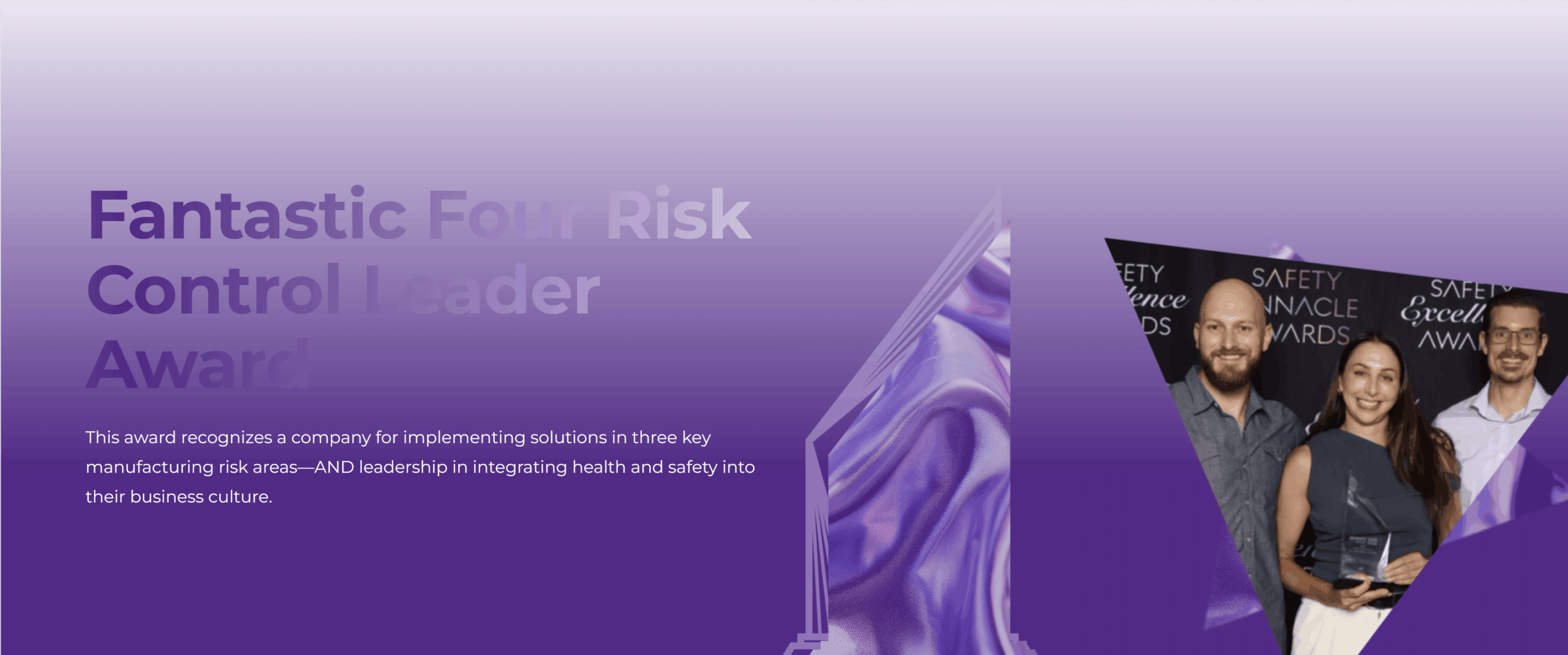
Fantastic Four Risk Control Leader AwardFantastic Four Risk Control Leader Award This award recognizes a company for implementing solutions in three key manufacturing risk areas—AND leadership in integrating health and safety into their business culture. Submit a Nomination Now Award Requirements & Guidelines Eligibility Awarded to any MSABC member* or OSSE certified organization. Criteria This award recognizes a company for implementing leading solutions in three key manufacturing risk areas—AND leadership in integrating health and safety into their business culture. Nominations Employee nominations are accepted and encouraged. Nominators are encouraged to submit supporting materials or video—including the company’s Employer Report from WorkSafeBC with data for at least one year and preferably the past three. Nomination Process Submit a Nomination Nominate a MSABC member* or OSSE certified organization you would like to see recognized. Additional Information Nominations must include examples of how the company’s solutions and demonstration of leadership. We will reach out to you with a short questionnaire. Review & Selection All nominations will be reviewed and a short list of finalists determined. Judges may interview finalists to determine a winner. Start Your Nomination Past Award Winners & Finalists 2026 Fantastic Four Risk Control Leader Award Winner Award Finalists 2025 Fantastic Four Risk Control Leader Award Winner Award Finalists 2024 Fantastic Four Risk Control Leader Award Winner Award Finalists 2023 Fantastic Four Risk Control Leader Award Winner Award Finalists 2022 Fantastic Four Risk Control Leader Award Winner Award Finalists 2021 Fantastic Four Risk Control Leader Award Winner Award Finalists Who would you like to nominate?
Committee nominations formBoard Member Profile and Application The Manufacturing Safety Alliance of BC is seeking new members to join its volunteer Board of Directors for a two-year term beginning in May 2027. Jump to Application Form Profile  About the Role The Manufacturing Safety Alliance of BC (the Alliance) recruits passionate and dedicated individuals to volunteer their time to serve on the Board of Directors. We are catalysts for improving workplace health and safety within the BC manufacturing industry. Our leading-edge health and safety programs, services, and training equip companies to make a difference in the lives of their employees – every day. As the industry-funded, not-for-profit health and safety association for BC manufacturers and food processors, the Alliance provides training and advisory support to more than 3,000 businesses each year. Alliance services help employers build systems to keep workers healthy and safe. The Alliance is currently seeking three Board Directors to provide strategic leadership. We evaluate candidates based on the knowledge, skills and experience they bring to the Board. In our commitment to reflecting community diversity on our Board, we encourage applicants from equity-deserving groups to apply (including Indigenous persons, people of colour, persons with disabilities, persons of minority sexual orientations, gender identities, and others.)  We are looking for senior executive management candidates with board governance experience and credentials: Senior manufacturing leader in finance or operations   Direct manufacturing experience 10+ years in a senior capacity   Position Summary Working collaboratively with the CEO, the Board of Directors is responsible for setting the strategic direction and providing fiduciary oversight and accountability for performance in achieving the vision and mission of the organization. Expectations  The Alliance evaluates candidates based on the knowledge, skills, and experience they bring to the Board. In our commitment to reflecting community diversity on our Board, we encourage applicants from equity-deserving groups to apply (including Indigenous persons, people of colour, persons with disabilities, of minority sexual orientations, gender identities, and others).  The general responsibilities of a Board Member include:  Continued commitment to improve health and safety for Alliance member organizations;  Attendance and active engagement at Board meetings (typically every second month);  Coming prepared, including reading minutes, agenda, and CEO and committee reports, to discuss issues and vote on motions at board meetings;  Being an active participant in the organization’s strategic planning process;   Providing input to board committee work in areas of governance, leadership, strategic planning, legal, HR, communications, government, finance, or risk management;  Ensuring the financial health, effective leadership and health and safety compliance of the organization;  Building relationships and networks with stakeholders;  Participating in an annual evaluation process to enhance Board performance;  Supporting efforts to increase the profile of the Alliance in the manufacturing industry in BC;  Identifying and disclosing real or perceived conflicts of interest;  Contributing to a collegial environment that works towards consensus; and  Exhibiting a solutions-focused attitude based on collaboration, dedication, and inclusion.  Skills and Experience Ability to contribute to setting strategic direction and determining long terms goals for the organization;  Experience in monitoring and/or improving organizational performance;  Demonstrated ability to assess, manage, and mitigate risk;  Adept strategic thinker who brings an analytical mindset to decision making;  Connected in business and community through personal and/or professional networks;  Possessing leadership qualities including energy, optimism, insightfulness, team-orientation, and focus on outcomes; and  Previous Board experience is essential.  Applications If you share our passion for partnering to ensure BC workers go home safe and well to their families and our vision for supporting a sustainable manufacturing sector through ethical people practices, we want to hear from you. To express interest, please apply online (below) before 5 PM on February 25, 2026. Additional intake rounds may follow. Application Form
Home | Manufacturing Safety Alliance of BC – Expert Health and Safety SupportHealth and safety training and support for B.C. business BC small businesses have a 29% higher risk of serious workplace injuries. Consider the impact. Take steps to keep your people safe. SIGN UP FOR FREE SAFETY TRAINING Your health and safety advisors. The Manufacturing Safety Alliance of BC is the not-for-profit health and safety association for British Columbia’s manufacturing and food processing sector.  Call us today to schedule safety training for your safety rep/ committee or supervisors. Ask a safety advisor for confidential support with regulatory compliance or your safety management program. Request a specialized assessment or safety consulting. Get in touch Membership for expert advice and training. The industry-driven Manufacturing Safety Alliance offers health and safety advice and training for more than 3,000 British Columbia manufacturers and food processors with services and training, in 47 industries—from foundries to wineries, trailer manufacturers to meat processing plants. Members have access to a team of health and safety advisors and experts on call. We can help you ensure compliance. Build your health and safety knowledge. Strengthen your safety culture. You may already be eligible for member benefits | Find out  Explore the benefits of membership Become a member Safety advisors and experts on call. A safety needs assessment is an onsite review of your health and safety program by a professional safety advisor. It’s a free service for Alliance members. Get help with a plan to build or improve your workplace health and safety management system. We can also support your safety team with specialized training and assessments—for ergonomics, air, noise, machine safeguarding, industrial storage racking, confined spaces, and combustible dust. Beyond physical safety, call us for leadership coaching and psychological safety training. Schedule a Needs Analysis Safety Program Support Specialized Safety Assessments and Consulting View all safety services The Alliance has been an incredible resource for us over the past year. With the help of [our advisor], our program has flourished in so many ways. I look forward to years of collaboration with the Alliance. — Member Survey — Read more testimonials Health and safety training. Training is critical to maintain a safe workplace. We can help you with the training you need—in the classroom or online.  Joint Health & Safety Committee Certificate Training  (eLearning) Self-paced eLearning Courses Virtual Safety Classes View all training Safety resources and templates. We have a series of free resources in online and printable formats to help you build your health and safety management system.  12 Months of Safety – Topics, crew talks, and resources Health and Safety Webinars Toolbox talks View all resources Specialized safety services and training. Qualified safety consultants for assessments, coaching, and specialized training. Industrial hygiene services Air quality assessments and fit testing Noise surveys and testing Combustible dust hazard assessments Other specialized safety services Confined space risk assessments and training Ergonomics and human factors–Industrial and office Industrial storage racking safety training Machine safeguarding Leadership and psychological safety services Workplace mental health and wellness consulting Leadership training and coaching Respectful workplace training and coaching View all specialized services COR certification to the Occupational Safety Standard of Excellence (OSSE). The Occupational Safety Standard of Excellence (OSSE, or COR for manufacturing) is BC’s solution for manufacturers and food processors who are ready to build and certify a comprehensive health and safety management system. Your WorkSafeBC Certifying Partner, the Manufacturing Safety Alliance of BC can help you achieve significant financial rewards. OSSE certified companies consistently out-perform their peers—with 21% fewer injuries than the sector average. Register now to get started! Steps to OSSE (COR) certification Call us when you are ready to Make it Safe Contact Us
Media KitManufacturing Safety Alliance of BC Media Kit 2026 Make It Safe Youth Challenge Media Release Photos Emerson Wang receives $2,500 cheque for first place at the 2026 Make It Safe Youth Challenge. (Left to Right: Emerson Wang, Robin Schooley (WorkSafeBC), Shirley Wilson (Abbotsford School District Board Chair), Aakash Rao (NGen), Wayne Arondus (MSABC), Kim Cooper (Youth Culture Inc.) Manufacturing Safety Alliance of BC CEO Wayne Arondus gifting the $2,000 earmarked for David Thompson Secondary School to Emerson Wang for his project. (Left to Right: Wayne Arondus (MSABC), Emerson Wang, and Emerson’s mother, June Liang); Photo credit: Emily Hui David Thompson Secondary School’s Science Club. Photo credit: Emily Hui Manufacturing Safety Alliance of BC CEO Wayne Arondus presenting a cheque to Prince of Wales Secondary. (Left to Right: Wayne Arondus (CEO), Andrew Leong (Prince of Wales), Wailea Lu, Lena Sivucha, Sangeeta Kauldher (Prince of Wales))
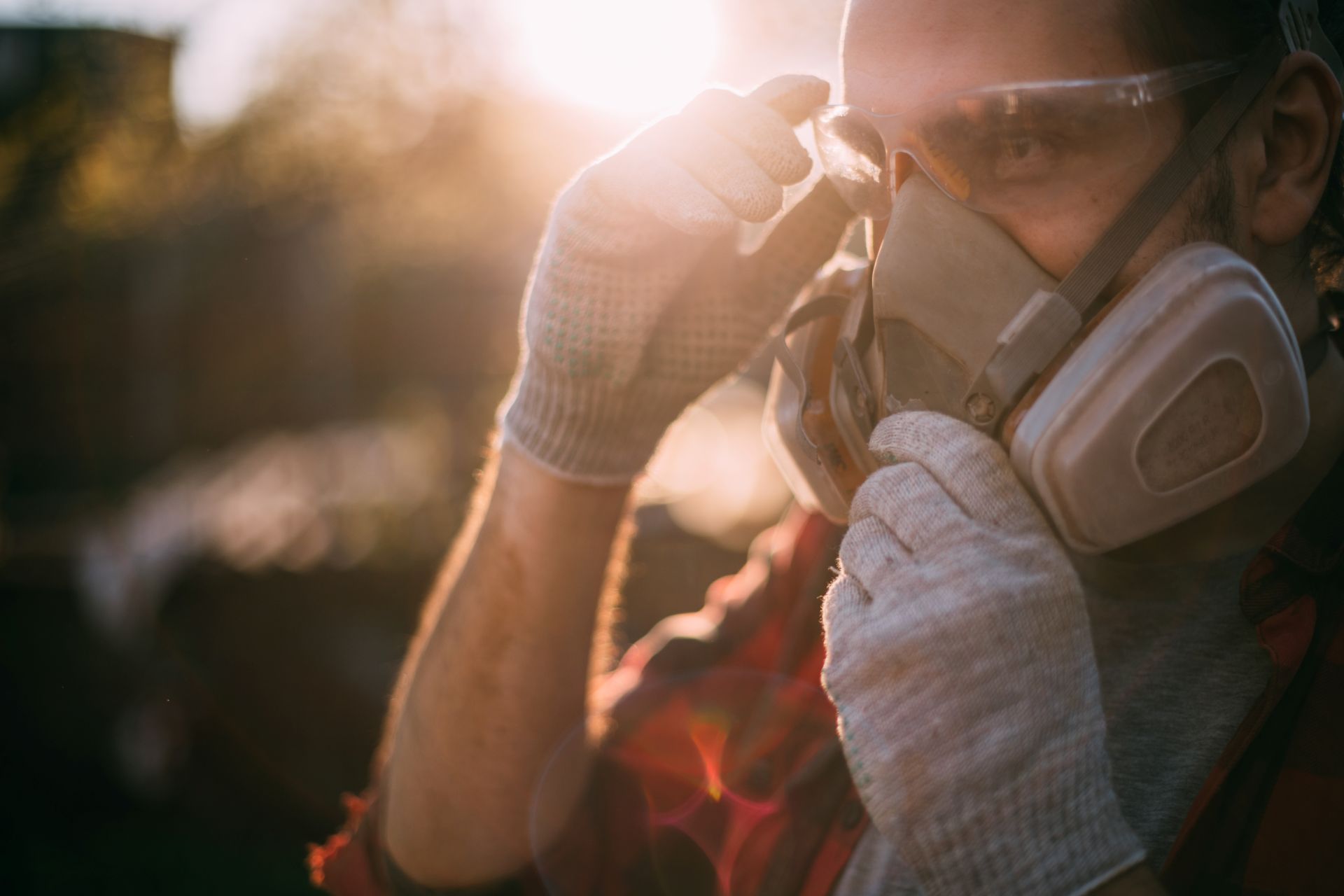
Respirator Face Seal Amendments Now in EffectPart 8 of the Occupational Health and Safety Regulation related to respirator face seals has been amended, effective November 6, 2026, to clarify existing requirements and use consistent terminology for tight-fitting respirators. The amendments do not change existing health and safety requirements for using these respirators. What is Changed in the Regulation The amended Regulation uses the term “tight-fitting respirator” for a respirator that needs an effective seal with the face to work properly. It also clarifies that nothing can interfere with the seal or proper functioning of a tight-fitting respirator. What this means for employers Protection from respiratory hazards starts with assessing the exposure and applying the hierarchy of controls. Employers should consider more effective controls before relying on respiratory protection. Where respirators are used as a control, employers must continue to: Choose an appropriate respirator for the worker, the task, and the circumstances Ensure workers receive fit testing before using a tight-fitting respirator, at least annually, and whenever changes could affect fit Ensure workers perform a user seal check before each use Prevent anything from interfering with the seal or proper functioning of a tight-fitting respirator Consult with respirator users before issuing a respirator and consider medical conditions or other limitations that may affect safe selection and use In practice, this means that the employer must implement and enforce procedures that help maintain an effective respirator seal, ensuring that workers: Keep hair, jewellery, clothing, personal items, personal protective equipment, and anything else from interfering with the seal or proper functioning of the respirator.  Reassess the risk if there are significant weight changes, dental work, or facial injury, as a new fit test may be needed.  Wear and adjust the respirator in the same manner as during fit testing. Examples of appropriate procedures include: User seal checks before each use. Workers using tight-fitting respirators must perform a positive- or negative-pressure user seal check before each use, as required by section 8.41 of the Regulation.  Inspection procedures. Employers must have processes to ensure respirators are inspected before use.  Supervision and monitoring. Supervisors must verify that workers are wearing respirators correctly, following established procedures, and maintaining seal conditions while performing their work.  Maintaining fit-test conditions. Employers must ensure that the conditions that allowed the respirator to pass the fit test are maintained. What this means for workers What this means for workers Workers who use tight-fitting respirators will continue to have the same responsibilities under the Regulation. Workers must continue to: Participate in fit testing as required Perform user seal checks before each use Use respiratory protection as instructed Tell their employer if a change or condition may affect the seal or proper functioning of the respirator Additional Regulatory Information New OHS guideline G8.39: Effective seal for tight-fitting respirators This guideline gives workplaces more detailed information about effective seals for tight-fitting respirators and helps them understand the requirements.  Regulatory Links OHS guideline G8.39: Effective seal for tight-fitting respirators OHS Regulation Part 8: Face seal OHS guideline G8.33-1: Respiratory protection — selection OHS guideline G8.33(2)-1: Approved respirators OHS guideline G8.39: Effective seal for tight-fitting respirators Board of Directors decision: Part 8, face seals Strikethrough version of the approved amendment More Information Air Quality Assessments For Respirator Fit Testing, contact Services Air Quality Resources and Training Respiratory Protection Resources and Training WorkSafeBC Respiratory Protection Resources
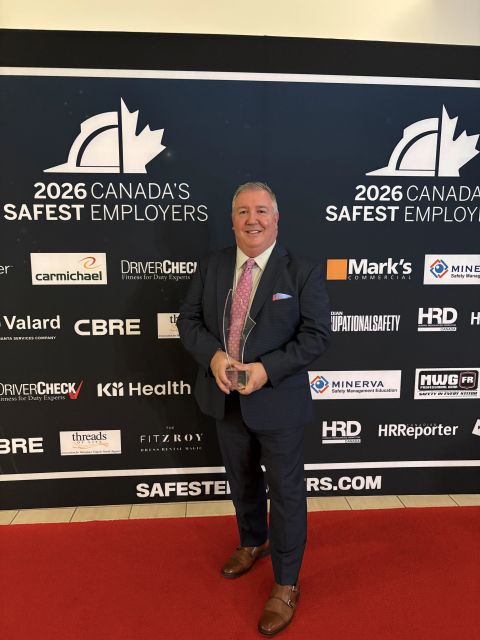
Canada’s Safest Employers Awards Names Wayne Arondus CEO of the YearAt the 2026 Canada’s Safest Employer Awards in Toronto, Manufacturing Safety Alliance of BC CEO Wayne Arondus was honoured as CEO of the year for his dedication leadership and commitment to the vision of safer workplaces across British Columbia and beyond. “Shocked, but truly honoured. It’s fantastic,” Arondus said, in an interview with Canadian Occupational Safety, “crediting a three-year push by his team to ‘make BC the safest place to live, work, and play.’ “We support all the food and beverage manufacturers in the province of BC, and it was crazy, but we just stayed focused on helping industry,” Arondus said. “This is a nice capstone to that work we’ve done.” The Workplace Safety and Prevention Services Award for CEO of the Year recognizes a CEO who drives successful safety strategies from the top by putting people first and championing innovative safety values. The Manufacturing Safety Alliance of BC is a not-for-profit that supports more than 3,000 member manufacturing and food processing businesses across B.C. The Alliance supports manufacturers with safety guidance, training, and specialized support. “Our manufacturing sector is facing headwinds,” Arondus says. “We are here to help them protect the health and safety of their people even in the most challenging environments,” he explains. “I’m incredibly proud of the work we’re doing together,” he adds, “That we’re seeing more companies come to us for help, and coming back again, is a sign that our support is making an impact.” Under Arondus’ leadership, the organization’s Make It Safe event and webinar series has expanded to educate and connect thousands in Vancouver Island, the Okanagan, northern B.C., the south coast—and outside the province via industry partnerships and the country’s largest virtual safety conference, Make It Safe Canada: Online. After a long career in senior manufacturing leadership role, giving back is a consistent tenet for Arondus—helping bridge the gap between what schools teach and what industry needs as an instructor at BCIT’s School of Business for 20 years, serving as Vice Chair on the Advisory Board for the BC & Yukon Chapter of Make-A-Wish-Canada, and as a past president of the CMHA, Vancouver-Fraser Board of Directors. Arondus is an alumnus of the 8th Governor General’s Leadership Conference of Canada.The finalist list for the 2026 CEO of the Year was deep, with 12 finalist awardees considered for the award: Derek Kelleher – Flanagan Foodservice Don Cooper – Innovator Industrial Services Jon DiMascio – QM LP Ken Robuck – EnergySolutions Canada Marc Breault – Paradox Access Solutions Matthew Bryan – SLB Canada Ltd. Mercy Lawluvi – Immigrant Women Services Ottawa Neil Waugh – NPL Canada Tim Hollander – Toyota Motor Manufacturing Canada Inc Wayne Arondus – Manufacturing Safety Alliance of BC Yves Tremblay – Pronghorn Controls
Make It Safe Vancouver 2026 ResourcesMake It Safe Vancouver 2026 Resources Thank you for attending Make It Safe Vancouver this October. You will be able to find presenter slides, supplementary resources, and links shared for each session by day and then session name. Click on the day and morning or afternoon to see the sessions that were being delivered during that period. If you require any assistance or have any questions, please feel free to reach out to makeitsafe@safetyalliancebc.ca. Day 1 | Oct 7 | Morning Sessions Opening Keynote | The Future of Global Health and Safety: Towards a Paradigm Shift in Prevention Presentation  Panel | Combustible Dust Expert Panel No presentation Panel | Seeing Risk Sooner: Leveraging AI in Safety and Controlling the Risk Presentation  JHSCs That Learn Presentation  Engage to Excel: Culture, Certification, and Sustaining Progress Presentation  Beyond Lagging Indicators: Preventing Serious Injuries by Focusing on What Matters Presentation  Investigation to Corrective Action—Lessons Learned in the Committee Trenches Presentation  The Implementation Gap: Integrating Safety with Efficient Operations Presentation  Case Study: JHSC-Shop Floor Collaboration to Improve Safety Outcomes Presentation  Youth Challenge | Lightning Talk: Second Savour Presentation  Youth Challenge | Lightning Talk: Earth Daily Presentation Coming Soon Youth Challenge | WorkSafeBC Student Safety Video Showcase Presentation  WorkSafeBC Student Videos on YouTube 2026 WorkSafeBC / CCOHS Student Video Winner – The Book of WorkSafe Wisdom Day 1 | Oct 7 | Afternoon Sessions Keynote | AI & Risk Perception in High-Risk Environments No presentation available The Practice of Safety: What School Can’t Teach No presentation available Challenging Claim Costs: A Practical Guide to Protests, Appeals and ROC Presentation  Business Continuity in Action: Working Through Real-World Crisis Scenarios Presentation  Video #1 Video #2 Video #3 Look Again: A Learning Lens for Better Investigations Presentation  Industry Keynote | Future Ready? or Falling Behind? No presentation available Day 2 | Oct 8 | All Sessions Keynote | Safety: Obligation or Opportunity? No presentation available Workshop | Full Day | Safety Coaching using the GROW Model Presentation  Workshop | Full Day | Real Time Risk in the Age of AI Resources  Women in Safety Forum | Full Day Keynote | Unapologetic Leadership: How Women Lead on Their Own Terms Women’s Health & Safety in the Workplace + Q&A (No presentation available) Workshop | Morning | When Pressure Has No Language, Risk Grows No presentation available Workshop | Afternoon | Emergency! Are You Prepared? Link to Safety Learning Centre (Health & Safety Training) Opening Keynote | The Future of Global Health and Safety: Towards a Paradigm Shift in Prevention Presentation  Panel | Combustible Dust Expert Panel No presentation Panel | Seeing Risk Sooner: Leveraging AI in Safety and Controlling the Risk Presentation  JHSCs That Learn Presentation  Engage to Excel: Culture, Certification, and Sustaining Progress Presentation  Beyond Lagging Indicators: Preventing Serious Injuries by Focusing on What Matters Presentation  Investigation to Corrective Action—Lessons Learned in the Committee Trenches Presentation  The Implementation Gap: Integrating Safety with Efficient Operations Presentation  Case Study: JHSC-Shop Floor Collaboration to Improve Safety Outcomes Presentation  Youth Challenge | Lightning Talk: Second Savour Presentation  Youth Challenge | Lightning Talk: Earth Daily Presentation Coming Soon Youth Challenge | WorkSafeBC Student Safety Video Showcase Presentation  WorkSafeBC Student Videos on YouTube 2026 WorkSafeBC / CCOHS Student Video Winner – The Book of WorkSafe Wisdom Keynote | AI & Risk Perception in High-Risk Environments No presentation available The Practice of Safety: What School Can’t Teach No presentation available Challenging Claim Costs: A Practical Guide to Protests, Appeals and ROC Presentation  Business Continuity in Action: Working Through Real-World Crisis Scenarios Presentation  Video #1 Video #2 Video #3 Look Again: A Learning Lens for Better Investigations Presentation  Industry Keynote | Future Ready? or Falling Behind? No presentation available Keynote | Safety: Obligation or Opportunity? No presentation available Workshop | Full Day | Safety Coaching using the GROW Model Presentation  Workshop | Full Day | Real Time Risk in the Age of AI Resources  Women in Safety Forum | Full Day Keynote | Unapologetic Leadership: How Women Lead on Their Own Terms Women’s Health & Safety in the Workplace + Q&A (No presentation available) Workshop | Morning | When Pressure Has No Language, Risk Grows No presentation available Workshop | Afternoon | Emergency! Are You Prepared? Link to Safety Learning Centre (Health & Safety Training)
The Dust You Don’t Always See: Why Maintenance Decides Whether Your Dust Collection Systems WorksA well-designed dust collection system is only as good as the way it is used and maintained. Most of the risk sits in places nobody looks: inside the ductwork, inside tool cabinets, and above the ceiling. Our recent dust webinar covered how combustible dust hazards are identified and how collection systems are designed to control them. The question that came up again and again was what happens after handover. That is where this article picks up. No dust collector is 100% effective. Every system is the product of three things: design, operation, and maintenance. Get the design right and neglect the other two, and the system will drift away from what it was built to do, often without anyone noticing until something fails. Good Collection reduces housekeeping. It does not replace it. A properly designed system captures dust at the source and carries it to the collector. That cuts the amount of dust that settles in the facility. It does not eliminate it. The dust that escapes capture settles on beams, ledges, cabinets, and ceiling spaces. The dust that drops out inside the ductwork builds up where nobody can see it. Both are fuel. In a combustible dust environment, accumulated dust is what turns a small event into a serious one. That is why maintenance and housekeeping belong in the same conversation as design. A system delivered to NFPA-referenced design intent on day one can fall well short of it a year later if changes are made without consideration of the effects on the rest of the system. What we find in the field These are the conditions our team sees most often during site visits. None of them are design failures. All of them are maintenance and operating failures, and all of them are preventable. Dust settling inside the ductwork. A collection system is balanced to keep dust moving at the right velocity through every branch. When users adjust blast gates, or add and remove pickup points, that balance is lost. Air velocity drops in parts of the system, and dust falls out of the airstream and builds up inside the duct. Photo: Dust and debris settled inside branch ducts where air velocity has dropped. Blast gates used the wrong way. Blast gates are there to balance the airflow to design conditions at all pickup points. When they are used to isolate branches that are not in use, material can build up in the duct that plugs the system and prevents capture when that tool is used. Photo: Opening a branch duct for inspection and cleaning. Machines not connected. We regularly find ductwork run right to a machine that is simply not hooked up. The pickup exists on the drawing. It does not exist in practice. Photo: Duct run in place, machine not connected. Dust building up inside tool cabinets. Machine enclosures and cabinets collect fine dust over time. It is out of sight, close to motors and moving parts, and rarely on anyone’s cleaning list. Photo: Dust accumulated inside tool cabinets and machine enclosures. Dust around tools and above suspended ceilings. Fugitive dust settles on every horizontal surface. Above a suspended ceiling, it can build for years without anyone seeing it. Photo: Dust around tools and pickups, and above a suspended ceiling. Plugged or torn filter bags. A plugged bag chokes airflow for the whole system. A torn bag sends dust straight through the collector. Either one means the collector is no longer doing its job. Photo: Collector inspection: dust-loaded filter bags. Damaged or blocked ductwork. Broken or ineffective hoods, duct plugged with foreign objects, and damage patched with tape rather than properly repaired. Each one reduces capture at the source. Photo: Ductwork inspection: a damaged hood, a foreign object in the duct, and a taped repair. The discipline that prevents it Manage change. Treat any change to pickup points, machines, or blast gate settings as a change to the system. Have it reviewed before it is made, not after. Inspect and clean the ductwork periodically. Open cleanouts, check for buildup, and remove it before it becomes a hazard. Inspect the collector. Check bags for plugging and tears, and replace them before performance drops. Inspect hoods and duct connections. Confirm every machine is connected, every hood is intact, and every repair is a proper one. Build hidden areas into housekeeping. Tool cabinets, ledges, beams, and ceiling spaces belong on the schedule. Just because the floor is clean, doesn’t mean the facility is. Where projects struggle The pattern behind these findings is rarely neglect. It is drift. No owner after handover. The system is commissioned, the project team moves on, and nobody is named as responsible for how it runs. Small changes add up. A new machine here, a moved pickup there, a gate left half open. Each change looks harmless. Together they rebalance the system in ways nobody designed. Inspection only happens when something breaks. By the time airflow drops enough to notice, dust has usually been building in the ductwork for some time. Housekeeping stops at what is visible. Floors get swept. Cabinets, beams, and ceiling spaces do not. Maintenance is part of the system, not an afterthought At AIRPLUS, we treat maintenance as a stage of the system lifecycle, not a separate service bolted on after the fact. Our 4P approach is the operational expression of our ISO 9001:2015 quality system: prepare. prevent. protect. perform prepare. Align goals, hazards, risks, and constraints with outcomes. prevent. Address risk through technologies that align with industry standards. protect. Safeguard people, assets, and the environment with systems built for critical duty. perform. Operate, maintain, and optimize over the lifecycle to protect uptime. For dust collection, that means deciding at the prepare stage who owns the system after handover and how changes will be managed. It means designing to NFPA-referenced design intent. And it means building inspection, duct cleaning, and filter replacement into the plan from the start, rather than waiting for a failure to prompt them. The last P

Safety Leadership: Investing in safetyThe case for continual workplace improvement At 19, I worked in a grain elevator in southern British Columbia. It was one of my first jobs, and keen to make a good impression, I took the tasks seriously. As a young worker, I was hesitant to ask questions. One day, my manager called me over, along with another young worker, and handed each of us a snow shovel and a paper dust mask. “Go to the basement and fill the grain leg with the mounds of grain, until the room is cleared,” he said, and off we went. I look back today and think about all the things that could have gone wrong. It was like working on a skating rink. We had only one radio, and the dust hazard was very high, with the potential for a multitude of injuries. Today, we work to improve workplace safety through education. We have learned more and know more. Since then, our understanding of workplace hazards has advanced significantly. Technology has advanced, and more safety regulations are in place. However, as I speak with our manufacturing members, many of those same hazards still exist, and changes to operations and machinery have introduced new risks. Safety is about staying curious In 2012, two dust-fuelled explosions hit sawmills in British Columbia’s northern Interior months apart. The community was shocked, the sawmill industry changed overnight, and WorkSafeBC rushed to investigate. What’s one thing those businesses could have done differently? By asking questions and talking to employees about the conditions and environments in which they worked, those companies might have been able to adapt and implement new housekeeping standards to reduce the risk. Our employees, the ones doing the work day-to-day, are often the first to notice when things are wrong. Workers should be the first to challenge us on established practices and existing processes, especially when they no longer serve the goals and intentions within a workplace. A new regulatory environment with the same challenges British Columbia is approaching new dust hazard regulations that will take effect in January 2027. Will these help make workplaces safer? Absolutely. But for owners and leaders of manufacturing facilities, their duty is to streamline production while protecting their teams. Meeting regulatory requirements is only the start. Many businesses maintain compliance. They have fulfilled their legal duty to protect their employees. However, as the world evolves around us, with new technological advances, changing expectations and shifting working conditions, the bar is rising. Equipment that was state-of-the-art 30 to 50 years ago may now be on the verge of retirement. Regulatory compliance does not always reflect changes that impact the work environment. It’s therefore critical to invest in learning. This may mean learning from our successes and failures as we audit our safety management system. We can no longer leave risk assessments and safe work procedures in a binder on the shelf. Through continuous improvement, we need to review and update our systems annually as our businesses change and evolve. Or it may mean learning new models, such as employing a system like 5S to reduce slips, trips and falls. We improve by encouraging the people we lead to ask questions, equipping them to find solutions and adapt, and building a practice of ongoing improvement. “Our employees, the ones doing the work day-to-day, are often the first to notice when things are wrong.” Wayne Arondus Building the culture We can learn from one another in the search for effective strategies to address risk. Ongoing workplace safety exists not only by meeting standards but also through continual improvement and the nurturing of a strong culture of safety. It is easy to fall into patterns of doing things the way they have always been done, but the result can be outdated procedures and practices. Instead, we need to build a system to regularly evaluate policies. We should also solicit feedback from frontline workers. Through review and consultation, we identify new solutions, resources and innovations to keep our businesses nimble, responsive and safe. Continuous improvement goes beyond operational improvements. It starts with equipping our teams with the skills and resources to adapt to a world that is changing rapidly around us. As the demographics and cultural landscape of our businesses shift, we need to lead with clear communication and intentional connection with our people to keep everyone safe. Investing in your team The impact of health and safety is significant. Injuries and incidents not only cause work to stop, but when someone is injured on the job, they strain your remaining team’s capacity and incur replacement and retraining costs. International ORP Foundation President Hans-Horst Konkolewsky notes that health and safety is more than a social or moral concern for business. “Bad working conditions cost firms money,” he says. “Health and safety pays; it really is an investment.” Part of that investment may be in professional development, including targeted technical training and future-focused development through conferences such as the CCOHS Forum or Make It Safe Canada Online. Another key investment is time. By getting to know your team authentically and addressing their concerns, you strengthen your culture, your risk awareness and your ability to adapt. By investing in an ongoing review process, you equip your people and your business to pivot, thereby building resilience to manage future challenges. Together, these actions help you take steps beyond regulatory compliance: strengthening awareness and a safety culture by building a sustainable practice of continual improvement. Editor’s Note: This article by Alliance CEO Wayne Arondus was originally published in OHS Canada October 13, 2026.