Blog

Behavioural-based safety | Part 4: Safety Culture

by Pourya Ghani The previous articles in this series outlined how to develop a behavioural-based safety program and ways to use tools such as observation and feedback to establish safe behaviours. But before designing your behavioural-based safety program, don’t forget to consider the importance of a safety culture with shared values. We need to establish these patterns of safe behaviours to have a thriving safety culture. What is a Safety Culture? “The safety culture of an organization is the product of values, attitudes, perceptions, competencies, and patterns of behaviour that determine the commitment to, and the style and proficiency of, an organization’s health and safety management. Organizations with a positive safety culture are characterized by communications founded on mutual trust, by shared perceptions of the importance of safety and by confidence in the efficacy of preventive measures.”[1] Of course, your organizational values must align with the fundamentals of safety; that is the first step in building a healthy safety culture. Then we must create a conviction to work safely to gradually win people’s hearts and minds. The strength of your safety culture heavily influences employees’ beliefs and attitudes towards safety. Without a strong safety culture, there will be very little participation in safety initiatives—eventually leading to unreported incidents or near-misses, which in time can cause a serious injury. To prevent this, a clear leadership commitment to safety as the number one priority reinforces the need to immediately report unsafe acts or conditions and the belief that reporting a problem will lead to a solution. The leadership commitment is proven to affect employees’ perception, belief and attitudes only when followed and reinforced by management and senior leadership. If just one “critical” corrective action is left incomplete for too long, or a manager ignores someone behaving unsafely, employees quickly lose faith that the company is serious about safety. In turn, this demotivates employees to comply with safety rules since management doesn’t “walk the talk.” So, if we know that management’s behaviour can vastly impact employees’ perceptions, attitudes, and beliefs, then which safety culture model has behavioural safety as its core pillar? Cooper’s Reciprocal Safety Culture Model One of the prevailing safety culture models of the 21st century is Cooper’s (2000) Reciprocal Safety Culture. This model shows the reciprocal relationship between employees’ perceptions and attitudes towards safety goals and day-to-day directed safety behaviours. Building on his Reciprocal Safety Culture Model, by adding Business Process Model (Cooper 2002), Cooper shows safety culture as a product-driven by a process. He shows the psychological, behavioural, and situational aspects as inputs into the safety culture, influenced by organizational goals, expectations, and management practices to output the prevailing safety culture. See the image below for a visual representation of this model. Cooper (2002): Business Process Model Safety Culture Cooper’s definition of safety culture focuses on proactively setting safety goals and actively finding ways to influence employees’ behaviours towards safety positively. On many levels, Cooper’s Model shows safety culture as: Focused explicitly on routine activities to improve safety, and A variable that can be frequently and regularly tracked over time (i.e. assessing the effort that people put into improving safety) Large-scale studies on accident prevention support the reciprocal safety culture model (Lund & Aaro, 2004). It shows that it provides a viable, practical approach for organizations to improve safety culture and performance to optimize accident prevention. The impact on accident prevention is substantial when both managers’ and workers’ behaviours are addressed simultaneously (Cooper 2006a, 2006b; 2010). The American National Standards Institute (ANSI) has formally adopted this exact approach as a standard. [1] ACSNI Human Factors Study Group: Third report – Organising for safety HSE Books 1993

Read More »

Behaviour-based safety, part three | Your behaviour-based safety program

by Pourya Ghani, OH&S Technical Advisor In part two of this series, we discussed the importance of recognizing Keystone Habits at your workplace in transforming unsafe routines into safer habits. While habits reinforce certain behaviours, they are only part of a comprehensive program to eliminate dangerous behaviours at the workplace. An effective behavioural-based safety program supports the overall safety culture in your organization. The traditional approach of total safety culture is a top-down approach. Rarely defined in most organizations, in this approach: Individuals hold safety as a value and not just a priority; Individuals take responsibility for the safety of their co-workers in addition to themselves; and All employees are willing and able to act on their sense of responsibility, going beyond the call of duty (Perdue, 2000).[1] Based on this idea, there’s a simple, causal relationship between culture on practices and outcomes. The idea is that safety culture is the antecedent – the thing that comes first – regulating the safety practices and driving the safety outcomes that follow. Unfortunately, when a positive result such as ‘zero Injury’ is set as a target from the top without an active attempt to change behaviours, employees continue performing routine tasks without timely feedback—and eventually, that leads to a serious injury. To implement an effective behaviour-based safety program into the organizational culture, we need to be proactive and not reactive. Proactive safety measures reduce the likelihood of an incident. When we are proactive, we anticipate accidents, are prepared, minimize response times, reduce the number of injuries that occur in the workplace, and as a result, reduce the number of worker’s compensation claims.[2] If and when an organization decides to implement a behaviour-based safety program, it has to be through a proactive, collaborative approach with a common aim to standardize safe behaviours. You can use the following steps to develop your program: Form a design team The most effective way to run a behaviour-based safety program is to start with a design team. The team should consist of management and frontline employees, and each member of the team should have heard about behaviour-based safety and volunteered to be on the team. This team will design the behaviour-based safety system, but all employees will be involved in the implementation. Choose target behaviours from safety incidents, near-miss reporting, safety audits, and observation First, the design team chooses targeted areas/ tasks. The team makes decisions on areas needing improvement based on existing safety data: results of safety audits, information from safety meetings, and informal interviews with staff (from the past five years if possible). The team determines what would have prevented the reported injuries; if not immediately apparent, the team discusses how increased situation awareness might have affected the situation. This analysis will identify critical safe behaviours for an observation checklist. Develop a critical checklist Building a checklist based on the list of safe behaviours identified in step 2. Narrow down the list based on the importance of safety, frequency, observability, and overlap with other items. The resulting list should be no more than one sheet of paper (one side). Include definitions for everything you will measure on the back of the checklist. Try not to leave anything up to interpretation. The best way to know if the checklist is useable is to observe an employee working and see if they can fill out all categories on the list during an observation. The list may need to be revised several times before it is ready to use. Ensure that you have a measurement system The measurement system for an observation program is a simple frequency count of safe and risky behaviours during an observation. Note of caution: the act of measuring is an antecedent, and we need a consequence in place to reinforce the behaviour under measurement. When a leader uses a measurement effectively, they can create an environment where people want to be measured. This can happen when positive consequences are delivered based on the observed behaviour change through measurement. When employees receive specific, positive feedback about the results, they will see a benefit, aim higher, and want to be measured. Behavioural observations are carried out Consider who will conduct the observations. The most beneficial approach is to involve all employees in the observation process. Behavioural observations increase safe behaviours not only by those observed but also by the observer. Encouraging employees to observe each other will benefit everyone. The team and all employees will need to decide how often you conduct observations. Will they occur across or within departments? Will you observe a single task/employee or a work area? Will you include contractors? If so, try to recruit them at the design phase. Deliver feedback The process requires careful training of employees. The observer should summarize the significant positive safety behaviours observed and then one or two areas requiring change. The feedback should be delivered as soon as possible after the observation (unless this poses a risk). Describe the behaviour observed, discuss the potential impact, and listen to the observed employee. Use this same formula for both positive and corrective feedback.In addition to individual feedback by the observer, the leader should discuss the results of the observations (categorically, not personally) at safety meetings while also providing visual feedback. The easiest and most effective way to do this is by creating a graph. Visual feedback helps us see how we are doing and set goals. Leaders should respond with positive feedback about any improvements and not react negatively to low numbers on graphs. Instead, use those low numbers to encourage objective problem-solving. Make use of the data You now have valuable data that you can use to guide process changes. Build a review of the data into existing meetings and inform all staff of any changes made based on the data. Make sure they know it was because of their contribution (as a group—avoid recording names). Set improvement goals Encourage employees to participate, and set realistic goals based on the current data. Set short-term

Read More »

Behaviour-Based Safety – Part 2 | Habits

Previously, we ended on how BBS combined with management’s commitment and direction can gain safety buy-ins throughout the organization. Without management support – especially senior management — the task of creating a new safety regime can be very difficult since a management’s biggest health and safety responsibility is to drive objectives and goals. It starts with a collaborative, systematic identification process that captures the most common safe behaviours and then standardizes them throughout the organization. Behaviour Based Safety works best when you take a systematic approach to capture data, examine the motivation behind the data, and harness it to increase desirable behaviours.1 However, most procedures ‘die out’ after a while; if not regularly kept up, they become less attractive and less effective, with no routine to reinforce the process. One way to ensure that workers perform safe procedures regularly is to make safe routines into habits. Habit Loop So, what are habits? Before we delve into habits, we need to know how they are formed. Charles Duhigg, an award-winning author of The power of habit: why we do what we do in life and business, believed that habits emerge because the brain is constantly looking for ways to save effort. The brain, when left to its own devices, will try to make almost any routine into a habit because habits allow our minds to ramp down more often.2 Although conserving mental effort is tricky because if our brains power down at the wrong moment, we might fail to notice something important, we can get seriously injured. Our brains are programmed to scan for specific triggers or cues to save effort and that tells the brain to go into rest or automatic mode. We can do two things with habits: ignore them or change and/or replace them. Ideally, changing unsafe habits is preferred because we form safer habits by creating habit loops. The brain’s dependence on automatic routines can be both beneficial and dangerous. In manufacturing, since most tasks are repetitive, habits can form quickly, without an in-depth analysis of the task. In most cases, it is left to each worker to assume safe routines to do their job. If tasks are not carefully observed and regularly analyzed, adopters may easily adopt bad habits that could eventually lead to serious injuries. Make Safety a Habit It takes a lot of effort to make safety habit changes in any organization. One easy way to create small wins in staff unsafe behaviours is to develop keystone habits. Charles Duhigg introduced this idea that “Typically, people who exercise, start eating better and become more productive at work. They smoke less and show more patience with colleagues and family. They use their credit cards less frequently and say they feel less stressed. Exercise is a keystone habit that triggers widespread change.” Some examples of keystone habits that you can implement in your workplace are safety, people, accountability, and organization. An easy way to implement keystone habits is to include them as a consistent part of each employee’s workday—it needs to be part of the daily routine, not something that is done only after an incident, after a safety meeting, or when being observed. Safe habits ensure that people do the right thing every time without thinking about it. 4 Charles Duhigg developed a four-step to change unsafe habits and replace them with safe habits. Identify a routine Experiment with rewards Experiment with Triggers Create a plan to change the unsafe routine. We start by asking what the triggers for unsafe behaviours are: location, time of day, emotional stress, mental states such as boredom, physical states such as fatigue, presence of others or action performed. Then we start by identifying the reward; is it temporary relief from stress, boredom, or fatigue. Is it a distraction, is it the satisfaction, or is it saving time? As you can see, many triggers and rewards could play a part in our habits, so we shouldn’t simply jump into a routine and try to break the habits cold turkey. It is crucial to observe triggers and rewards for weeks or months, note the three common reasons (rewards) that come into mind for that unsafe habit, and gradually eliminate the reward. A common belief is that it takes 21 days to form a new habit. Unfortunately, it is not that straightforward, and that statement is missing a few words. One study on changing habits found that it takes a minimum of 21 days to form a new habit. Subsequent research has confirmed that the 21-day mark is often a best-case scenario and that the median timeframe for habit formation is 66 days (Lally, van Jaarsveld, Potts, et al., 2010).[1] Once you establish the standard behaviour, it can take up to 66 cues, routines and rewards to formulate a habit. In 2002 researchers at New Mexico State University wanted to understand why people habitually exercise. In one group, 92 percent of people said they habitually exercised because it made them “feel good”—they grew to expect and crave the endorphins and other neurochemicals a workout provided. In another group, 67 percent of people said that working out gave them a sense of “accomplishment”—they had come to crave a regular sense of triumph from tracking their performances and that self-reward was enough to make the physical activity into a habit. In other words, other than financial rewards, employers must think of other rewards for employees to reinforce new habits or existing habits at the workplace. Here are some ways you can indirectly encourage safer habits: Recognition (verbal/written praise, birthdays, Employee Appreciation Day, work anniversaries, safety accomplishments, safety performance reviews) Involvement (include in decision making processes, voting, surveys, sharing responsibilities) Personal Development (Training, setting personal development goals) Continuous Improvement (Evaluation of reward systems, Safety goals & KPIs) The first rule in creating safe habits is to break the old ones and choose the desired safe behaviours we want. Suppose we wish to build a habit of stopping and dealing with potential hazards in the workplace before they become incidents and near misses. In that case, we must identify

Read More »
Responsible Business

Behaviour-Based Safety – Part 1 | Rewards and Penalties

by Pourya Ghani, OH&S Technical Advisor We all know that workplace incidents can have serious human and financial costs for organizations. Most workplace injuries involve an unsafe habit or behavior. Behavioral-based safety (BBS) is a scientific attempt to understand the relationship between human nature and work, and a mechanism to improve.[1] The aim of a BBS program is to change behavior through use of objective measures, results-based changes, and feedback with one goal in mind: to increase safety performance, reducing work-related incidents. Creating a BBS program today can help you see the benefits in your organizational culture sooner than you think.

Read More »

Preparing for an extended power outage in the plant

In a power outage due to extreme weather or a natural disaster such as a wildfire, you may have to activate your emergency response plan. Ensure that your staff know how to safely evacuate your building(s) in an emergency and where they should muster. Communication in a power outage is critical, but some of your usual communications channels may be interrupted without power. Pay attention to updates from your community and follow any directions from local authorities. Ensure that your staff is informed throughout the incident and is aware of their role and responsibilities. Depending on your worksite, you have additional precautions to take in a power outage. Record, before an outage, any procedures and precautions required for machinery shutdown or other considerations. Power outage checklist BEFORE AN OUTAGE  Have an emergency response plan in place, and make sure your employees are familiar with it.  Stock up on batteries and other essentials in advance (such as fuel for your generator). Have a list that includes:  Equipment that will need to be turned off and how to turn it off in a power outage (follow the startup/shutdown procedure for your equipment) Equipment that does not follow the shutdown plan Protect your data by backing it up regularly (to the cloud, or a removable storage device) Consider having a battery or generator backup system in place for emergency requirements (such as maintaining vital equipment and/or computers). Know how to safely operate any generators or backup power supplies. Do not operate them without proper ventilation. DURING AN OUTAGE Ensure all equipment has been shut down so it can start-up in the required sequence when the power comes back on. Account for each employee. If any employees are missing, inform the supervisor or follow the emergency plan protocol. In an extended power outage, determine at what point you will send employees home. Protect people working outside your building by ensuring that during an outage that all generator equipment is properly connected so that the lines outside the buildings are not energized. Account for any visitors, contractors, or customers on-site. Keep doors closed on all coolers and freezers to prevent product damage or loss. AFTER AN OUTAGE Check equipment and machinery for any damage prior to restarting. Check your backup power supply equipment and refuel the generator for the next event. Confirm that power is stable before resuming operations. Confirm that alarm panels and sensing devices are operating as expected. Confirm that your emergency plan worked as designed. Review any issues that occurred during the event and update your plan accordingly. Review the incident with your Joint Health and Safety Committee and document any corrective actions in the minutes. Some advanced preparation will protect your employees, your equipment, and your business from the impacts of an extended power outage. Learn more about emergency response planning: Emergency Response Awareness Emergency Response Planning

Read More »
B.C. Combustible Dust OHS Regulations – WorkSafeBCThis resource is helpful to understand some of key changes that will impact manufacturers and food processors around building their own combustible dust management programs.
The Frontline of Safety: Lean 5S in ManufacturingManufacturers and food processors are under constant pressure to improve productivity, control costs, engage employees, and maintain safe workplaces. Many are discovering that Lean 5S is more than an organizational tool. It’s a practical framework that can help create safer, more efficient, and more resilient operations.  Hear from a manufacturing and food processing leader who has successfully implemented Lean 5S within their facility and is seeing real-world results. Through candid discussion and peer-to-peer learning, hear how Lean 5S has helped reduce workplace hazards, improve workflow, strengthen employee accountability, and support continuous improvement initiatives.  The most valuable lessons come from organizations that face the same challenges you’re tackling today. Hear firsthand what worked, the challenges they faced, and the lessons they learned along the way. Whether you’re considering Lean 5S for the first time or looking to strengthen an existing program, you’ll leave with practical ideas that can help you sustain success over time.  Bring your questions and join the conversation to discover how Lean 5S can help your organization create safer workplaces, empower employees, and achieve operational excellence.
Safety Pinnacle Awards Criteria (Copy)Safety Pinnacle Awards Criteria Starting with the Topaz award and graduating to the Diamond, each award is measured with criteria that demonstrates the commitment of the recipients’ leadership to the safety and well-being of their workers. We gather annually to celebrate the success of companies who have achieved excellence in safety at the Pinnacle Awards Gala. Topaz Award Sapphire Award Emerald Award Ruby Award Diamond Award Criteria Companies who have successfully developed and implemented a comprehensive health & safety management system Achieved Certificate of Recognition (COR) certification to the Occupational Safety Standard Excellence (OSSE). Certified companies whose senior B.C. executive has demonstrated leadership commitment to continuous improvement by endorsing its audit action plan. To Apply: Submit a copy of the signed Audit Action Plan to MSABC ↗ Continues to meet the criteria for the Sapphire Award and maintains their Injury Rate below their Classification Unit (CU) over the most recent 3 consecutive years. To Apply: Submit a copy of your WorkSafeBC Employer Report for the most recent year to MSABC ↗ Experience Rating improved by 10% over the previous 3 reporting years. Achieving at least two of the following: Effectively closing at least 80% of the action items in their COR/OSSE action plans for the past three years. A score of 80% or better in a Safety Culture Survey conducted independently (by MSABC or other) Actively supporting the broader safety community by referring other companies for certification or sharing their OHS experience with other members. Eligible activities include such things as sharing case studies or participating in panels at Make It Safe events, in MSABC webinars, or peer groups. To Apply: Submit Your Application Using the Form Below Criteria Topaz Award Sapphire Award Emerald Award Ruby Award Diamond Award Companies who have successfully developed and implemented a comprehensive health & safety management system Achieved Certificate of Recognition (COR) certification to the Occupational Safety Standard Excellence (OSSE). Certified companies whose senior B.C. executive has demonstrated leadership commitment to continuous improvement by endorsing its audit action plan. To Apply: Submit a copy of the signed Audit Action Plan to MSABC. Continues to meet the criteria for the Sapphire Award and maintains their Injury Rate below their Classification Unit (CU) over the most recent 3 consecutive years. To Apply: Submit a copy of your WorkSafeBC Employer Report for the most recent year to MSABC. Experience Rating improved by 10% over the previous 3 reporting years. Achieving at least two of the following: Effectively closing at least 80% of the action items in their COR/OSSE action plans for the past three years. A score of 80% or better in a Safety Culture Survey conducted independently (by MSABC or other) Actively supporting the broader safety community by referring other companies for certification or sharing their OHS experience with other members. Eligible activities include such things as sharing case studies or participating in panels at Make It Safe events, in MSABC webinars, or peer groups. To Apply: Submit Your Application Using the Form Below Criteria Topaz Award Sapphire Award Emerald Award Ruby Award Diamond Award Companies who have successfully developed and implemented a comprehensive health & safety management system Achieved Certificate of Recognition (COR) certification to the Occupational Safety Standard Excellence (OSSE). Certified companies whose senior B.C. executive has demonstrated leadership commitment to continuous improvement by endorsing its audit action plan. To Apply: Submit a copy of the signed Audit Action Plan to MSABC. Continues to meet the criteria for the Sapphire Award and maintains their Injury Rate below their Classification Unit (CU) over the most recent 3 consecutive years. To Apply: Submit a copy of your WorkSafeBC Employer Report for the most recent year to MSABC. Experience Rating improved by 10% over the previous 3 reporting years. Achieving at least two of the following: Effectively closing at least 80% of the action items in their COR/OSSE action plans for the past three years. A score of 80% or better in a Safety Culture Survey conducted independently (by MSABC or other) Actively supporting the broader safety community by referring other companies for certification or sharing their OHS experience with other members. Eligible activities include such things as sharing case studies or participating in panels at Make It Safe events, in MSABC webinars, or peer groups. To Apply: Submit Your Application Using the Form Below Past Award Recipient Topaz and Sapphire Awards Winner for 2026 Ruby Awards Winner for 2026 Topaz Awards Winner for 2026 Topaz Awards Winner Rapid Span for 2026 Emerald Awards Winner for 2026 Topaz Awards Winner for 2026
Fractional support for safety in BC manufacturingLast week, the Canadian Occupational Safety published an interview with Wayne Arondus that reveals how the Manufacturing Safety Alliance of BC best helps its members with support, training, and resources. CEO of the Year winner Wayne Arondus explains how free and low-cost safety support is driving gains for BC manufacturers The Manufacturing Safety Alliance of BC has built what its chief executive officer calls a “fractional safety” model, deploying specialists such as ergonomists and confined-space experts on demand to manufacturers that cannot justify a full-time hire, often at no cost to smaller, cash-strapped members. Wayne Arondus, who has led the alliance as CEO for roughly three years, credits the approach for measurable injury and incident reduction among the organization’s members. The strategy also underpinned his recent win of the WSPS Award for CEO of the Year, part of this year’s full list of Canada’s Safest Employers Awards winners announced in October. A new strategic plan replaced a 17-year legacy Arondus stepped into the CEO role after serving as chief operating officer, taking over from a founder who had led the organization for about 17 years. The transition meant building a new strategic plan largely from scratch. “To step into that role, come up with a new strategic plan, and rally the entire team around the work we wanted to accomplish – honestly, it was about getting my board on side, getting my team to understand clearly what we were going to do and how, and guiding them through it,” Arondus said. “There was such great buy-in from my entire organization and my board on the vision and the strategy.” That shift pushed the alliance toward specialized hires in ergonomics, confined spaces, and mental health, alongside upgraded training and onsite support. “This was really supporting members at the core of the deficiencies they had on site as an organization,” Arondus said. Free support for small manufacturers, not just large ones With members ranging from large manufacturers to small, family-owned operations, Arondus said flexibility is the point of the fractional model. “Because we have the flexibility, in a lot of cases we were giving complete free services to those small companies that maybe aren’t as flush with cash. We were able to give them a lot of support for free, point them in the right direction, and give them the onsite support they were looking for,” he said. He added that barely a week goes by without a personal call or site visit to a member’s owner or vice-president. Tariffs and a skilled worker shortage test the sector Arondus pointed to ongoing tariff pressure as a distraction for high-hazard industries supplying the US, alongside a persistent gap in qualified safety professionals that mirrors the skilled labour shortage reshaping safety staffing in other sectors. “That is still a challenge even for ourselves, to find safety people. It’s not easy. These are skills that are in demand,” he said. He also described psychological health and safety as newly urgent after 25 years in manufacturing where it barely came up. “Psych health and safety wasn’t a discussion – it was never really a discussion,” he said. “And now it is a discussion.” Presence over compliance defines his leadership style Asked what separates a CEO who treats safety as culture rather than obligation, Arondus pointed to presence. “Those leaders are very physically present in their buildings and plants. They have a genuine interest in all the workers, regardless of who they are,” he said. “I’ve been in some organizations where safety was kind of like a line item on the P&L statement, and while we said the right things, our actions didn’t speak as loud.” His advice for future leaders centred on trust over control. “A good people leader is a person that empowers people but doesn’t try to overpower people,” he said. “We hire people because they have talent. I don’t need to be the smartest person in the room.” Written by: Shane Mercer This article was originally published November 10, 2026 by Canadian Occupational Safety on https://thesafetymag.com/ca.
In memory of Heidi HareWith sorrow, we share that our friend and colleague Heidi Hare passed away earlier this month. It leaves me in complete disbelief and profound sadness. In my messages with Heidi, she wanted everyone to know how much she wanted to make a good and positive impression on everyone, both in her professional and personal life, and how much everyone meant to her. She was a remarkable, kind, and talented person who will be very missed by so many.   Our hearts are with Heidi’s family, and we grieve together with her friends and anyone who knew and worked with her. It is important for us all to keep Heidi’s memory alive in a meaningful way that recognizes her impact on our team and organization, and the industry we serve. We will share more as those plans take shape. Heidi was a friend to the industry, to so many of you in the companies she served, and to all of us at the Alliance. She approached her work with serious diligence. An experienced, well-researched, and credible mentor, Heidi delivered practical advice and training with a side of humour that connected with people and made a difference. As a Canadian Registered Safety Professional, Heidi was committed to professional excellence and dedicated to supporting her clients in the Interior and across the province. Her loss leaves a ragged gap in our organization that we will bridge the way Heidi would: with dedication and teamwork. Wayne Arondus, CEO We recognize the relationships Heidi built with so many of our members and will work together to support your health and safety needs going forward. If Heidi was an advisor or trainer for your business, please accept our deepest condolences for your loss as well. We are reaching out to Heidi’s clients to share the sad news, and to connect you with another advisor. If you have an immediate need for guidance, support, or training, please let us know. We have opened comments below if you would like to leave a message or memory on this page.
Business Continuity Planning for Manufacturers: A Five-Part SeriesWhen an accident halts production, the decisions that follow affect more than the next shift. Employees and their loved ones need clear, timely information, clients need to know whether they can count on deliveries, and managers need to determine what it will take to resume operations safely. Navacord (previously Acera Insurance), a proud partner of the Manufacturing Safety Alliance of BC, has produced a five-part video series exploring how manufacturers can prepare for these decisions. In under eight minutes, Navacord’s Rob Shearar and Mark Lee examine what happens during a disruption and in its aftermath, how to build and communicate a post-disruption plan, and how to put a business continuity plan into action. Part 1 | Why Planning for a Crisis Now Saves You Later In the first video, Why Planning for a Crisis Now Saves You Later, Rob and Mark discuss the first hours of a crisis and how little time you have to weigh unfamiliar options. Planning is essential and allows your team a starting point in response to a fire, flood, or workplace accident. They explore the role insurance plays in recovery and how planning can help limit downtime and manage costs. https://vimeo.com/1214380457/7cea9022ed?share=copy&fl=sv&fe=ci Part 2 | What Happens After a Crisis? Getting an incident under control is often just the beginning of recovery. In What Happens After a Crisis? Navacord’s Rob Shearar and Mark Lee look at the pressures manufacturers may face in the days that follow, from questions raised by the community and the media to regulatory investigations. They discuss how leaders can respond with accountability and address the concerns of those affected. https://vimeo.com/1226055734/4a38cb8ea8?share=copy&fl=sv&fe=ci
Sponsorship OpportunitiesPartner + Sponsorship Opportunities Make connections. Deliver value. Through value-added partnership and sponsorship, the Alliance offers multiple ways to connect with BC manufacturers — and align your brand with a cause that is saving lives. Extend your reach to our members by speaking or exhibiting, network and connect with industry at member events. Align with the Alliance to deliver services that help manufacturers protect workers and build safer workplaces – saving them money! The Alliance is also the WorkSafeBC COR/Occupational Safety Standard of Excellence (OSSE) certifying partner for the manufacturing industry.  Download the Sponsorship Prospectus Event Sponsorship Sponsor Alliance events for the broadest reach. Ask about ongoing sponsorship and content marketing opportunities through our educational programs as well—and let us tailor a partnership that delivers new connections with the companies that drive British Columbia’s supply chain. Why sponsor Make It Safe Conferences? Reach leading manufacturers across the province with our Make It Safe Conference Series hosted in Vancouver, Vancouver Island, the Okanagan and Online! March 11 2027(Nanaimo, BC) April 22, 2027(Kelowna, BC) October 6-7, 2027(New West, BC) October 27-28, 2027Online/Virtual Partner with Make It Safe to: Connect and engage with industry leaders and decision makers at our Leadership Industry Breakfast. Increase brand visibility and get in front of your target customers and new audiences through the exhibit hall and onsite activations.  Host a industry session to increase exposure and gain leads Network with industry and business leaders with your all-access pass to the in-person and virtual sessions. Speak to our members at a conference session about health & safety issues The Make It Safe Health & Safety Conference is now hosted across 3 regions in BC and 1 online event; Vancouver/Lower Mainland Okanagan Vancouver Island MIS Online Both live and online, attendees attend workshops, seminars, keynotes and panels while networking with industry peers, associates, exhibitors and partners.   Calling all Industry Partners!  Join us at MIS and combine your ticket purchases with additional exposure and networking opportunities. Connect with us about how your company can send 3+ members to a MIS Conference, network with regional leaders, showcase your brand alignment alongside health & safety while supporting your companies training and commitment to a stronger tomorrow.  Connect with us on how you can support not only your team, but health & safety advocacy across BC Who Attends? Safety Managers CEO’s + VP’s Account Managers HR Managers Business Owners Auditors  Safety Advisors JHSC Members OHS Students Make it Safe attendees tune in from across BC and the country. Connect with people-focused leaders and professionals from BC manufacturing companies Media Make it Safe e-Newsletter 5800+ SubscribersWebsite 8,000 monthly visitors;  37,000 monthly viewsSocial Media 25,000 monthly reach Our Members 3000+ BC manufacturing and food processing companies across BC48 Industries across British Columbia  Make It Safe Conference Series Sponsor the Pinnacle Awards to: Connect with executives, HR and safety leaders from BC’s diverse and essential manufacturing and food processing sector. Align your brand with a compelling story about the role of health and safety excellence in sustainable business. Be recognized as a supporter of the industry and the Alliance Network with the top safety leaders and companies in BC Speak directly to members through the events programming Each June we bring industry together for a night to celebrate organizations accomplishments in health & safety. The Safety Pinnacle Awards Gala recognizes B.C. manufacturers and food processors for excellence in health and safety with the prestigious Pinnacle Award series for Occupational Safety Standard of Excellence certified companies and Safety Excellence Awards. An evening gala reception provides a great backdrop to enjoy amazing food, live music, a silent auction and the opportunity to celebrate our members success stories.  Fiesta 1.9.1,Contrast=1.0,NoiseReduction=0.0,Sharpness=0.4,Source=dslr Fiesta 1.9.1,Contrast=1.0,NoiseReduction=0.0,Sharpness=0.4,Source=dslr Fiesta 1.9.1,Contrast=1.0,NoiseReduction=0.0,Sharpness=0.4,Source=dslr Fiesta 1.9.1,Contrast=1.0,NoiseReduction=0.0,Sharpness=0.4,Source=dslr Fiesta 1.9.1,Contrast=1.0,NoiseReduction=0.0,Sharpness=0.4,Source=dslr Fiesta 1.9.1,Contrast=1.0,NoiseReduction=0.0,Sharpness=0.4,Source=dslr Fiesta 1.9.1,Contrast=1.0,NoiseReduction=0.0,Sharpness=0.4,Source=dslr Fiesta 1.9.1,Contrast=1.0,NoiseReduction=0.0,Sharpness=0.4,Source=dslr Fiesta 1.9.1,Contrast=1.0,NoiseReduction=0.0,Sharpness=0.4,Source=dslr Alliance Partnerships Webinar Series The Alliance is proud to partner with many organizations to host and co-host on our Make It Safe Expert Series, Leadership Panels, Ask Me Anything sessions and Regulatory updates. Connect with members through hosted webinars and speaking engagements to gain valuable insight to BC manufacturers and food processors.   Associate Membership | Only $499 Gain access to exclusive opportunities to connect with industry members through our Associate Membership.  With each membership, you connect with our Safety Advisors, are featured in our newsletter and social channels, you have exclusive opportunities to member only sponsor opportunities and can work with us on cross-promotion campaigns to start. From blog posts to industry events, many opportunities are available to partner with the Alliance through this unique membership offering.   Classroom and Online Training Classroom and online training is a great way to get your brand infront of employees, supervisors and managers as they continue their health & safety training. From onsite and digital signage to banners, adverts and an extensive digital presence, connect with us to see how aligning with our training programs can assist your organization.  Last year we had over 5000+ online and instructor led class enrollments.  Make It Safe Expert Series Educational Events Many educational events are hosted under the Make It Safe series – offering specialized training and education to industry. From mental health to dust hazard analysis, we can align your brand with our specialized services to ensure you connect with the intended industry. Member Insights Workplace injuries cost BC businesses millions in lost time and damaged reputations. The cost to injured workers and their families can be life altering. Alliance sponsorships provide multiple ways to connect your brand with BC’s thriving manufacturing and food processing sectors in a meaningful way—positioning your brand as an active supporter of workplace health and safety. Reach BC’s leading manufacturers with a message that matters, partnering with the Alliance to make BC workplaces the safest in the world. As our member and client base grows, so does your impact and reach. The Alliance membership is expanding annually towards our goal of serving all 11,142 BC manufacturers—companies with a combined $57 billion in annual sales. Our current membership is composed of about 3,000 manufacturing employers across 48 different industries. We also provide training and services to non-member organizations
The First 30 Days After an Injury: What Employers Get Right (and Wrong)What happens in the first 30 days after a workplace injury matters. From the first conversation to planning next steps, employers face decisions that touch recovery, worker trust, and day-to-day operations. Join us for a fireside chat with a disability management specialist as we explore what employers get right—and where common missteps can complicate the path forward. Discover practical considerations for communicating clearly, supporting recovery, and balancing operational needs with worker well-being.
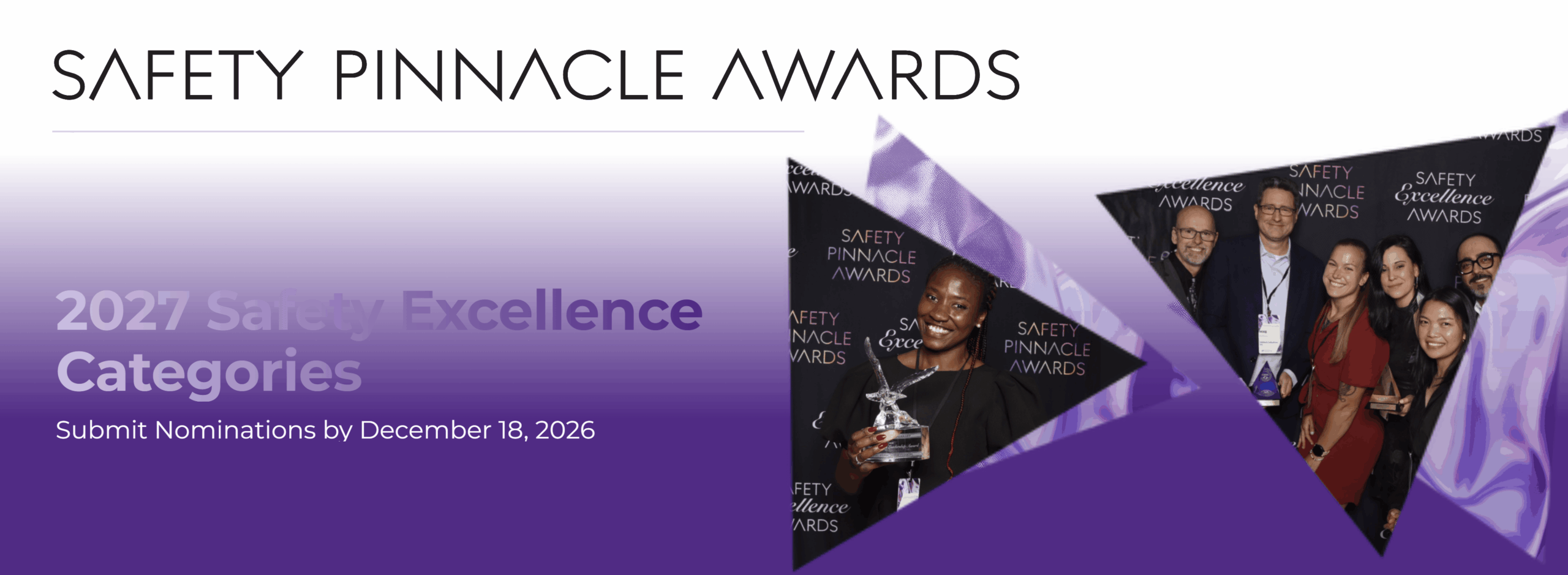
Safety Pinnacles – Excellence Award Nominations2027 Safety Excellence Categories Submit Nominations by December 18, 2026 Celebrate your JHSC, your company, or a leader. The Safety Excellence Awards recognize BC manufacturing and food processing businesses for innovation and excellence in health and safety. Companies, teams, and leaders from across the province compete for these prestigious awards. Individual Safety Excellence Awards Recognizing individuals whose leadership, dedication, and commitment make a meaningful difference in workplace health and safety. Eligibility Individual senior leader or safety professional Nominations Self-nominations are not accepted. Soaring Eagle Leadership Award Recognizes a business owner, CEO, or senior executive of a BC organization who demonstrates inspiring leadership and a strong commitment to workplace health and safety. Criteria: This award recognizes an executive leader or business owner who demonstrates exemplary and inspiring leadership and a commitment to health and safety. Nominate Read More Apex Award Honours an individual leader who demonstrates exceptional dedication and a lifelong commitment to improving workplace health and safety. Criteria: This award recognizes an individual working to improve workplace health and safety demonstrating exceptional: commitment passion dedication action The individual receiving this award will reflect a commitment to improving workplace health and safety throughout their career. Individuals who qualify for this award may also qualify for the Maureen Shaw Safety Legacy Award. Nominate Read More Maureen Shaw Safety Legacy Award Honours a rising safety leader who demonstrates exceptional passion, dedication, and action in advancing workplace health and safety, carrying forward Maureen Shaw’s legacy. Criteria: This award, presented in honour of Canadian OHS pioneer and advocate Maureen Shaw, recognizes an individual working to improve workplace health and safety who demonstrates exceptional: commitment passion dedication action The recipient will also receive a $2,500 cash award from the Manufacturing Safety Alliance of BC to support ongoing professional development in health and safety. *Individuals qualifying for this award may also qualify for the Apex Award.  Nominate Read More Team Safety Excellence Awards Celebrating teams and organizations advancing workplace safety through leadership, innovation, and collaboration. Eligibility MSABC member or OSSE certified organizations. Nominations Employee nominations are accepted and encouraged. Joint Health and Safety Committee Excellence Award Recognizes committees that exceed safety requirements and improve workplace safety culture. Criteria: Central themes of the Joint Health and Safety Committee Excellence Award: How does the team champion health and safety in your workplace? (Please provide examples) What impact has the team made on the organization’s safety performance and culture? How do workers in the organization feel about safety? Nominate Read More Fantastic Four Risk Control Leader Award Recognizes organizations implementing effective solutions across four key manufacturing risk areas. Criteria: This award recognizes a company for implementing leading solutions in the following four key manufacturing risk areas: Musculoskeletal Injuries (MSIs) Machine-Related Injuries (i.e. Safeguarding and Lockout) Slips, Trips, and Falls (i.e. Housekeeping) Safety and Business Culture Nominate Read More Manufacturing Safety Innovator Award Celebrates innovation in safety management, training, wellness, and workplace culture. Criteria: This award recognizes a company for innovation in safety based in any or all of the following categories: OHS Management Systems Health & Safety Training Wellness Programs Safety Culture Nominate Read More Small Business People First Award Honours businesses with fewer than 20 employees demonstrating outstanding safety leadership and workplace culture. Criteria: This award recognizes a small business that has: Demonstrated excellence in achieving health and safety goals above and beyond regulatory requirements Made a positive impact on workplace culture Shows leadership support for health and safety as a core value. Award criteria includes: How does the company’s safety program champion a healthier and safer workplace? What is the impact of the company’s safety program on employee experience and workplace culture? Nominate Read More Culture of Courage Award Recognizes organizations building psychologically safe workplaces where employees feel heard, respected, and supported. Criteria: This award recognizes a company that has demonstrated success in fostering a culture of psychological health and safety, where: Everyone understands the policies and safe work procedures supporting a respectful workplace Employees clearly understand their roles and company expectations Everyone is treated fairly and equitably Everyone has a voice, with channels for employee feedback (such as individual and team meetings, staff surveys, all-staff meetings, town halls, or roundtables), Leadership encourages new ideas, concerns, and perspectives Leaders respond to all employee suggestions, issues, and ideas in a timely and respectful way Employees are encouraged to experiment and mistakes are treated as learning opportunities Employees feel safe to speak up, supported in their roles, and recognized for their contribution Employees are trained on psychological safety topics Nominate Read More
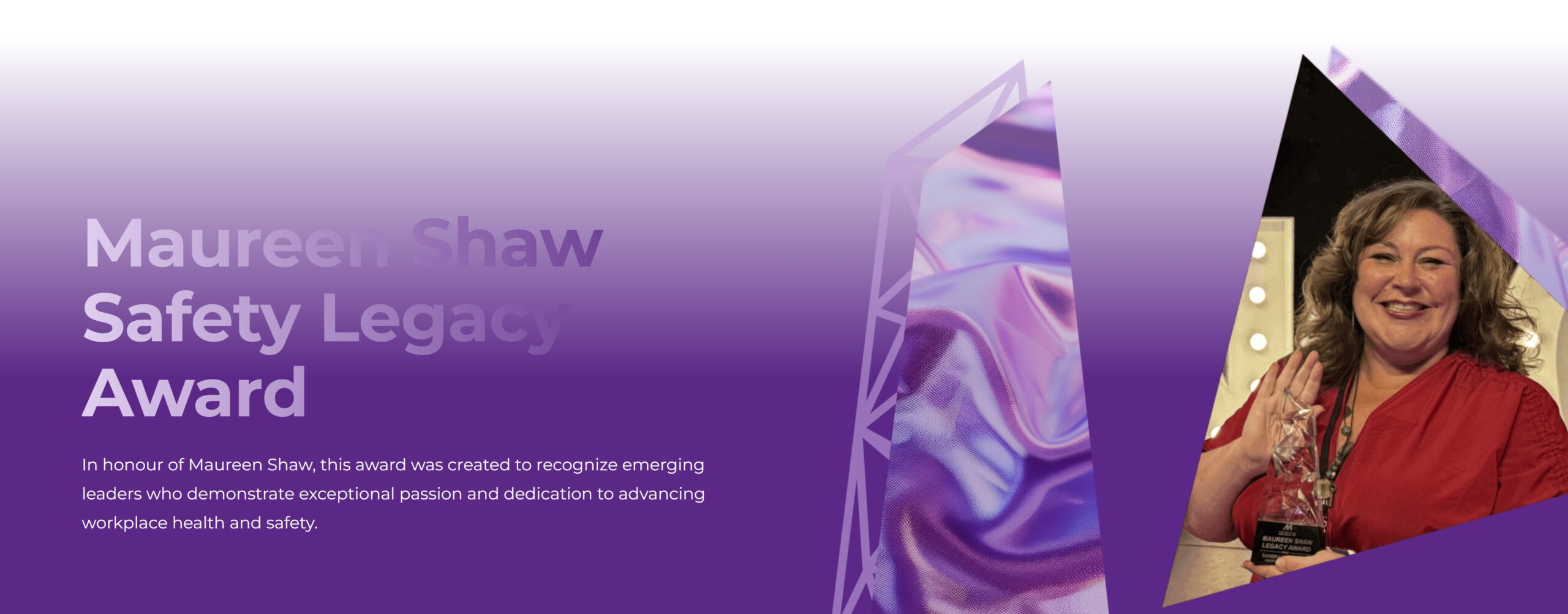
Maureen Shaw Safety Legacy AwardMaureen Shaw Safety Legacy Award In honour of Canadian health and safety icon Maureen Shaw, this award—which comes with a cash prize to support ongoing professional development—recognizes an emerging leader for exceptional dedication to advancing workplace health and safety. Submit a Nomination Now Maureen Shaw Leader, Speaker, and Mentor Emeritus Maureen Shaw is a Canadian safety icon. Retired president and CEO of the Industrial Accident Prevention Association and co-founder of Threads of Life, CEO Leadership Charter in Ontario and BC Safety Charter, and The Safe Communities Foundation of Canada, she is a thought leader, mentor, and a driving force for health and safety. A founding member of the board of the Executive Health and Safety Council of BC, Maureen is a treasured advisor to the Manufacturing Safety Alliance of BC. Award Requirements & Guidelines Eligibility Awarded to any individual working at a MSABC member* or OSSE certified organization. Criteria This award recognizes an emerging health and safety leader who demonstrates exceptional commitment, passion, and dedication to improving workplace health and safety. Nominations Self-nominations are not accepted. Others may submit supporting nominations, but the primary nomination must come from someone inside the nominee’s organization. Nomination Process Submit a Nomination Nominate an emerging health and safety leader whose passion, dedication, and commitment to creating safer workplaces reflect the legacy of Maureen Shaw. Additional Information All nominees will be contacted for additional information to supplement the nomination. * We may also reach out to the nominator for additional information. Review & Selection All nominations will be reviewed and a short list of finalists determined by an external judging committee. Judges will interview all finalists to determine a winner. Start Your Nomination Past Award Winners & Finalists 2026 Maureen Shaw Safety Legacy Award Winner Sandra Tanemura Food Safety & Health and Safety Manager, Western Canada Andrew Peller Limited https://youtube.com/shorts/ttVeqi2v0-8?si=GcJAQ2YxXNbVsywK Award Finalists https://youtu.be/YpX_4n8iHN0?si=DRlbwfHLMOm-2Gh4 Roemarr Bryan Production, Health and Safety Manager, Liberty Tire Recycling Canada https://youtu.be/wiuRcXXY60M?si=WQy11tqff_3wV8H5 Benjamin Laborde SHES Specialist, Lead Digital Solutions, Orica Digital Solutions Who would you like to nominate?