Health and Safety

Resources

ResourcesFree resources, downloads and training materials to help build and support your health and safety management systemUpcoming Webinars LEARN MOREWebinarsRegister for upcoming webinars or view webinars on demandLEARN MOREWebinars on demand Missed a live webinar session? Access recorded sessions on your scheduleLEARN MORE Resources and training materials Search by Topic: 12 Months of Safety Explore All Safety Topics    Search by Type: Checklists Guidebooks Posters Presentations Quick Reference Cards Templates (Coming Soon) Toolbox Talks Videos Webinars

Read More »

New partnership with Sensitivity Training Canada will benefit Alliance members

Employees are a company’s most valuable resource. Fostering good interpersonal relationships benefits everyone who works within an organization. The Manufacturing Safety Alliance of BC is pleased to announce our new partnership with Sensitivity Training Canada – a leading national provider of training and services which help make companies respectful through workplace wellness and sensitivity training. The mission of Sensitivity Training Canada is to help companies create workplaces where people can bring their whole self, do their best work, and live their dreams. Sensitivity training helps employees to become more accepting of diversity in the workplace and supports understanding and respect between workers. School yard bullies grow up and sometimes bring those same behaviors to work. Sensitivity training can help all employees understand what constitutes appropriate and inappropriate conduct towards others in the workplace. Alliance members will benefit from: 11 new courses. These courses are available as half-day workshops, 2-hour seminars, in-person or virtual training and include: Sensitivity training for workplace restoration Respect in the workplace Cultural sensitivity training for diversity Workplace anti-bullying and anti-harassment Sensitivity training for employees Sensitivity training for middle managers Sensitivity training for executives Resilience in the workplace Anger management Mental health awareness Workplace anti-sexual harassment Anti-bullying and anti-harassment policy and program development services 8% off the regular cost of sensitivity and psychological safety training. An additional 2% residual goes to support the development of new Manufacturing Safety Alliance of BC programs. Ten percent of all proceeds from Sensitivity Training Canada policy and program development services go to the Starlight Children’s Foundation Canada to support sick kids in your local community. Sensitivity training is an important tool for companies to help employees work successfully with colleagues from different backgrounds, cultures, and beliefs. We are thrilled to add this training to the catalogue of health and safety education courses available to Alliance members.

Read More »
Tired male worker in hard hat leaning on railing on a factory floor.

The dangers of fatigue in the workplace | Understanding the risk and impact

A contributing factor in 13 percent of workplace injuries, workplace fatigue also has a costly financial impact . A study in the Journal of Occupational and Environmental Medicine found that US businesses lose more than $100 billion per year to fatigue-related absenteeism and reduced productivity. Learn how to manage fatigue risk at work in this 2-hour online course: Online Training: Introduction to Fatigue Management Causes of workplace fatigue: factors at work Many environmental and ergonomic factors in the workplace may contribute to worker fatigue—including some of the same factors that contribute to musculoskeletal injuries (MSIs): Physically or mentally taxing work Boring or repetitive tasks Sustained tasks Stress (from any cause) Shift work (particularly night shifts) Compressed or long workdays (and workweeks) Poor lighting Extreme temperatures Constant noise Vibration Health factors in fatigue and poor sleep On top of those workplace factors may be health concerns that can also contribute to poor sleep and fatigue: Sleep disorders such as insomnia or sleep apnea, which affect as nearly a third of Canadian adults Vitamin deficiency Chronic fatigue syndrome, thyroid, or heart problems Diabetes and cancer Depression Fatigue risk for workers who drive on the job If you have employees who drive for work, the risk may be even greater: According to ICBC, driver fatigue causes 850 crashes in our province each year—injuring 620 drivers and passengers and killing nine (Transport Canada data averaged over five years).  A 2016 study by AAA found that missing just 1-2 hours of sleep doubled the risk of a crash. The AAA Foundation for Traffic Safety’s report, Acute Sleep Deprivation and Risk of Motor Vehicle Crash Involvement, reveals that drivers missing 2-3 hours of sleep in a 24-hour period more than quadrupled their risk of a crash compared to drivers getting the recommended seven hours of sleep. This is the same crash risk the National Highway Traffic Safety Administration associates with driving over the legal limit for alcohol. Prevention strategies Recognizing fatigue as a risk in the workplace and incorporating prevention strategies into your health and safety program is an important place to start.  In your program, consider these tips for managing risk of workplace fatigue: Balance workload and schedule enough staff Consider temperature, light, and ergonomics in the design of your workplace Rotate jobs or try other strategies to relieve boredom Give your staff tools to recognize fatigue risks and to develop healthy sleep habits Monitor employee fatigue as a form of impairment Promote mental health supports such as an Employee Assistance Program and online resources such as Workplace Strategies for Mental Health Promote physical activity and exercise; consider a stretching program or break-time walking program Consider workers’ sleep needs and recognize the risk in shift scheduling: Where possible, schedule employees to work day shifts Restrict consecutive day shifts to five or six days and night shifts to four days Give workers at least two consecutive days off Make schedules consistent, and provide frequent breaks Learn more about workplace fatigue and how to manage it through this online course: Introduction to Fatigue Management. Webinar:  Shift Away from Workplace Fatigue  Article: If You Do Not Manage Your Fatigue, It Will Manage You (Dr. Steve Conway) Industry Research:  Fatigue and Work (CCOHS) Fatigue Risk in the Workplace (WorkSafeBC) Research: Causes and Consequences of Occupational Fatigue (Journal of Occupational  and Environmental Medicine) Shift work and workplace injury risk (Institute for Work and Health) Are Canadians Getting Enough Sleep (Government of Canada)

Read More »
Communicable Disease Prevention PlanThis template is a guide to ensure that you have considered the communicable disease prevention measures to prevent the spread of COVID-19, flu, colds, and other viruses in your workplace. Although you are no longer required to maintain a formal, written plan (unless directed by Public Health), by completing this checklist, you can be confident you have all the information you need to communicate measures with staff, contractors, and visitors.
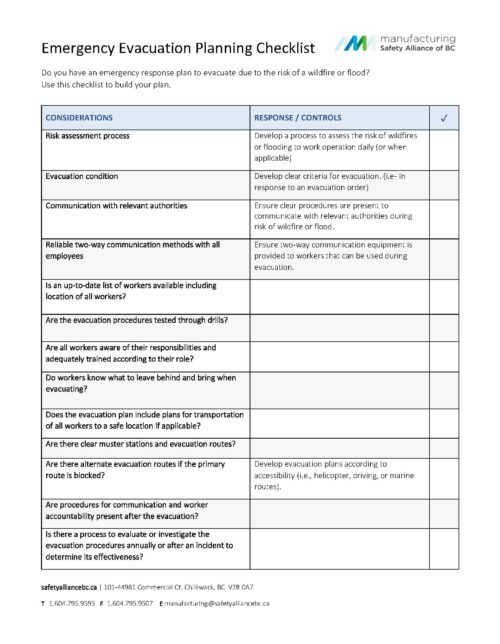
COVID-19 safety planAs our knowledge of the COVID-19 virus grows, we need to review our COVID-19 Safety Plan to ensure that it remains effective and relevant to protect our workplaces and communities. Use this checklist as a guide to help strengthen your plan.
Conducting a Hazard Assessment after a floodBusinesses impacted by a flood must take steps to ensure their personal safety and their employees, including a hazard assessment. Do not enter a flood-damaged location without first reviewing the risks and putting protections from potential hazards in place.
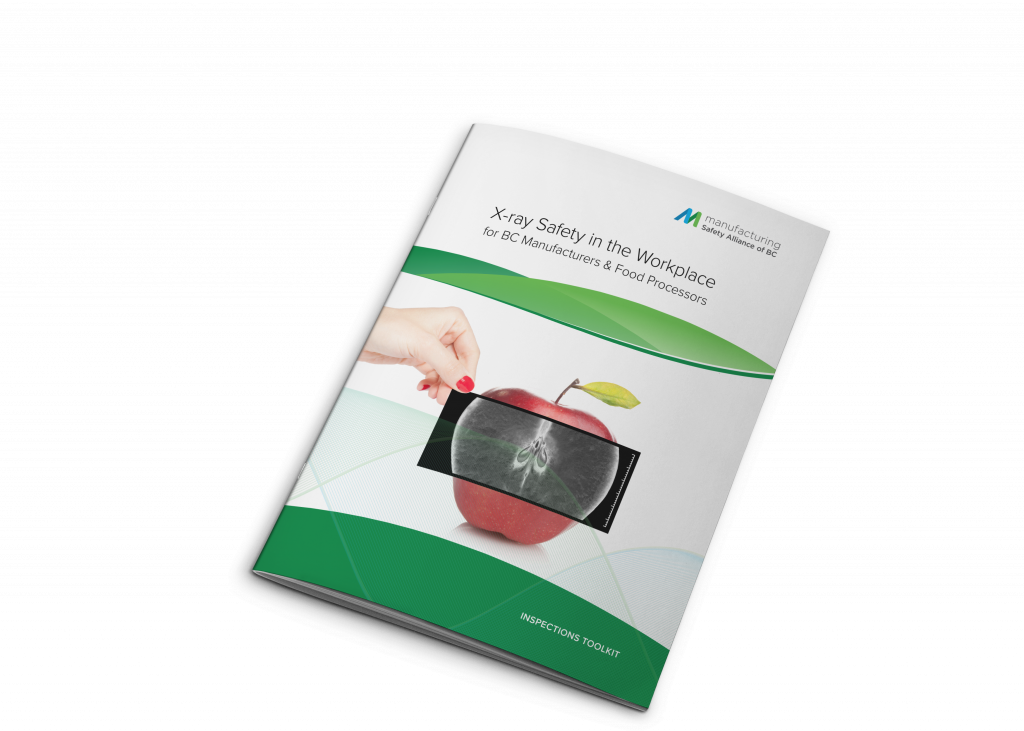
X-ray Inspection ToolkitA collection of checklists to help guide routine x-ray equipment inspections, including a resource for Joint Health and Safety Committees
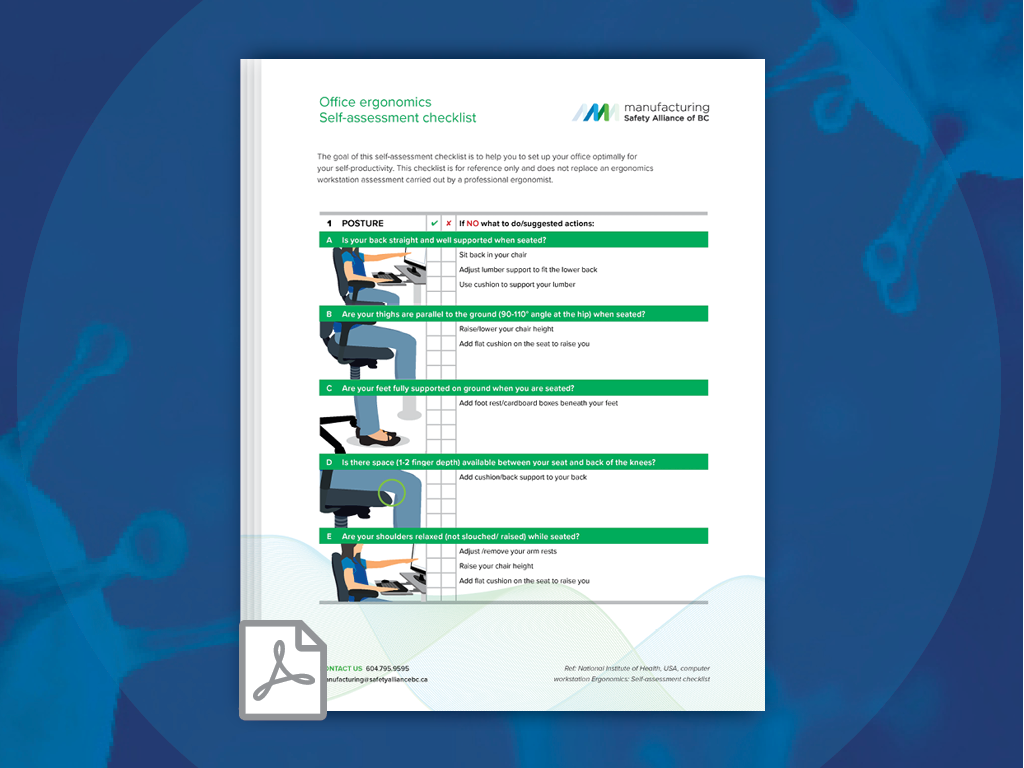
Office ergonomics Self-assessment checklistThe goal of this self-assessment checklist is to help you to set up your office optimally for your self-productivity. This checklist is for reference only and does not replace an ergonomics workstation assessment carried out by a professional ergonomist.
Vehicle Emergency Kit Checklist | Road Safety At WorkVehicles and drivers need to be prepared to deal with emergencies. A vehicle emergency kit with the supplies, tools, clothing and other contents that match the weather and driving conditions that vehicle will encounter is a great way to be prepared.
The First 30 Days After an Injury: What Employers Get Right (and Wrong)What happens in the first 30 days after a workplace injury matters. From the first conversation to planning next steps, employers face decisions that touch recovery, worker trust, and day-to-day operations. Join us for a fireside chat with a disability management specialist as we explore what employers get right—and where common missteps can complicate the path forward. Discover practical considerations for communicating clearly, supporting recovery, and balancing operational needs with worker well-being.