*Sponsored

Creating a workplace that supports mental health

An innovative work environment enhancement program from Sensitivity Training Canada, the 3-Step Respect in the Workplace Sensitivity Training program helps create workplaces that support mental health. Employers are required to protect the mental health of their employees while they are at work, physically or virtually. This includes protection from harassment, violence and bullying. Some employers have been held liable for exposing employees to unsafe work environments that have resulted in psychological harm.Unlike physical illnesses, workplace mental health issues are often more difficult to pinpoint and can go undetected for years. Poor mental health in the workplace can lead to: increased levels of absenteeism and presenteeism low levels of job performance disengagement from the work itself and from colleagues inappropriate nonverbal communication inappropriate language inappropriate behaviour poor attitude So, what happens when these kinds of issues are not addressed by employers? Their impact will erode the organization’s bottom line.In 2019, Deloitte reported on the cost to employers of workplace mental health disorders. The ROI in Workplace Mental Health Programs: Good for People, Good for Business found that mental health issues account for more than 30 per cent of both short- and long-term disability claims in Canada “with the prevalence of claims for mental health diagnoses climbing by 0.5 to one per cent every year.” The transformational 3-Step Respect in the Workplace Sensitivity Training Program includes assessments, work-shops and booster sessions to help participants stay on track. This program is suitable for groups or individuals.One-on-One Sensitivity Training is designed for employees who lack awareness of what is appropriate and what is not in the workplace. This training helps to remediate negative attitudes and restores conflict-filled relationships. What can employers do? Create an organization-wide mental health strategy. The comprehensive strategy should include a workplace anti-harassment policy, a workplace anti-harassment program and a sensitivity training framework that is centred on respect in the workplace. This strategy should align with the relevant statutes of occupational health and safety as well as human rights legislation, both of which are designed to protect employees in Canada. The workplace anti-harassment policy should be designed to set acceptable boundaries within which all internal stakeholders are expected to operate. It should also set out who is responsible for its enforcement, its scope, how employee privacy will be handled and when new hires will be provided training about its existence. Also important is a section addressing the frequency with which the policy will be reviewed. The workplace anti-harassment pro-gram should be developed with the sole purpose of operationalizing the policy. Sections setting out processes for reporting or investigating workplace incidents are to be central. Actions that sustain mental health at work Embed sensitivity training into the onboarding process to ensure that new hires are socialized with an understanding of the organization’s core values around respect. This kind of training also gives employers the opportunity to provide new employees with a common understanding of what is acceptable behaviour, language and attitudes within the company. Provide existing employees with Cultural Sensitivity Training for Diversity to guard against an organizational climate of exclusion, where diverse people feel excluded and marginalized. This workshop supports diversity, equity and inclusion in the organization’s culture. If there has been a pattern of unacceptable behaviour or language in the company, Sensitivity Training for Workplace Restoration very effectively restores relationships and prepares teams to move forward together. Develop talent by providing Workplace Mental Health Awareness training for employees and for leaders. Both of these workshops build workers’ awareness about the continuum between mental health and mental illness, the concept of mental injury, signs that a person may be struggling from a mental perspective, strategies for reducing stigma in the workplace and tips for helping themselves or others who may be dealing with mental health challenges at work. To find out more about creating a workplace that sustains mental health, visit Sensitivity Training Canada at www.sensitivitytrainingcanada.com.


Read More »
CapriSMW Insurance

What You Should Know About Business Interruption Insurance  

Imagine disaster strikes at your premises or a key supplier’s location and your operations come to a halt. Could your business withstand the impact? The results could be devastating— and although most manufacturers are insured for Business Interruption, many are not fully informed on how the coverage works or how to determine an adequate limit. The limit could be the deciding factor in whether you can financially recover.   If your business is shut down, either through a traditional loss like a fire, or emerging risks such as cyberattacks, you could suffer:   Lost income with ongoing operating expenses  Heightened vulnerability to competition   Permanent loss of important customers   Loss of employees  When discussing Business Interruption coverage with your Insurance Broker, be sure to address these concerns that help in assessing the specific types and amount of coverage you need:  How quickly can you get a key piece of machinery repaired or replaced?   Do you have production lines duplicated which have spare capacity?   Is the technology you currently employ readily available or compatible with current technology?   Is your building specifically designed for your operation? How long will it take to rebuild?   How long will it take for you to get your revenue streams back to where they were pre-loss?  Who are the employees critical to your organization’s survival?  Additionally, to make sure the policy responds how it should, it is important to understand and consider these questions:  What policy form do you need (Profits vs. Gross Earnings vs. Extra Expense)?  How long will it take to get back up and running? Is the indemnity period on the policy sufficient?  Have you projected at least two years ahead for future losses?  Contact a CapriCMW Risk Advisor for a thorough analysis and review of your Business Interruption requirements. 

Read More »
Checklist for Working from HomeIf employees work from home, it is the employer’s responsibility to ensure their health and safety.
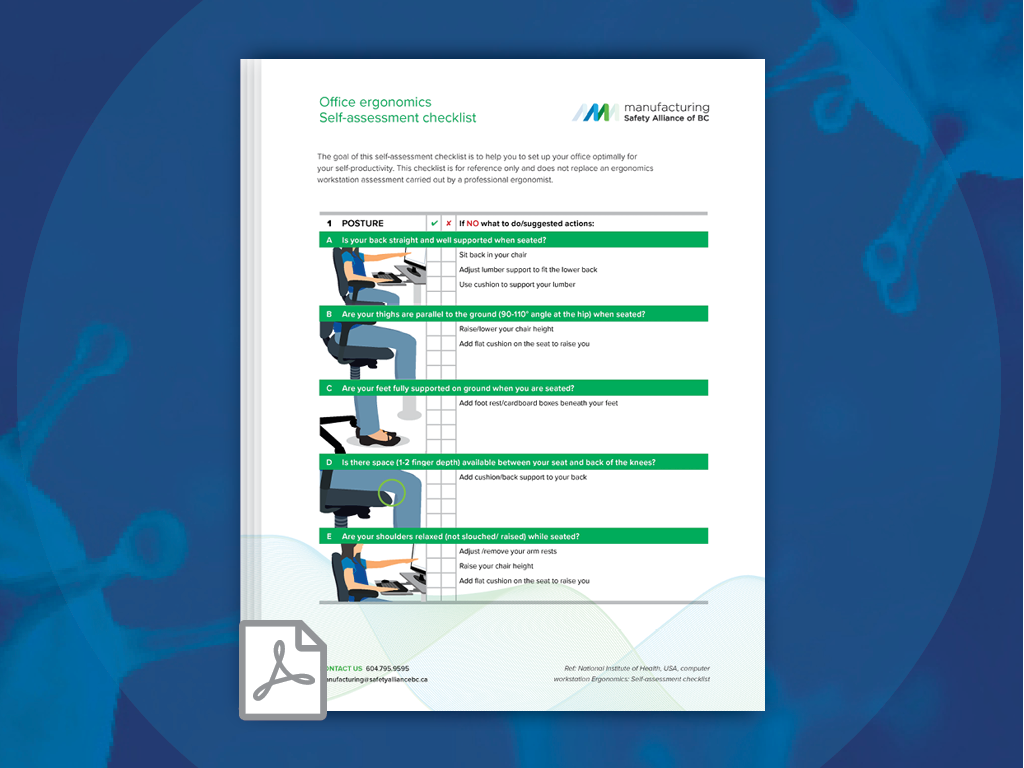
Office ergonomics Self-assessment checklistThe goal of this self-assessment checklist is to help you to set up your office optimally for your self-productivity. This checklist is for reference only and does not replace an ergonomics workstation assessment carried out by a professional ergonomist.
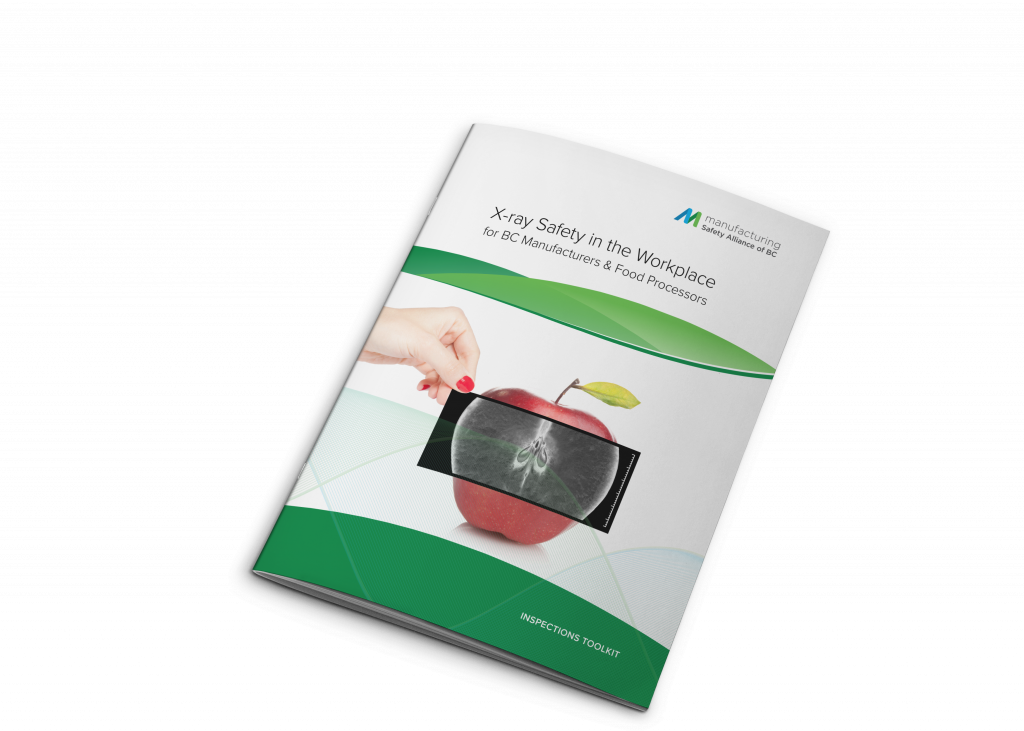
X-ray Inspection ToolkitA collection of checklists to help guide routine x-ray equipment inspections, including a resource for Joint Health and Safety Committees
Vehicle Emergency Kit Checklist | Road Safety At WorkVehicles and drivers need to be prepared to deal with emergencies. A vehicle emergency kit with the supplies, tools, clothing and other contents that match the weather and driving conditions that vehicle will encounter is a great way to be prepared.
Communicable Disease Prevention PlanThis template is a guide to ensure that you have considered the communicable disease prevention measures to prevent the spread of COVID-19, flu, colds, and other viruses in your workplace. Although you are no longer required to maintain a formal, written plan (unless directed by Public Health), by completing this checklist, you can be confident you have all the information you need to communicate measures with staff, contractors, and visitors.
Conducting a Hazard Assessment after a floodBusinesses impacted by a flood must take steps to ensure their personal safety and their employees, including a hazard assessment. Do not enter a flood-damaged location without first reviewing the risks and putting protections from potential hazards in place.
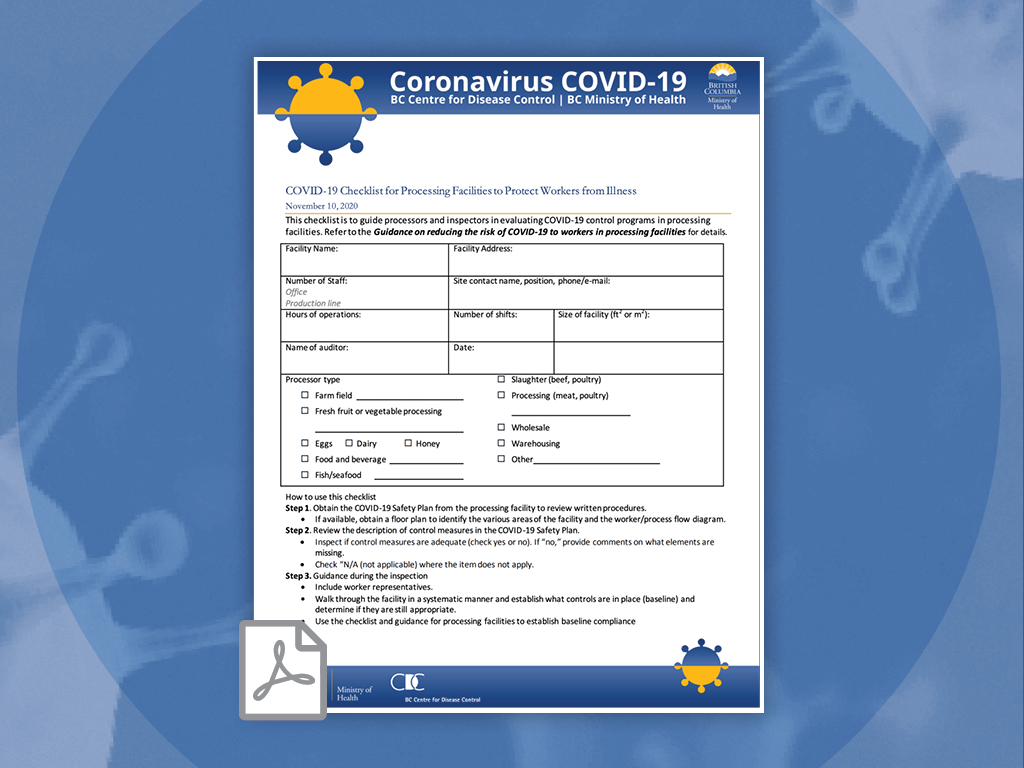
BCCDC COVID-19 Checklist for Processing FacilitiesThis checklist is to guide processors and inspectors in evaluating COVID-19 control programs in processing facilities. Refer to the Guidance on reducing the risk of COVID-19 to workers in processing facilities for details.
From Screening to Control: the New Combustible Dust GuidelinesNew workplace combustible dust regulations take effect in January 2027, and employers across many industries need to understand what the requirements mean for their operations. Whether you manufacture, process, handle, store, or clean materials that generate dust, now is the time to prepare.  In this follow-up to our 3-part Combustible Dust webinar series, join WorkSafeBC for guidance on at the four new proposed guidelines for combustible dust: See what’s in the new guidelines and learn what resources and support are available to help employers meet their obligations. Get clarity on the role of qualified persons and the required assessment process and ask questions about controls.  Build the next steps you may still need to be compliant in January.  Register now to gain the knowledge you need to prepare for the January 2027 compliance deadline and confidently navigate the new requirements.