COVID-19

FALL 2023 HEALTH UPDATE | COVID-19 Vaccines, Flu Vaccines, and Masking

COVID-19 Vaccines As of today, the newest COVID-19 vaccine has arrived in B.C. and priority populations are receiving invitations to book their vaccine appointments now. The new COVID-19 vaccines target the current subvariant and are approved for people six months and older. People will be receiving their invitations to book an appointment for your next dose starting Oct. 10. Flu Vaccines This year’s influenza vaccines are now available. People will be able to receive an influenza vaccine at the same time they are booked for a COVID-19 vaccine if they wish. Both vaccines will be available at pharmacies, health authority clinics, and some primary care providers’ offices. Masking Currently, medical mask wearing is now required for all health care workers, volunteers, contractors, and visitors. Long-term care visitors will also be required to wear a medical masks. Masks will not be required for patients or long-term care residents except where instructed by a medical professional. For more information and details, visit the BC Ministry of Health News.

Read More »
COVID-19 Update

COVID-19 Safety Plans Still Required with Relaxed Restrictions | Feb 15, 2022 BC Provincial Health Update

With the province shifting to a sustainable, long-term strategic approach to managing COVID-19, the Public Health Officer today announced the relaxation of many restrictions, effective February 16 at 11:59 p.m. Notable for manufacturers and food processors: Indoor and outdoor events allowed at full capacity with no table limits and mingling allowed – with masking and BC Vaccine Card requirements still in place. The requirement that businesses employ and maintain an effective COVID-19 Safety Plan remains in place and unchanged. Restrictions Easing This change will lift previous restrictions on social gatherings and public events, allowing: Indoor personal social gatherings back to normal Indoor and outdoor organized gatherings  at full capacity Indoor seated events at full capacity with masks and BC Vaccine Card Fitness centres, adult sports, dance, swimming at full capacity, no tournament restrictions Restaurants, bars, and night clubs at full capacity, no table limits, with mingling and dancing allowed Restrictions Remaining in Place For review before Mar 15 and potentially again before Apr 12: Masks required in all indoor public spaces Vaccine passport COVID-19 Safety Plans Long term care visitation restrictions K-12 and childcare guidelines Faith community guidelines Restrictions on child and youth overnight camps Industrial camp order For more information, visit the BC Ministry of Health News.

Read More »
COVID-19 Update

COVID-19 restrictions extended | New order for Workplace Safety now posted

The Provincial Health Officer has extended all current COVID-19 restrictions, except for gyms and fitness facilities – which can open on January 20, 2022, with strict COVID-19 Safety Plans in place. The COVID-19 Safety Plan order remains in place for B.C. businesses. Members and clients should review and renew their COVID-19 Safety Plan to keep employees safe through the Omicron surge. Employers must remind employees who are sick to stay home. A COVID-19 Safety Plan should include a daily worker health check. COVID-19 transmission – particularly Omicron – remains highly active in our communities. Some groups are at greater risk for severe illness and hospitalization, including: Younger people not vaccinated People over the age of 70 – regardless of vaccination status People with underlying immune compromising conditions Additionally, one in ten people who get sick with the virus have symptoms lasting ten weeks or longer. COVID-19 resources and information: PHO Order – Workplace Safety – January 20, 2022 Webinar replay | Omicron Q&A for Business COVID-19 Safety Plan Checklist  

Read More »
Workers in hard hats and face masks standing in front of a shipping container.

Continuity planning for a reduced workforce – keeping workers safe

As the Omicron wave continues in British Columbia, many employers report unprecedented worker shortages with employees calling in sick. Some authorities have estimated that workplaces could see up to a 30% reduction in their typical workforce. Almost every employer has someone on their team that the latest COVID-19 wave has touched. Some businesses have had to close, reduce hours, or cut back production to address related absences. A drop in staffing levels not only threatens output but also creates new challenges for keeping your remaining team safe on the job. Risks of significant short-staffing due to COVID-19 include: Workers who may not have the same skills and knowledge as their absent co-workers Other team members who are afraid of COVID infection and reluctant to come to work Potential demand for longer hours or extra shifts, leading to a higher risk of injury Sleep loss, changes in shift schedules, stress, and other factors can leave workers fatigue impaired. Fatigue is a significant contributor to workplace accidents and injuries. It can: Affect the ability to think clearly Slow reaction time Decrease attention and vigilance Impact short-term memory, judgment, and other functions Workplace fatigue makes workers more prone to making mistakes that can cause incidents and injuries. Tired employees are less effective and more likely to miss work. And productivity decreases as the number of hours worked per week increases. So, what can employers do to keep workers safe on the job when working with significant absenteeism? It’s essential to understand your remaining staff and assess their ability and training levels to ensure they can do assigned tasks safely. Incorporate training for anyone assigned to a new task or role. Do not ask employees to perform tasks or activities they are not trained for or qualified to do. If longer hours or extra shifts are needed to support business operations, introduce more frequent rest breaks—particularly at peak times. The highest injury risk occurs when breaks are too infrequent or too short. Build extra breaks into your shift schedule to allow workers to rest and recover from long hours on the job. Enable a supportive environment and communicate clearly. Ensure that leaders are visible and hands-on. Take the time to talk with your remaining team and find out what they need to feel safe at work. Continue to emphasize your safety culture and show your dedication to your people. Conduct regular workplace inspections to note new or emerging health and safety risks. Ask staff what resources they need to do their work safely. When workers bring forward safety concerns, thank them for their feedback. Put safety at the heart of all your decisions and ask yourself how your decisions will affect your team. What else can you do to reduce the impact of COVID-19 and the Omicron variant in your workplace? Encourage your staff to get vaccinated. Vaccination is still the single, best way to prevent serious illness, complications, hospitalization, or death from COVID-19. B.C. recently reported that fully vaccinated people were 60-70% less likely to end up in hospital with COVID. And if they do get sick, they are also less likely to transmit the virus to others. Increase health and safety vigilance and avoid complacency. The January 7th Provincial Health Officer order requires B.C. workplaces to re-instate COVID-19 Safety Plans. Review your plan, update as necessary, and remind employees what they need to do to prevent the spread of COVID at work. Reduce exposure through physical distancing Improve ventilation Use masks as appropriate Have a sick day policy and encourage employees to stay home when they are not feeling well Support mental health The pandemic continues to evolve, sometimes surprising us, and it’s hard to predict when we may see the other side. In the meantime, all of us—employers and workers—must stay vigilant to keep everyone safe at work.

Read More »

New PHO orders require COVID-19 Safety Plans for BC businesses | Updates

On January 7, 2022, Dr. Henry announced a new order requiring all British Columbia businesses to re-implement the protocols defined in their COVID-19 Safety Plans. Use the COVID-19 Safety Plan checklist to review and strengthen your plan – including links to everything you need to build or expand your safety plan and controls. Need help? Email or call 1.604.795.9595 to talk to a safety advisor. Watch the COVID-19 update for January 7, 2022 Booster dose timeline for priority immunization program participants Last spring’s priority essential worker vaccine clinic participants are automatically prioritized for booster doses as well. Plan now for your employees who participated in the April and May clinics to receive their booster invitations this week. If employees received their vaccinations early and have not yet registered with the Ministry of Health’s Get Vaccinated system, please encourage them to register now. Everyone needs to be registered to get their invitation for their booster shot. If an employee has passed the six-month interval after their second dose and has not yet received their booster invitation, they may be able to book an appointment by calling the toll-free call centre at 1-833-838-2323. This is a 24/7 support line with translators available. Learn more about vaccination for BC food processors and manufacturers. Rapid antigen workplace point of care testing The provincial health office has announced that they will continue to expand point-of-care testing support for businesses. Under the current Provincial Health Order, B.C. businesses must have pre-approval from the Provincial Health Services Authority (PHSA) and meet PHSA training and reporting requirements to conduct COVID-19 screening for workers. If you wish to access rapid antigen tests to establish an onsite rapid COVID-19 workplace screening program for employees with no symptoms, follow the Provincial Health Services Authority (PHSA) program process to apply. Email RapidPOCTeam@phsa.ca for an intake assessment. There are two pathways for B.C. businesses to apply for, and to receive approval to conduct COVID-19 screening activities for workers: Independently – Businesses apply directly with PHSA. Safe Screen B.C. – Businesses apply through Safe Screen B.C. to PHSA and receive support and guidance which will streamline and simplify the application process and the implementation of the screening program to meet their specific workplace needs. If you are accepted into the program, you will receive training and operational support materials and learn about public health reporting requirements. To participate, you will be required to enter into an agreement with the Provincial Health Services Authority Priority will go to industries with an increased risk of transmission of COVID-19 or outbreaks due to high contact between workers including food processing plants. Learn more here or at safescreenbc.ca.

Read More »
COVID-19 testing

Rapid Antigen Workplace Point of Care Testing

The provincial health office announced this week that they will continue to expand point of care testing support for businesses. If you wish to access rapid antigen tests to establish an onsite rapid COVID-19 workplace screening program for employees with no symptoms, follow the Provincial Health Services Authority (PHSA) program process to apply. Email RapidPOCTeam@phsa.ca for an intake assessment. If you are accepted into the program, you will receive training and operational support materials and learn about public health reporting requirements. To participate, you will be required to enter into an agreement with the Provincial Health Services Authority Priority will go to industries with an increased risk of transmission of COVID-19 or outbreaks due to high-contact between workers including food processing plants. For more support: The BCCDC is currently inviting employers interested in rapid antigen tests to establish onsite rapid COVID-19 workplace screening programs for employees with no symptoms (asymptomatic) to apply through the Business Council of British Columbia’s Safe Screen BC program. This fee-based program offers guidance and support for rapid workplace screening programs. Through Safe Screen BC, get: Guidance in applying for the PHSA program Tools and support to set up rapid antigen screening at your facility Access to platform that will help meet public health reporting requirements Learn more at www.safescreenbc.ca

Read More »

COVID-19 FAQs

As the pandemic has forced many businesses to make significant changes to operations and staffing to remain viable, the financial impact has triggered companies with employee retirement and savings plans to make temporary adjustments as part of necessary cost-saving measures. CapriCMW Group Retirement and Pension Specialists have been working with businesses to understand options they can implement while minimizing the effect on employees.

Read More »
COVID-19 Vaccine

WorkSafeBC to Mandate Vaccination for Most of Its Own Employees 

24 Sep 2021—WorkSafeBC has shared with its partners that they will be following the lead of public health and mandating vaccination for most of the organization’s own employees in the coming weeks. As context for companies evaluating their own vaccine policy, this is the direction WorkSafeBC is taking: As of November 1, all WorkSafeBC employees whose role requires them to interact in person with employers, workers, and members of the public — or with other WorkSafeBC employees — will be required to be vaccinated. Full vaccination (both doses) will be required before entering our offices, public or private workplaces, and workers’ homes. This decision is grounded, as always, in public health guidance; as leaders, we must take every available step to prevent the transmission of COVID-19 in our workplaces and our communities. The Rationale According to WorkSafeBC President & CEO Anne Naser, this decision is based on our current public health situation and risk levels: The scientific evidence supporting this approach is clear. According to B.C.’s Ministry of Health, after factoring for age, unvaccinated people are 37.9 times more likely to be hospitalized with COVID-19 than those who are fully vaccinated. Those who have been vaccinated are protecting not just their own health, but the health of all those who aren’t eligible for vaccines, including children under 12. They are also helping assure the sustainability of our health care systems, by reducing the burden on those who work in them. Additional Controls The messaging from WorkSafeBC also notes that “While vaccines have been identified as the primary preventative measure to prevent illness and reduce the risk of hospitalization and death, it’s important to continue with our supplementary protocols, which include mask-wearing, social distancing, and handwashing in all our facilities.” More Information For more perspectives on the vaccine policy question, you can revisit our recent webinar or join us at Make It Safe 2021 for two key case study sessions on vaccine policy: Make It Safe Keynote | Vaccine policy, passports, and privacy  Make It Safe Case Study | Inside the design of an effective vaccine policy Some members have also requested help responding to employee concerns and hesitations about the vaccine. If you would like this type of support, please contact us to discuss your situation. As always, with policy decisions in this area, we encourage you to obtain legal advice. If we can help you navigate workplace health and safety controls and decisions, please contact us.    

Read More »

B.C. Vaccine Card – what businesses need to know

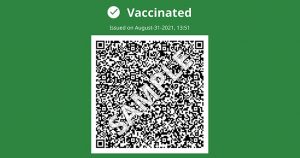
Beginning September 13, 2021, proof of vaccination will be required to access certain higher-risk social, recreational, and discretionary events and businesses across B.C. to help protect people from COVID-19. This measure will ensure that businesses are able to stay open and continue to serve their customers while reducing the risk of transmission. The following places require proof of vaccination for entry: Indoor ticketed sporting events Indoor concerts, theatre, dance, and symphony events Licensed restaurants, and restaurants that offer table services (indoor and patio dining) Pubs, bars, and lounges (indoor and patio) Nightclubs, casinos, and movie theatres Gyms, exercise facilities/studios, pools, and recreation facilities Businesses offering indoor group exercise Indoor adult group and team sp9orts for people 22 years old or older Indoor organized events with 50 or more people (e.g. wedding receptions, parties, conferences, and workshops) Indoor organized group recreational classes and activities like pottery, art, and choir Post-secondary on-campus student housing Businesses can verify proof of vaccination with the B.C. Vaccine Card Verifier app (most secure) or visually. The app will be available on Apple and Android devices soon. After verifying proof of vaccination, you must also review ID to ensure that it matches the name on the vaccine card. Youth 12-18 do not require ID. For more information and resources (including posters and guidance documents) on the new BC Vaccine Card for businesses visit https://www2.gov.bc.ca/gov/content/covid-19/vaccine/proof/businesses.

Read More »
COVID-19 Vaccine

New B.C. Vaccine Card Announced

Due to the rise in COVID-19 infections, British Columbia is unlikely to move to Step 4 of the provincial Reopening Pan on September 7.   Recognizing that vaccination is the way forward, the province is introducing a new Public Health Order requiring proof of vaccination to attend discretionary events, to ensure that people can attend with confidence other attendees have also been vaccinated.  New B.C. Vaccine Card The province has a new B.C. Vaccine Card—a temporary measure intended to keep people safe and businesses open. The B.C. Vaccine Card will be available by confidential download to a mobile phone, and in another format still to be announced for those who do not have a mobile phone.  People will need to show proof of vaccination and identify to attend discretionary indoor gatherings: As of September 13 – proof of at least 1 dose of the vaccine + 7 days; and  As of October 24 – proof of full vaccination + 7 days  The B.C. Vaccine Card will be required for:  Indoor ticketed sporting and arts events and concerts Indoor and patio dining Nightclubs and casinos Theatres, dance, symphony, and cultural events Gyms and fitness centers Weddings, large parties Conferences and workshops Indoor recreational activities and classes (such as choirs, seniors group activities)  The new Order does not apply to employees of these businesses, or to workplaces in general. It also does not apply to faith-based services, essential health services, retail, or grocery.  Get Vaccinated  In the province this week, 776K eligible British Columbians are not yet vaccinated.  If you have staff who still need access to the vaccine, additional drop-in and pop-up clinics are being provided across the province for free vaccination. Register here: https://www2.gov.bc.ca/gov/content/covid-19/vaccine/vaxforbc  Exemptions  Children under 12 will be exempt from this requirement, provided their parents accompanying them are fully vaccinated.  Otherwise, no one will be exempt. The province describes this initiative as a temporary measure to get us through a risky period. Those rare individuals who cannot get vaccinated will not be able to attend these discretionary events during this critical timeframe.  Travelers from out of province (or internationally) will be allowed to attend these discretionary events with equivalent proof of vaccination.  COVID-19 testing will not be accepted as an alternative to a B.C. Vaccine Card.  Technology and Privacy  The province is working with Privacy Commissioner and Ministry of Health to restrict the B.C. Vaccine Card to ONLY vaccine status information—and to ensure the strictest security protocols to protect personal data and prevent forgery.  Rationale  Dr. Henry: “The science is clear.” Vaccines have changed how we deal with the pandemic and have made it possible to remove restrictions. In B.C., we continue to see waves of cases, particularly in people who are not yet vaccinated:  Almost 90% of all cases, and over 93% of hospitalizations in this past month have been unvaccinated people  The current rate of infection is 28/100K cases in people who are unvaccinated, compared to 2/100K in people who are fully vaccinated  That leads to transmission in clusters as groups gather, particularly with the highly transmissible Delta variant  For those who have had COVID-19, particularly mild cases), their immunity  is less broad than what the vaccine provides and may not last as long. Vaccination is required for everyone, whether they have had COVID-19 or not.  As we enter the fall season of increased respiratory illness, and prepare to send children back to school, to keep all of our businesses open and ensure we can continue to enjoy social events, the province says, this additional measure is needed.  Additional Measures  Particularly in areas of high transmission, the province continues to recommend (or require in certain areas)  masks in indoor public areas, physical distancing, and good hand hygiene. The Provincial Health Office is discussing whether the new initiative may allow the province to reduce restrictions in the Interior sooner.  Vaccine Policy Questions for your Workplace? Register for our September 7 Town Hall: The Vaccine Policy Debate REGISTER


Read More »
Sick leave written on a sticky note next to a keyboard and pen.

COVID-19 sick leave reimbursement applications: action requested

In order to apply for the B.C. government’s COVID-19 Paid Sick-Leave Reimbursement Program, you need to sign up for WorkSafeBC’s online services. Through this program, which will be available starting June 15, employers can apply to be reimbursed for up to three days of wages paid to workers for COVID-19-related sick leave. How to apply: In order to apply for the B.C. government’s COVID-19 Sick-Leave Reimbursement Program, employers must: Be registered for WorkSafeBC insurance coverage Have signed up for WorkSafeBC’s online services Not have an existing paid sick-leave program The program application will be available on WorkSafeBC’s online-services portal starting June 15. Visit worksafebc.com to learn more. In addition to hosting the sick-leave reimbursement application, WorkSafeBC’s online-services portal for employers offers you an easy and convenient way to report payroll, pay premiums, and access additional tools. Create your online-services account today Watch this short video to learn how to create your online-services account, then visit worksafebc.com to sign up. For technical issues related to setting up your account, please contact WorkSafeBC’s technical support team. For more information For questions about the program, please visit the B.C. government’s COVID-19 Paid Sick-Leave Reimbursement program web page.

Read More »
WHMIS EducationThe Workplace Hazardous Materials Information System (WHMIS) education course provides essential training on the safe handling, storage, and disposal of hazardous materials in the workplace. Available in 5 languages: English, Spanish, Punjabi, Mandarin, and Cantonese.
Navigating BC OHS LegislationAs new or experienced safety committee members, managers, or supervisors, it is important to fully understand and know which OHS regulations are related to your work and how you may be in compliance—or not. This 45-minute self-paced course helps introduce people to information on how to identify and find the OHS legislation related their work—perfect for anyone working at a manufacturing or food processing facility who may be tasked with consulting OHS legislation.
Mental Health Skill Building for WorkersIn this 45-minute, self-paced online course, workers learn to identify common signs and symptoms of mental health issues, to recognize stigma and reduce the impact. They learn practical strategies to respond to a co-worker experiencing a mental health issue.
Managing Difficult ConversationsWhether you're working in an environment in-person or virtually, gain practical tools to help you manage difficult conversations effectively to achieve the best possible outcomes through this course.
Hearing ConservationThis awareness level course will introduce learners to the importance of hearing conservation and how to protect themselves from hearing impairment.
Disability Awareness: Working with People with DisabilitiesCreating an inclusive working environment and workplace is essential for fostering innovation, improving team dynamics, and addressing the evolving needs of today’s workforce. By understanding the challenges faced by people with disabilities and recognizing their unique contributions, learners will gain the skills to support a more diverse and equitable environment. This online course was developed to raise awareness and provide practical strategies to work effectively with people with disabilities.     
Developing a Safety Procedures ManualConsistent safety procedures foster safer working environments, reduce injury-related downtime, and boost productivity. This course will provide participants with the foundation needed to start writing safety procedures that are clear, concise, and practical for day-to-day use. 
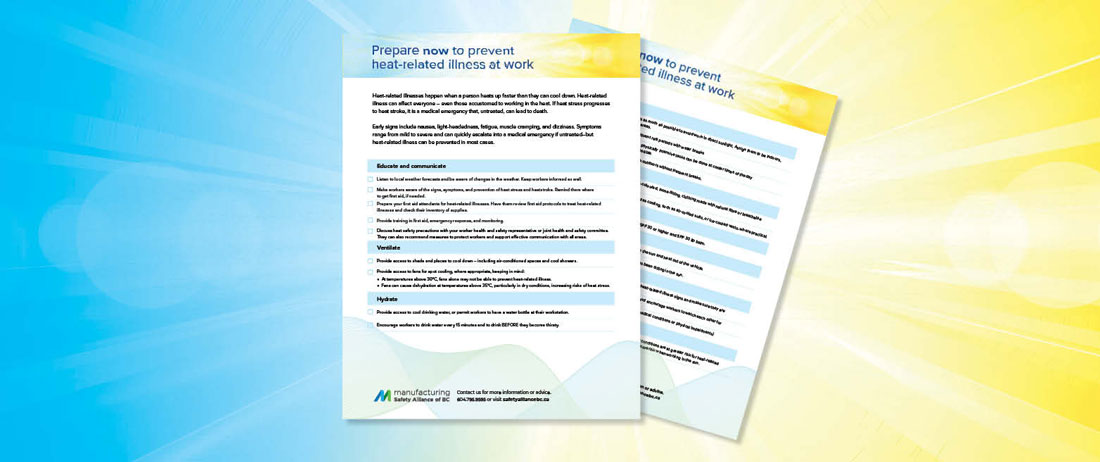
Prepare now to prevent heat-related illness at workHeat-related illnesses happen when a person heats up faster than they can cool down. Heat-related illness can affect everyone – even those accustomed to working in the heat. If heat stress progresses to heat stroke, it is a medical emergency that, untreated, can lead to death.
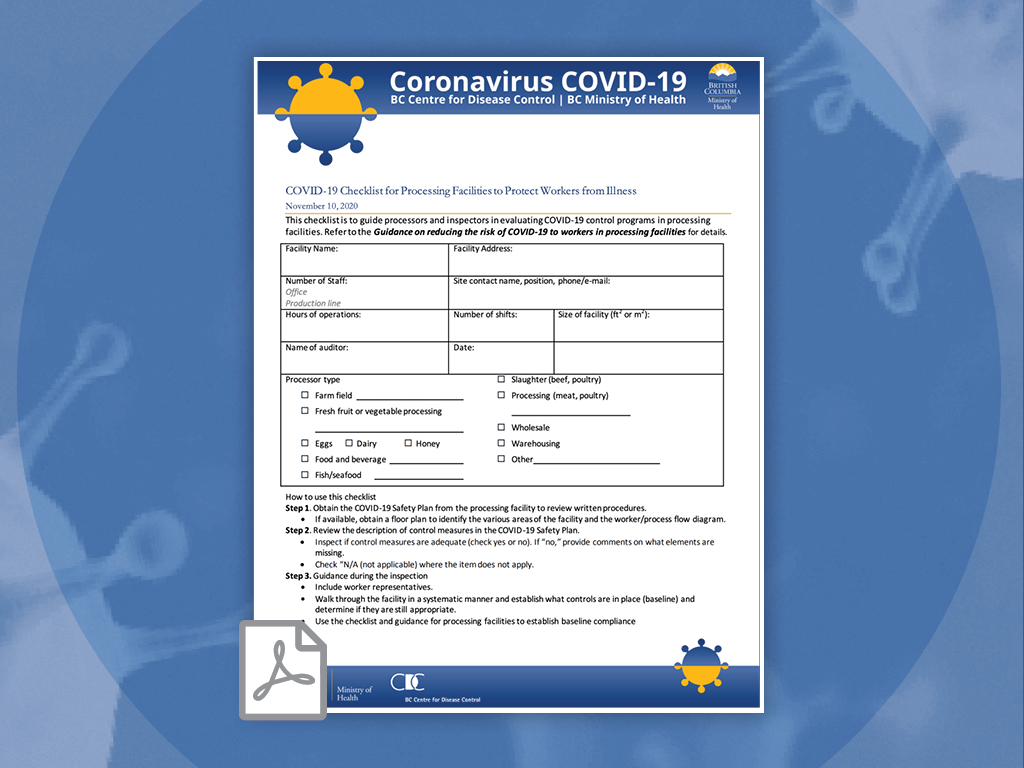
BCCDC COVID-19 Checklist for Processing FacilitiesThis checklist is to guide processors and inspectors in evaluating COVID-19 control programs in processing facilities. Refer to the Guidance on reducing the risk of COVID-19 to workers in processing facilities for details.